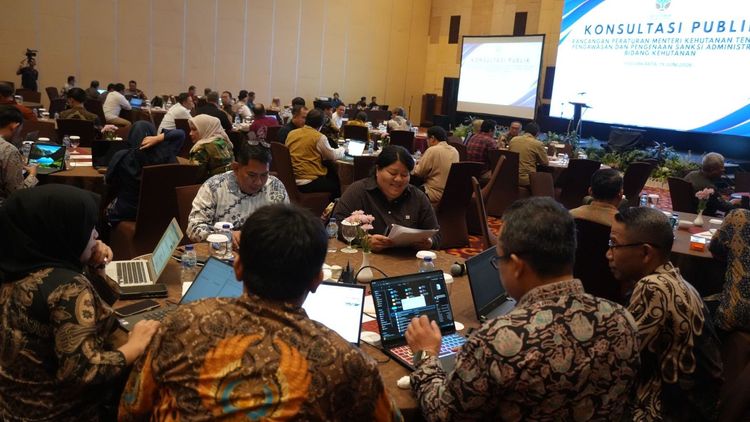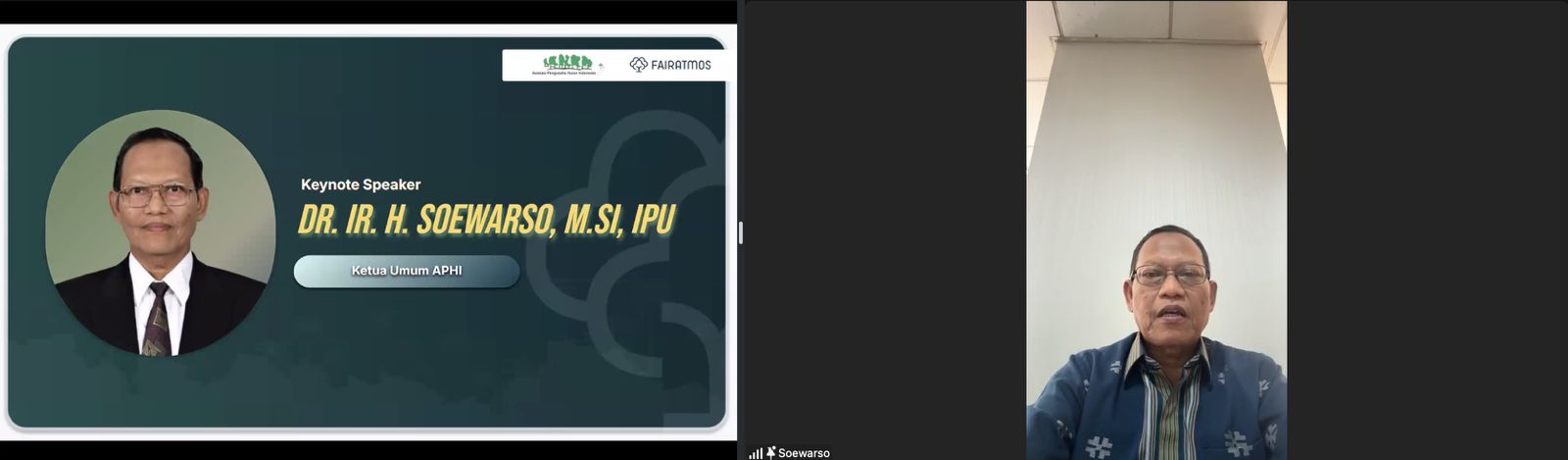
Enviro News Asia, Jakarta – The Indonesian Forest Entrepreneurs Association (APHI) and Fairatmos held a Carbon Trading Discussion Series titled “Ministerial Regulation No. 6 of 2026: Accelerating Carbon Project Development and Trading in PBPH Working Areas” on Monday (6/22/2026), aimed at building the capacity of forest business permit (PBPH) holders to develop carbon projects in line with the latest government regulations.
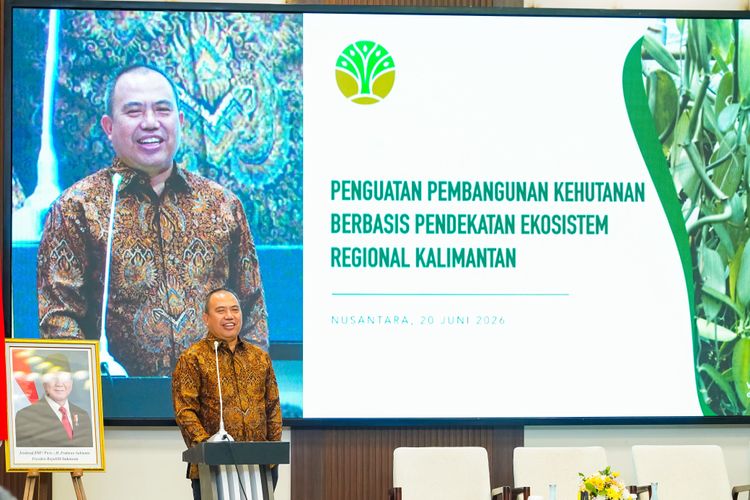
APHI Chairman Soewarso said the issuance of Presidential Regulation No. 110 of 2025, followed by Ministerial Regulation No. 6 of 2026 on carbon trading procedures through greenhouse gas emission offsets in the forestry sector, marks an important milestone for the development of national carbon trading.
“This regulation not only provides greater business certainty but also affirms the recognition that forests do not only produce timber commodities, but also environmental services, particularly carbon, which carries real economic value,” Soewarso said.
He noted that the policy development opens opportunities for PBPH holders to develop sustainable multi-business forestry models while generating added value from efforts to maintain forest cover and manage their concession areas responsibly.
Nonetheless, Soewarso cautioned that carbon trading is not a straightforward undertaking, requiring regulatory understanding, credible data, appropriate methodologies, institutional readiness, and adequate human resources. He also cited challenges around the high cost of carbon project development, market certainty, widely varying carbon prices, access to financing, and Indonesia’s competitiveness in the global carbon market.
As the organization representing PBPH-holding companies, APHI views its members as primary actors in the development of forestry sector carbon trading and regards capacity building as an urgent priority. The discussion series is the first in a program of capacity-building activities for APHI members in collaboration with Fairatmos, through which both parties will support members’ understanding, readiness mapping, and capacity development for building credible, regulation-compliant carbon projects.
“APHI hopes the implementation of Ministerial Regulation No. 6 of 2026 can proceed effectively, simply, and with business certainty. Government support is greatly needed, particularly in strengthening business operator capacity and providing reliable support systems and access to credible, sustainable carbon markets,” Soewarso said.
Also speaking at the event, Ministry of Forestry Directorate General of Sustainable Forest Management’s Director of Forest Utilization Business Development Ilham explained that carbon trading is an important instrument for supporting Indonesia’s climate targets given the limited capacity of government budgets.
“The capacity of the national and regional budgets covers only around three percent of the total funding needed to meet Indonesia’s NDC targets. That is why we have no choice but to seek funding sources outside the state budget, one of which is carbon trading,” Ilham said.
He noted that Indonesia also has major forestry sector targets, namely achieving carbon removal across 12 million hectares of land and protecting 50 million hectares of forest area from deforestation, degradation, and fires. Ministerial Regulation No. 6 of 2026 was designed to support the achievement of both climate targets and economic growth, with emphasis on high integrity, protection of local communities, good governance, complaint mechanisms, and risk mitigation in carbon project development.
“The goal is to produce carbon credits with high integrity and quality, because that is what the global carbon market currently demands,” Ilham said, adding that under the forestry carbon trading scheme, PBPH holders are the parties entitled to conduct carbon trading within their concession areas, with project developers able to partner with them but the primary responsibility remaining with the license holders.
Meanwhile, Fairatmos Chief Commercial and Operating Officer Aruna Pradipta said Indonesia holds enormous potential in the global carbon market as one of the countries with the largest tropical forest areas in the world.
“Indonesia’s carbon credit potential through 2030 is estimated to reach one gigatonne. If monetized, its value could potentially reach around US$12 billion,” Aruna said.
He noted that global demand for carbon credits continues to rise, particularly in the voluntary carbon market (VCM), with the forestry and land-use sector contributing more than 30 percent of that market.
“This indicates that globally, demand for carbon credits continues to grow, from both corporations and other buyers. Indonesia has enormous supply potential and needs to prepare itself to participate as the market continues to develop,” Aruna said.
Despite this strong potential, Aruna identified several remaining challenges in carbon project development, including ensuring clean and clear land status, the availability of accurate baseline data, project economic certainty, and access to carbon markets and price information.
He stressed the importance of ensuring land used for carbon projects is genuinely clean and clear with no potential conflicts or overlapping management rights, and that technical surveys covering biodiversity, carbon stocks, landscape, and social conditions are required. Community engagement through Free, Prior and Informed Consent (FPIC) principles is also essential to project success.
“Communities around the project area must understand and actively participate in the carbon project. Building trust and ensuring no misunderstandings arise is therefore critically important,” Aruna said, adding that project developers play a supporting role in technical assessments, document preparation, certification processes, social and environmental programs, and financial and marketing management, but do not replace license holders as the primary owners and managers of the area. (*)