Enviro News Asia, Balikpapan – The Ministry of Forestry has continued to strengthen its commitment to protecting and preserving mangrove ecosystems as one of Indonesia’s strategic environmental assets. Amid growing challenges from climate change, coastal degradation, and mounting pressure on biodiversity, mangroves play an increasingly vital role in supporting ecological resilience and community welfare.
East Kalimantan is home to one of the country’s most significant mangrove ecosystems, providing enormous ecological functions. Mangrove forests serve not only as habitats for diverse flora and fauna but also as natural shields for coastal areas against abrasion, saltwater intrusion, and extreme weather impacts. Their capacity to absorb and store large volumes of carbon also makes them a significant contributor to climate change mitigation and the achievement of national emission reduction targets.
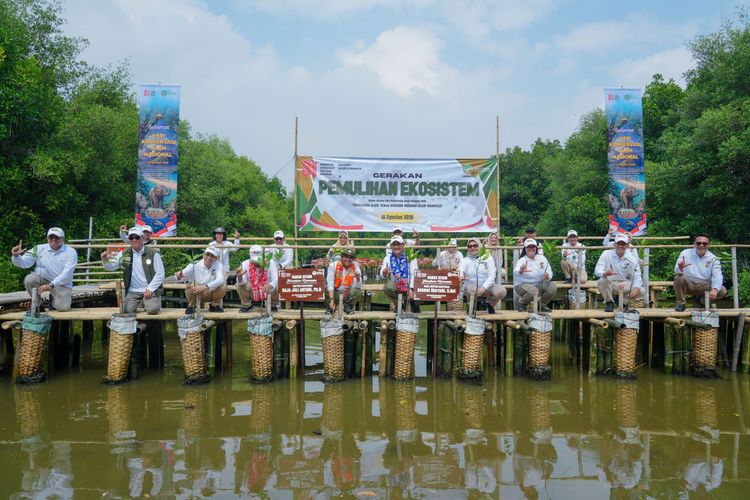
During a visit to the Graha Indah Mangrove Area in Balikpapan, Ministry of Forestry Secretary General Mahfudz affirmed that mangrove conservation is an integral part of the national sustainable development agenda.
“Mangroves hold extremely high ecological, social, and economic value. Their existence is important not only for coastal protection but also as a natural solution to climate change and for sustaining natural resources for future generations. That is why protection and management efforts must continue to be strengthened through collaboration among all parties,” Mahfudz said.
He further stressed that the success of mangrove conservation depends not only on rehabilitation activities but also on long-term commitment to protecting intact areas, strengthening environmental education, and increasing community participation in sustainable natural resource management.
The Graha Indah Mangrove Area in Balikpapan stands as an example of mangrove ecosystem management that delivers benefits for conservation, environmental education, research, and raising public awareness of the importance of protecting coastal areas, demonstrating that mangrove conservation can proceed hand in hand with community empowerment and environmental education efforts.
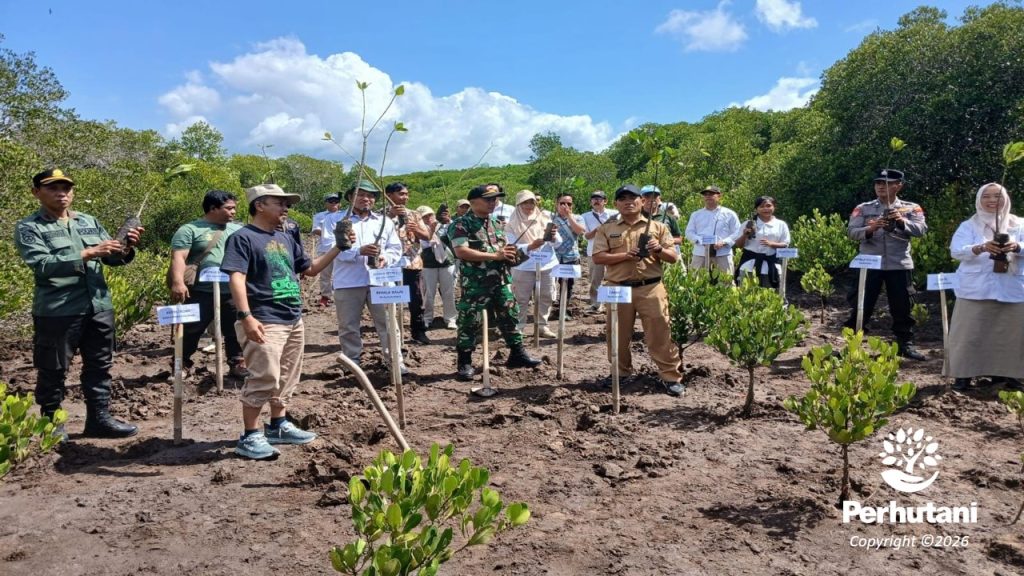
As part of the visit’s activities, Mahfudz and stakeholders planted mangroves as a symbol of shared commitment to preserving coastal ecosystems, while reaffirming that the core of conservation efforts lies in ensuring mangroves remain protected and sustainably managed.
“Planting mangroves is an important step, but what matters more is ensuring they can grow, be protected, and deliver long-term benefits for the environment and communities. Mangrove conservation is an investment for the future, one whose results will be enjoyed by generations to come,” Mahfudz said.
The Ministry of Forestry called on all elements of society, regional governments, the business sector, academics, and environmental communities to strengthen collaboration in protecting and preserving mangrove ecosystems, stressing that with strong cooperation, mangroves can continue to serve as Indonesia’s natural coastal bulwark while making a real contribution to addressing global climate change. (*)