Enviro News Asia, Tumbang Nusa – Peatland ecosystem management has emerged as one of the keys to strengthening Indonesia’s resilience against climate change, with peat serving not only as a natural carbon store but also as a regulator of water systems, a protector of biodiversity, and a foundation for community livelihoods. Protecting peatlands, authorities say, demands cross-sectoral collaboration to address growing forest and land fire risks.
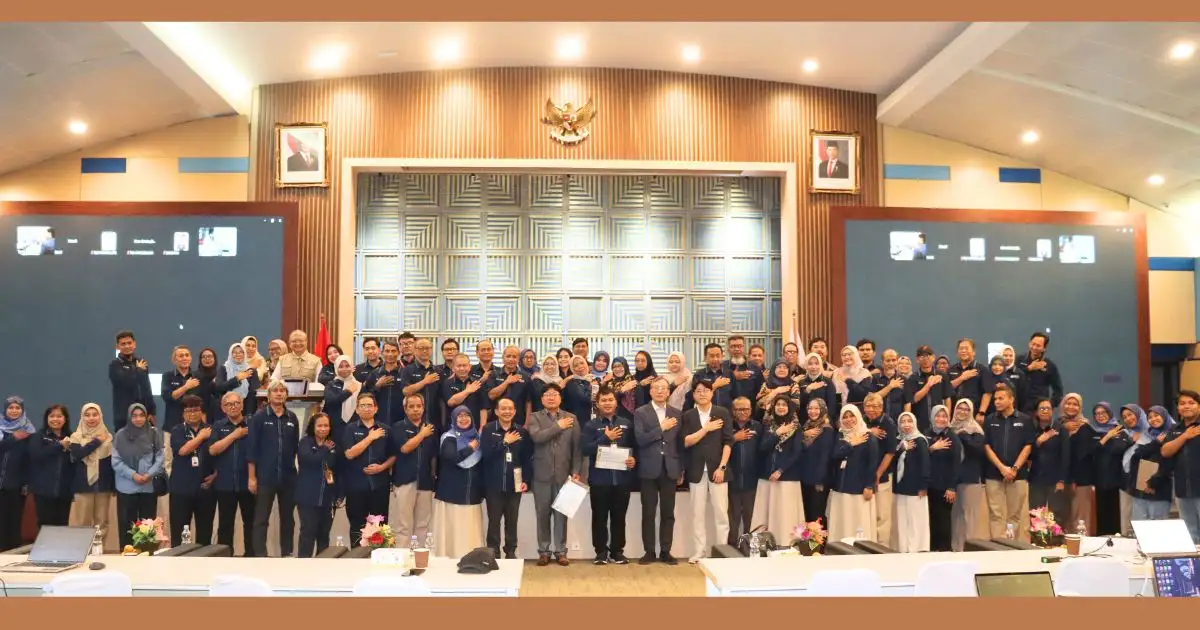
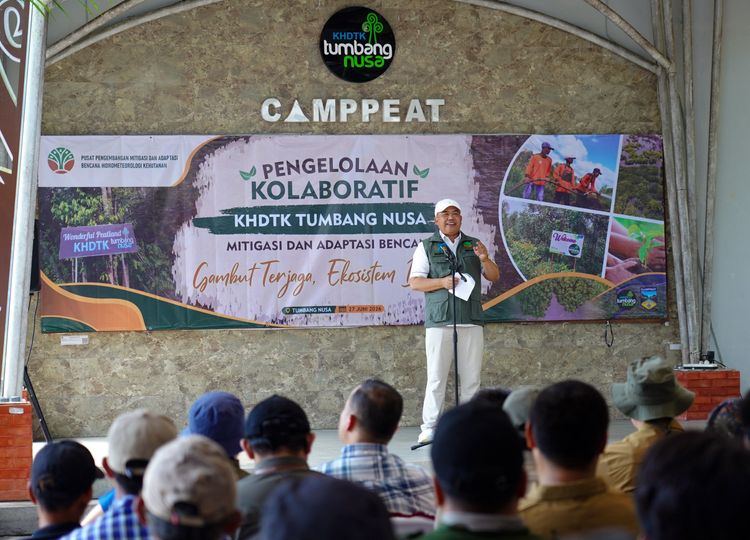
The commitment was reaffirmed by Ministry of Forestry Secretary General Mahfudz at the opening of the Collaborative Management of the Tumbang Nusa Special Purpose Forest Area (KHDTK): Disaster Mitigation and Adaptation event at Camppeat Tumbang Nusa, Pulang Pisau Regency, Central Kalimantan, on Saturday (6/27).
Mahfudz said the increasing intensity of climate change, including the El Niño phenomenon, makes peatland areas increasingly vulnerable to forest and land fires, requiring integrated peatland management that brings together government, academics, communities, businesses, and development partners.
“Peatland management cannot be done in a partial or sectoral manner. A collaborative approach involving all stakeholders is needed for mitigation and adaptation efforts to run effectively at the field level,” Mahfudz said.
He explained that KHDTK Tumbang Nusa, covering around 4,900 hectares, plays a strategic role as a field laboratory for the development of science, technology, and best practices in peatland ecosystem management. Innovations developed at the site range from peat hydrological restoration and water management to water level monitoring, community capacity building, and the development of forest and land fire mitigation technologies.
“Management of KHDTK is carried out through a knowledge-based, best-practice, and scientific data approach through the Collaborative at Tapak (Coll-Tapak) framework. This approach is not only relevant for peatland areas but also has the potential to become a management model for KHDTK areas across Indonesia,” Mahfudz said.
Head of the Center for Forestry Hydrometeorological Disaster Mitigation and Adaptation Development Wening Sri Wulandari said the Ministry of Forestry currently manages six KHDTK units serving as centers of learning, research, and innovation development for forestry disaster mitigation and adaptation. KHDTK Tumbang Nusa, she said, is one of the strategic areas being developed as a multi-stakeholder collaboration space for sustainable peatland ecosystem management.
“Peatland area management cannot be done alone. That is why we continue to strengthen synergy with regional governments, universities, development partners, communities, and various stakeholders so that area management runs optimally,” Wening said.
This collaboration is realized through integrated patrols with the Fire-Aware Community (MPA), water level monitoring, seed garden management, area access maintenance, and community capacity building in forest and land fire prevention.
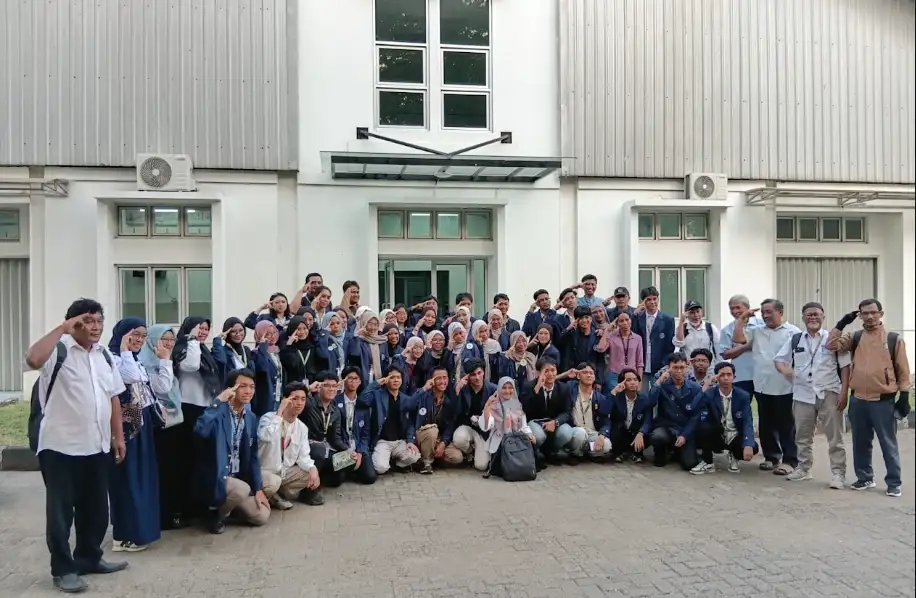
During the event, the Secretary General handed over field equipment to Fire-Aware Community members as a form of support for the community’s role in protecting forest areas. Activities continued with inspections of the Camp Peat facility, the Tumbang Nusa Permanent Nursery, the installation of water level monitoring equipment, tree planting, and the RePeat peatland rehabilitation area covering 27 hectares that has been rehabilitated since 2016 using various peat-characteristic tree species including Shorea balangeran, pulai, jelutung, and pantung.
Beyond strengthening field-level management, the Ministry of Forestry is also expanding national and international cooperation, including through support for the International Tropical Peatland Center (ITPC) as a center for developing and disseminating tropical peatland management knowledge.
Mahfudz also expressed appreciation for the dedication of Manggala Agni and the Fire-Aware Community as the frontline guardians of forest and land fire prevention and control.
“The commitment, care, and dedication of Manggala Agni and the Fire-Aware Community are the primary strength in protecting forest areas. They are strategic partners building area resilience while strengthening the resilience of communities around forests,” he said.
Going forward, KHDTK Tumbang Nusa will continue to be developed as a peatland ecosystem field laboratory serving as a center of learning, technology demonstration, and a collaborative peatland management model replicable across various regions.
“Protecting peatlands means protecting life. From this area we build knowledge, strengthen collaboration, and present a peatland management model capable of responding to the challenges of climate change while preserving Indonesia’s forests,” Mahfudz concluded. (*)