Enviro News Asia, Bandung – Indonesia’s National Research and Innovation Agency (BRIN) is promoting the development of domestic manufacturing for next-generation solar panels to accelerate the country’s clean energy transition and strengthen long-term energy independence.
The initiative was presented by Oo Abdul Rosyid, Principal Research Engineer at BRIN’s Research Center for Energy Conversion Technology (PRTKE), during the SISTEM Vol. 4 Webinar 2026 titled “Unlocking the Full Potential of Solar Cell Technology: Lesson Learned from Silicon and Tandem PV,” held on July 29. The presentation was based on findings from his collaborative visiting research at Forschungszentrum Jülich (FZJ) in Germany.
BRIN’s study explores the feasibility of establishing local manufacturing for Silicon Heterojunction (SHJ/HJT) and Perovskite-Silicon Tandem photovoltaic (PV) technologies, which represent the latest generation of high-efficiency solar panels. The research supports Indonesia’s broader efforts to expand renewable energy deployment while reducing dependence on imported solar technologies.
According to Rosyid, global photovoltaic technology is rapidly shifting from conventional silicon-based panels toward advanced SHJ and tandem technologies that offer significantly higher efficiency. SHJ solar cells have already achieved conversion efficiencies exceeding 27 percent, while perovskite-silicon tandem cells have demonstrated laboratory efficiencies above 30 percent. Both technologies also maintain strong performance under high-temperature conditions, making them particularly suitable for tropical countries such as Indonesia.
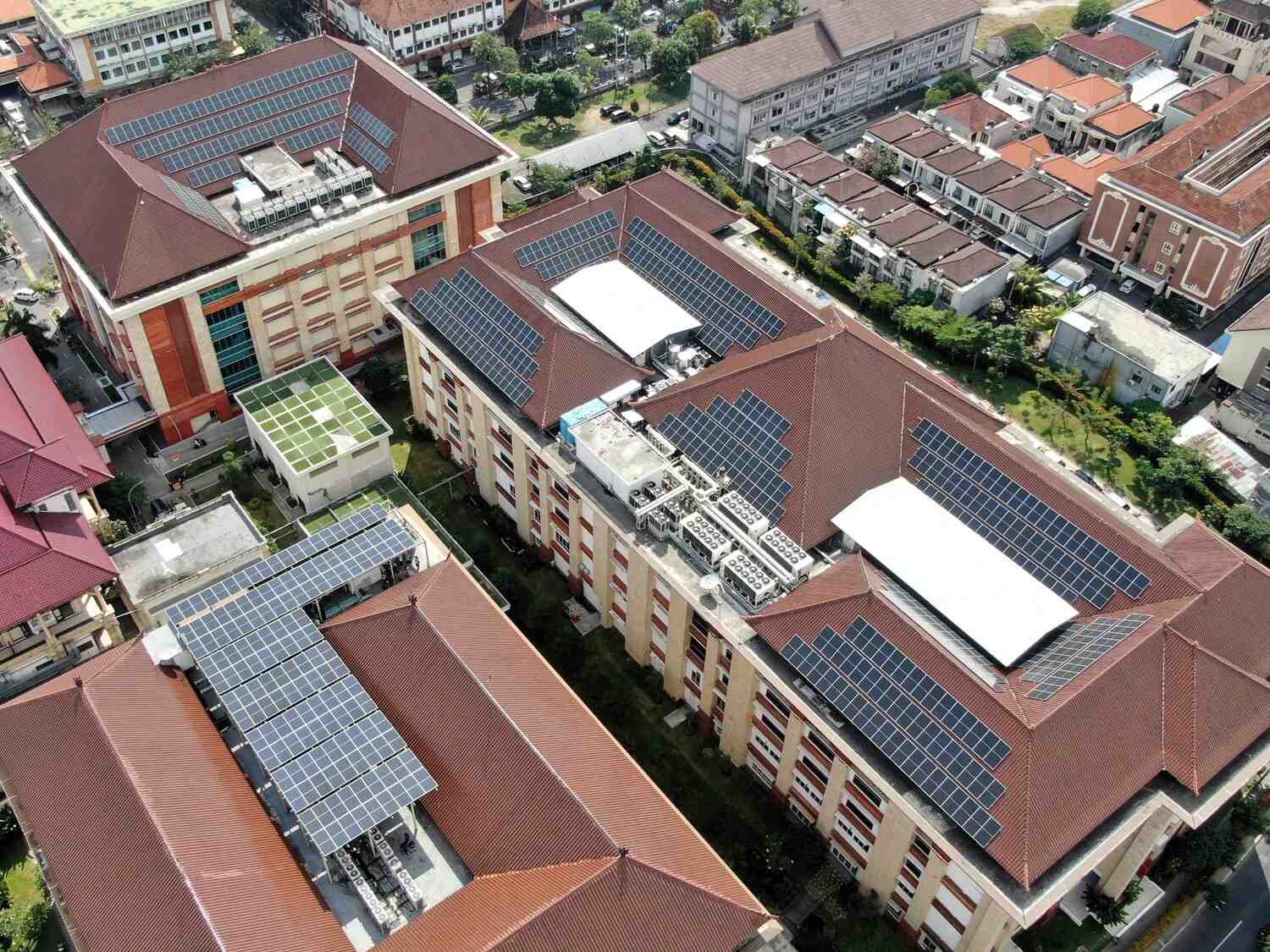
Although Indonesia’s solar energy market continues to grow across rooftop systems, utility-scale solar farms, and floating solar power plants, most critical components, including solar cells and raw materials, are still imported. BRIN believes this creates an opportunity for Indonesia to leapfrog directly into manufacturing next-generation photovoltaic technologies rather than relying on conventional technologies that are gradually being replaced in global markets.
Rosyid said developing domestic SHJ manufacturing capabilities would serve as a strategic foundation for future tandem photovoltaic production, enabling Indonesia to become a competitive producer of high-efficiency solar panels instead of remaining solely a consumer. The research is expected to contribute to the development of a national solar manufacturing roadmap and provide strategic recommendations for policymakers and industry stakeholders to accelerate the establishment of a comprehensive domestic photovoltaic industry.
Through continued research and international collaboration, BRIN aims to support the creation of a resilient national clean energy ecosystem while advancing Indonesia’s green energy independence and generating long-term economic benefits. (*)