Enviro News Asia, Jakarta – The Indonesian Forest Entrepreneurs Association (APHI) has welcomed the issuance of Environment/Environmental Control Agency Ministerial Regulation No. 10 of 2026 on the Carbon Unit Registry System (SRUK), describing it as an important step toward strengthening transparent, credible, and accountable carbon governance in Indonesia.
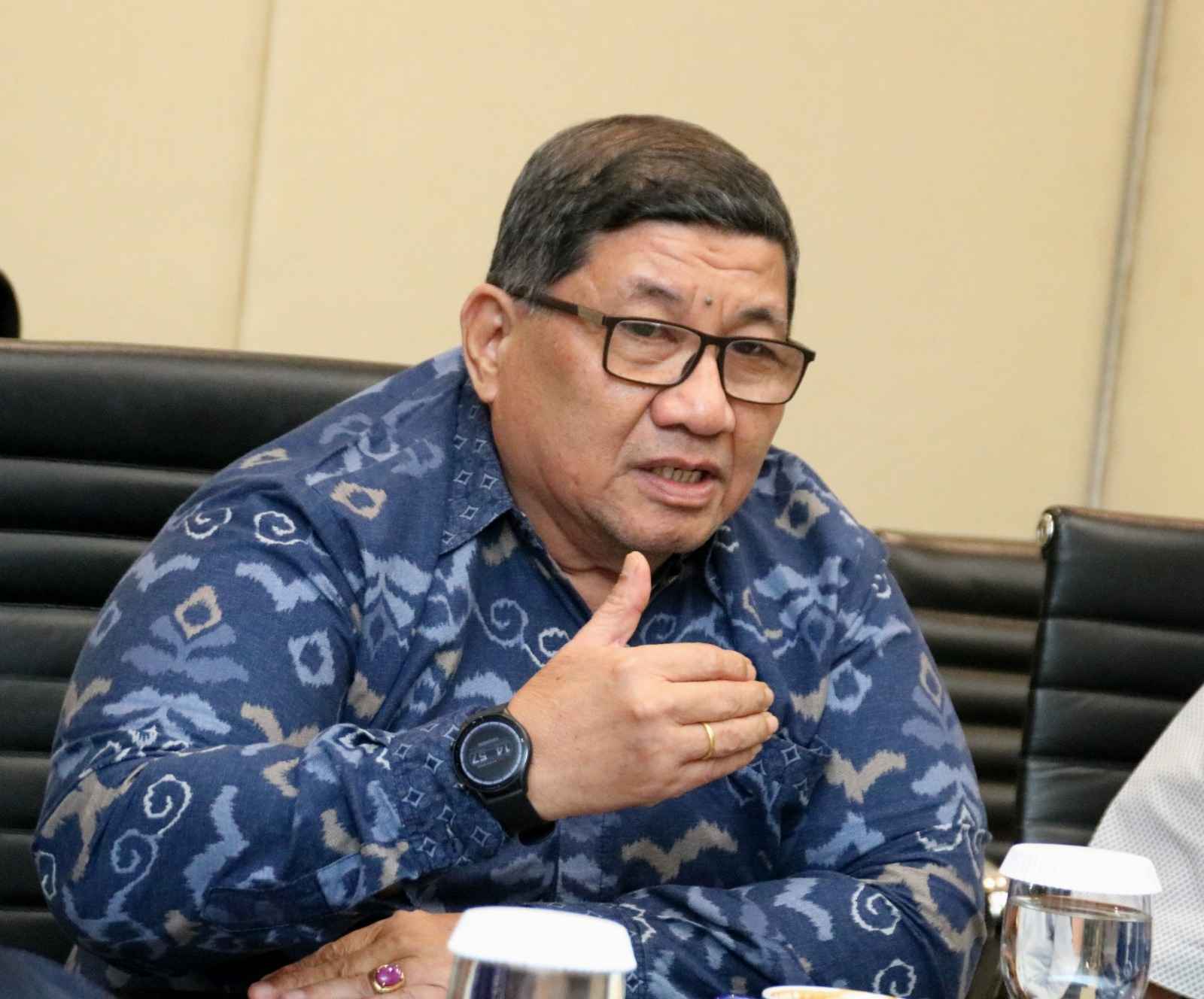
APHI Vice Chairman for Legal Affairs, Public Relations, and Cooperation Erwansyah said the regulation provides greater certainty for business actors, including the forestry sector, in developing carbon economic value activities and carbon trading aligned with Indonesia’s Nationally Determined Contribution (NDC) targets.
“APHI welcomes the issuance of Ministerial Regulation No. 10 of 2026 on SRUK because this regulation serves as an important foundation for ensuring carbon units are recorded transparently, can be traced, and carry strong integrity,” Erwansyah said in Jakarta on Wednesday (7/8/2026).
He said SRUK is strategically significant as a central registry for carbon units and an instrument for preventing double counting, enabling environmental claims for greenhouse gas emission reductions and removals to be managed in a more orderly, measurable, and accountable manner.
Designed as a decentralized, transparent, permanent, and real-time network system, SRUK is expected to improve market confidence in Indonesian carbon units. Its ability to connect with other registries, both national and international, is also considered important for strengthening Indonesia’s position in global carbon trading.
“For the business world, registry certainty is decisive. The carbon market requires trust, and trust can only be built through a system that is clear, transparent, connected, and capable of preventing duplicate claims,” Erwansyah said.
He added that the SRUK regulation also provides a clearer framework for carbon trading implementation, both through greenhouse gas emission trading and offset mechanisms. For international trading, provisions on authorization and corresponding adjustment are seen as an important component to ensure Indonesian carbon transactions remain aligned with national NDC achievement.
Erwansyah said provisions on carbon unit certification in both SPE GRK and non-SPE GRK form also open more flexible space for business actors, with the domestic scheme through SPE GRK and the international scheme through non-SPE GRK available as options as long as they meet validation, verification, recording, and approval requirements from relevant authorities.
“This certification flexibility is important, but must remain within the boundaries of environmental integrity. Carbon units must come from real, measurable, and verified mitigation actions that do not impede the achievement of national climate targets,” he said.
APHI expressed hope that SRUK implementation would be followed by operational technical guidelines that are easy to understand and provide service time certainty for business actors, ensuring carbon projects, including from the forestry sector, can run effectively while delivering benefits for the environment, communities, and the national economy.
Erwansyah affirmed that forestry business actors are in principle ready to support the strengthening of Indonesia’s carbon ecosystem through credible, collaborative, and sustainable governance.
“With increasingly clear regulation, we hope the forestry sector can contribute more optimally to emission reductions, increased carbon absorption, and the development of a carbon market with integrity trusted by both national and international markets,” he said.
Successful SRUK implementation, he added, requires strong synergy among government, business actors, verification institutions, carbon exchanges, and other stakeholders. With transparent, measurable, and high-integrity governance, APHI is confident the forestry sector can become one of the important pillars in supporting the achievement of Indonesia’s NDC targets, strengthening carbon market confidence, and driving sustainable low-carbon economic development. (*)