

Enviro News Asia, Manokwari — The West Papua Regional Commission of the Indonesian Forestry Entrepreneurs Association (APHI) has praised PT Kesatuan Mas Abadi (KMA) for maintaining forest and land fire preparedness through patrols and cooling operations in a savanna area that had previously been affected by fire.
APHI West Papua Regional Commission Chairman Haryoto said comprehensive response measures must continue even after visible flames have been extinguished. Patrols and cooling operations are necessary to ensure that remaining embers or hotspots do not trigger renewed fires or allow them to spread.
“Forest and land fire management does not end when the flames are no longer visible. Patrols and cooling operations must continue comprehensively to ensure there are no embers or hotspots that could trigger a recurrence,” Haryoto said in Manokwari on Sunday (August 30).
He said cooling operations are an important component of post-fire management, particularly in savanna areas where vegetation can burn relatively easily. Dry weather and strong winds can cause fires to reignite if embers remain beneath the surface or in areas that have not been adequately cooled.
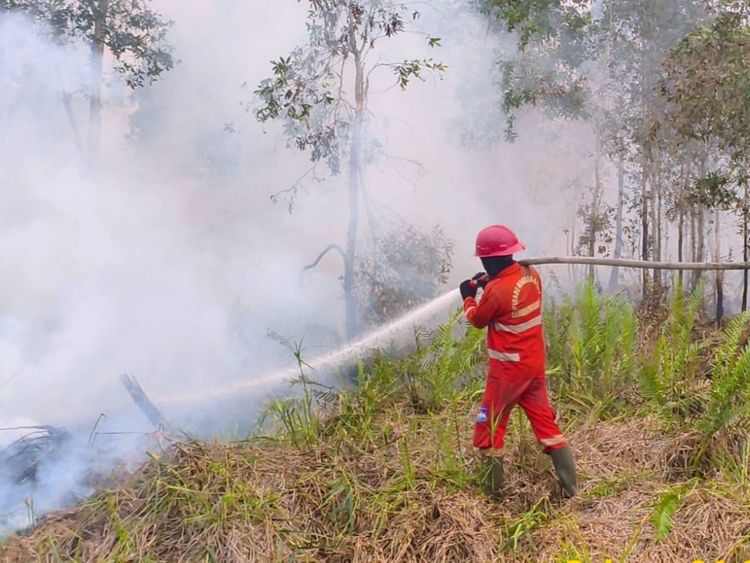
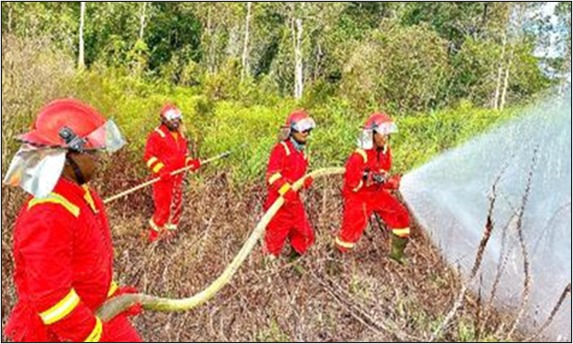
PT Kesatuan Mas Abadi conducted patrol and cooling operations on Friday, August 28, from 8:00 a.m. to 4:45 p.m. Eastern Indonesia Time (WIT). The operation focused on savanna areas that had previously experienced fires.
The company deployed its firefighting personnel with support from Indonesian military personnel assigned under operational control, known as Bawah Kendali Operasi (BKO). The firefighting team was equipped with fire trucks, Kohler water pumps, 1.5-inch and 2.5-inch fire hoses, hose branch connections, nozzles and other supporting equipment.
PT Kesatuan Mas Abadi Camp Manager Hengki F said the patrol was conducted to inspect the entire burned area and ensure that no active flames, smoke or embers remained.
“The team conducted a sweep, inspected areas that could potentially retain embers and carried out cooling operations in locations considered vulnerable. These measures were taken to prevent the fire from reigniting and spreading to surrounding areas,” Hengki said.
He added that all personnel carried out the operation while prioritizing safety and following established fire-management procedures. Field conditions are also being monitored continuously to determine whether additional patrols or cooling operations are required.
“We continue to keep personnel and equipment on standby. If monitoring identifies smoke, embers or indications of a fire hotspot, the team will immediately respond to prevent the fire from developing further,” he said.
APHI West Papua has called on all holders of Forest Utilization Business Licenses (PBPH) to further strengthen patrols, early detection systems, firefighting team readiness, as well as the availability of firefighting equipment and water sources during periods of elevated fire risk.
The organization also emphasized the importance of coordination among companies, local governments, the Indonesian military and police, Manggala Agni firefighting units and local communities. Such cooperation is expected to ensure that any indication of forest and land fires can be detected and addressed at the earliest possible stage, preventing incidents from developing into larger-scale fires. (*)