Enviro News Asia, South Tangerang – Indonesia’s National Research and Innovation Agency (BRIN) has partnered with the University Social Responsibility (USR) program of Taiwan’s Feng Chia University (FCU) and the Asia-Pacific Economic Cooperation–Research Center for Advanced Biohydrogen Technology (APEC-ACABT) to strengthen low-carbon eco-village development through bioenergy and circular economy initiatives.
The collaboration was carried out under the 2026 Green Synergy Program: Green Synergy for Low-carbon Eco Villages in Indonesia, held at the B.J. Habibie Science and Technology Area (KST) in Serpong on July 29. The program aims to build institutional and technical capacity for developing sustainable rural communities while supporting Indonesia’s transition toward renewable energy.
Ratih Damayanti, Director of Environmental, Maritime, Natural Resources, and Nuclear Policy at BRIN, said the Green Synergy initiative is part of APEC’s Policy Partnership on Science, Technology and Innovation (PPSTI). She noted that the program offers a capacity-building model that can be replicated by BRIN and Regional Research and Innovation Agencies (BRIDA).
According to Ratih, the initiative leverages Indonesia’s strengths in agriculture and renewable energy, particularly bioenergy, to promote integrated low-carbon community development.
The program was delivered through a Training of Trainers (ToT) approach covering four key topics: energy-based circular economy, carbon credit assessment, electrical assessment, and cost-benefit analysis. Participants are expected to become trainers capable of adapting eco-village concepts to local conditions across Indonesia.
Chyi-How Lay of Feng Chia University and APEC-ACABT emphasized that the Green Synergy Program extends beyond scientific research by encouraging researchers to apply technology directly to solve real-world community challenges.
He added that APEC-ACABT has established partnerships with several countries, including Italy, Thailand, Malaysia, and Indonesia. In Indonesia, the collaboration is implemented with Sam Ratulangi University in Manado through field projects using two-phase HyMeTek technology to convert livestock and slaughterhouse waste into alternative electricity.
Puji Lestari, Head of BRIN’s Research Organization for Agriculture and Food, said Indonesia must accelerate the integration of renewable energy with agricultural development. She noted that national energy demand is increasing by around seven percent annually, while more than 90 percent of the country’s energy supply still depends on fossil fuels.
She stressed the importance of strengthening circular economy principles and achieving zero-waste agricultural systems to reduce carbon emissions while improving energy independence.
Puji also highlighted Indonesia’s commitments under its Nationally Determined Contribution (NDC), saying they provide significant opportunities to develop eco-villages based on local resources. Agricultural waste and biomass, she said, can be transformed into renewable energy to support food security and energy self-sufficiency in rural communities.
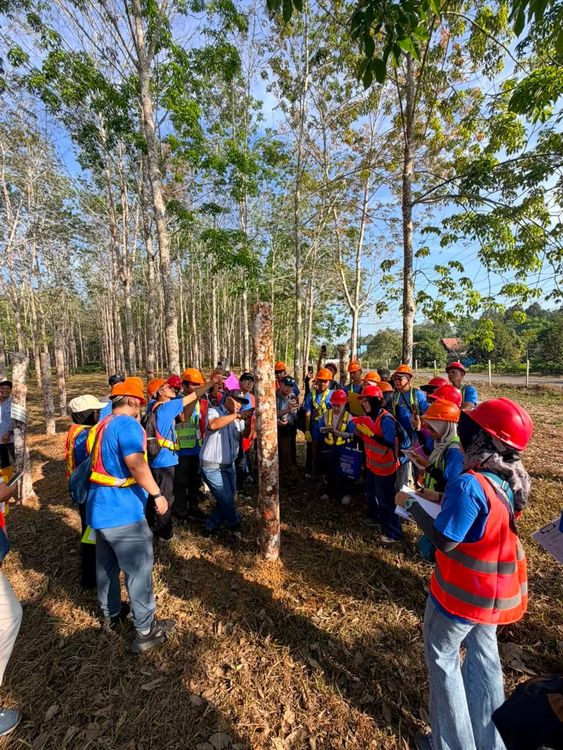
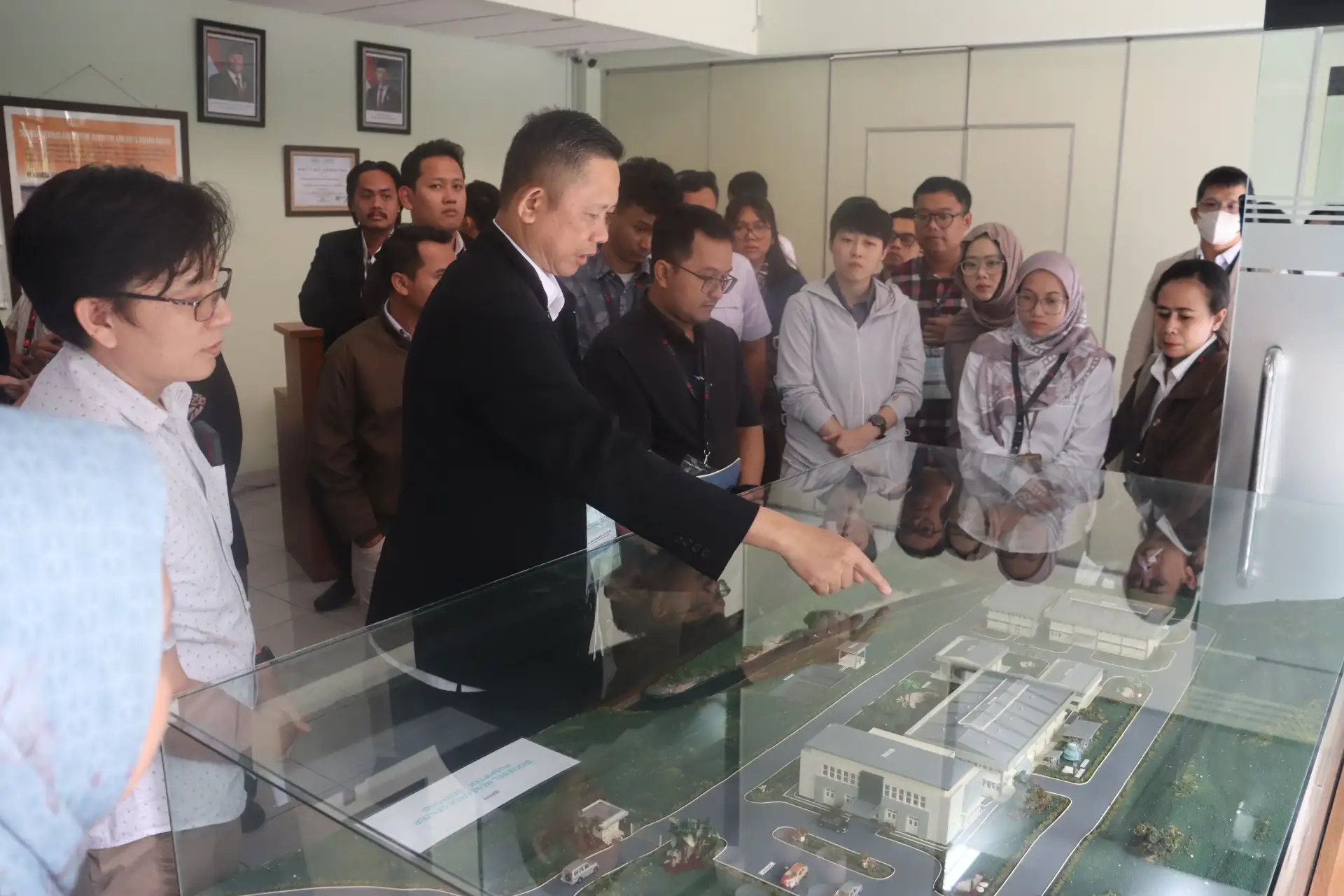
The two-day training program brought together 30 participants from research institutions, government agencies, and universities across Indonesia. Participants also visited several research facilities at KST B.J. Habibie, including biodiesel production, gasification, and pyrolysis facilities, to observe renewable energy technologies in practice. (*)