Enviro News Asia, South Tangerang – The National Research and Innovation Agency (BRIN) has strengthened its push to bring renewable energy innovations to market through a research and technology development collaboration with PT Comestoarra Bentarra Noesantarra (Comestoarra), focusing on verifying, validating, and refining mini gasifier technology to meet technical standards and prepare it for wider deployment in the national energy sector.
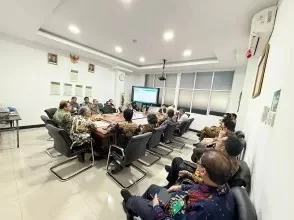
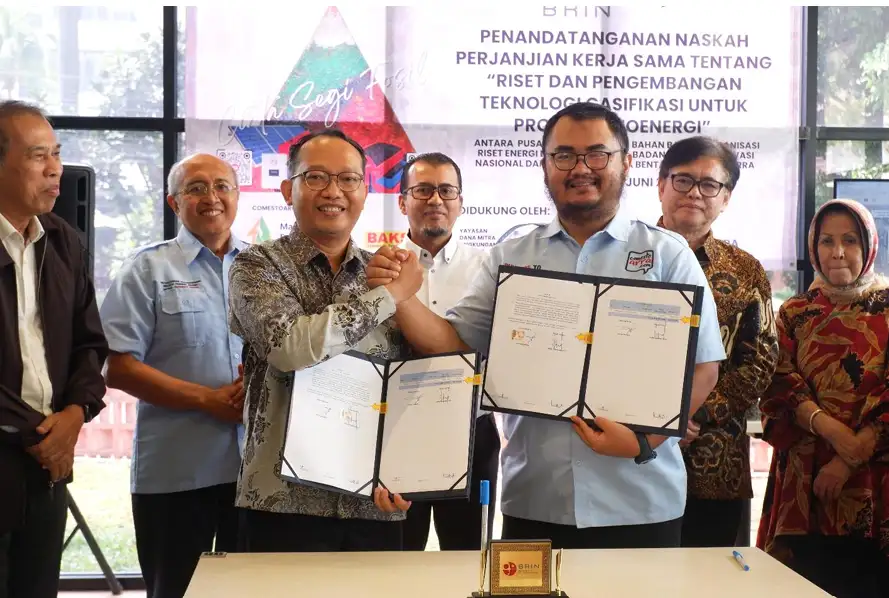
The collaboration was formalized through the signing of a Cooperation Agreement between BRIN’s Center for Fuel Technology Research Head Jan Setiawan and Comestoarra’s leader Arief Noerhidayat on Friday (6/12). The agreement follows a memorandum of understanding signed by both parties on October 3, 2025, covering research, innovation, and the application of research findings in information technology, new and renewable energy, and waste-to-energy management.
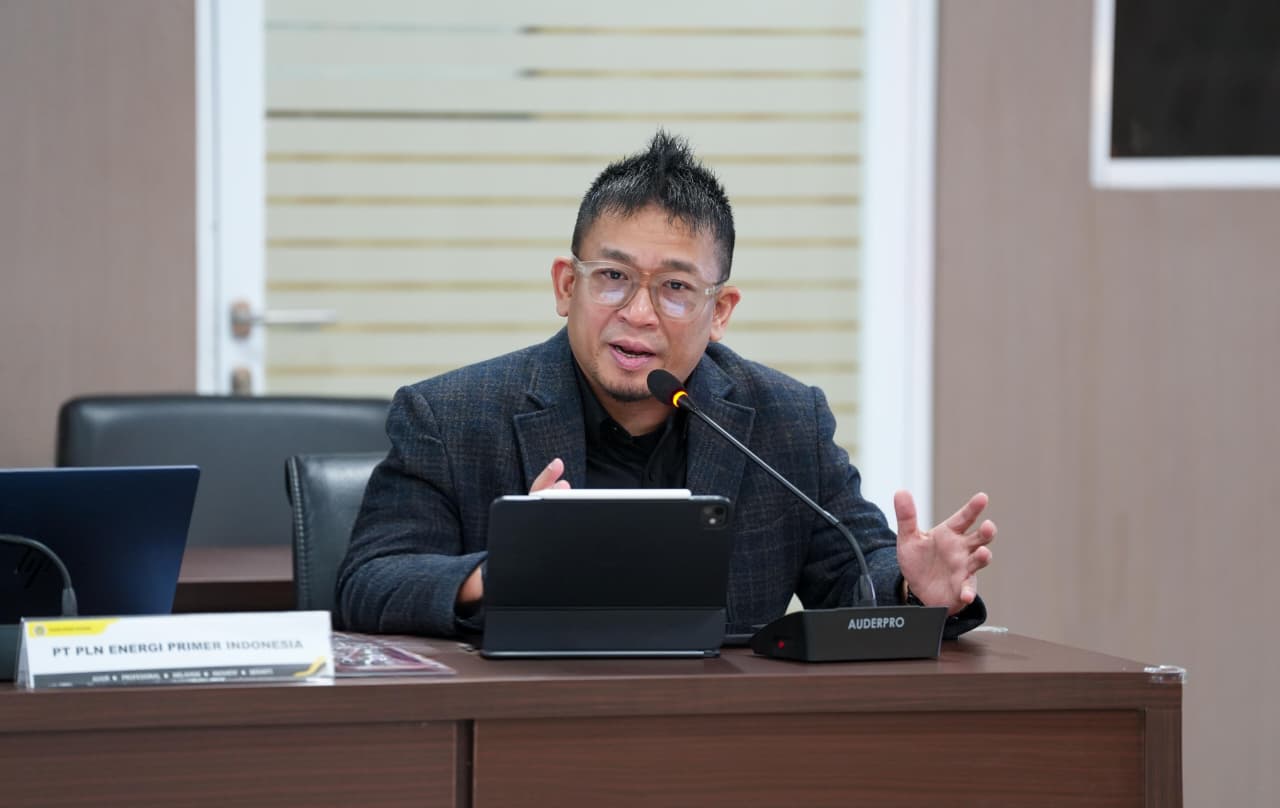
Jan Setiawan said BRIN’s involvement aims to ensure the mini gasifier technology delivers reliable performance, meets technical standards, and is ready for replication by domestic industry.
“BRIN will provide scientific and technical support through the verification, validation, and refinement of the mini gasifier technology so it can become a national product ready for widespread use. This is part of BRIN’s commitment to transforming innovation outputs into technology that generates economic added value and real benefits for the public,” he said.
The mini gasifier technology uses biomass pellets as a renewable fuel to generate electrical energy, offering potential to reduce dependence on fossil fuels. Its development is considered relevant to the government’s de-dieselization program, particularly in remote, outermost, and island regions that still rely on oil-fueled power plants.
Jan further explained that the system does not rely solely on biomass but has also been integrated with solar panels and battery energy storage, resulting in a hybrid energy system that is more efficient and reliable in meeting community energy needs.
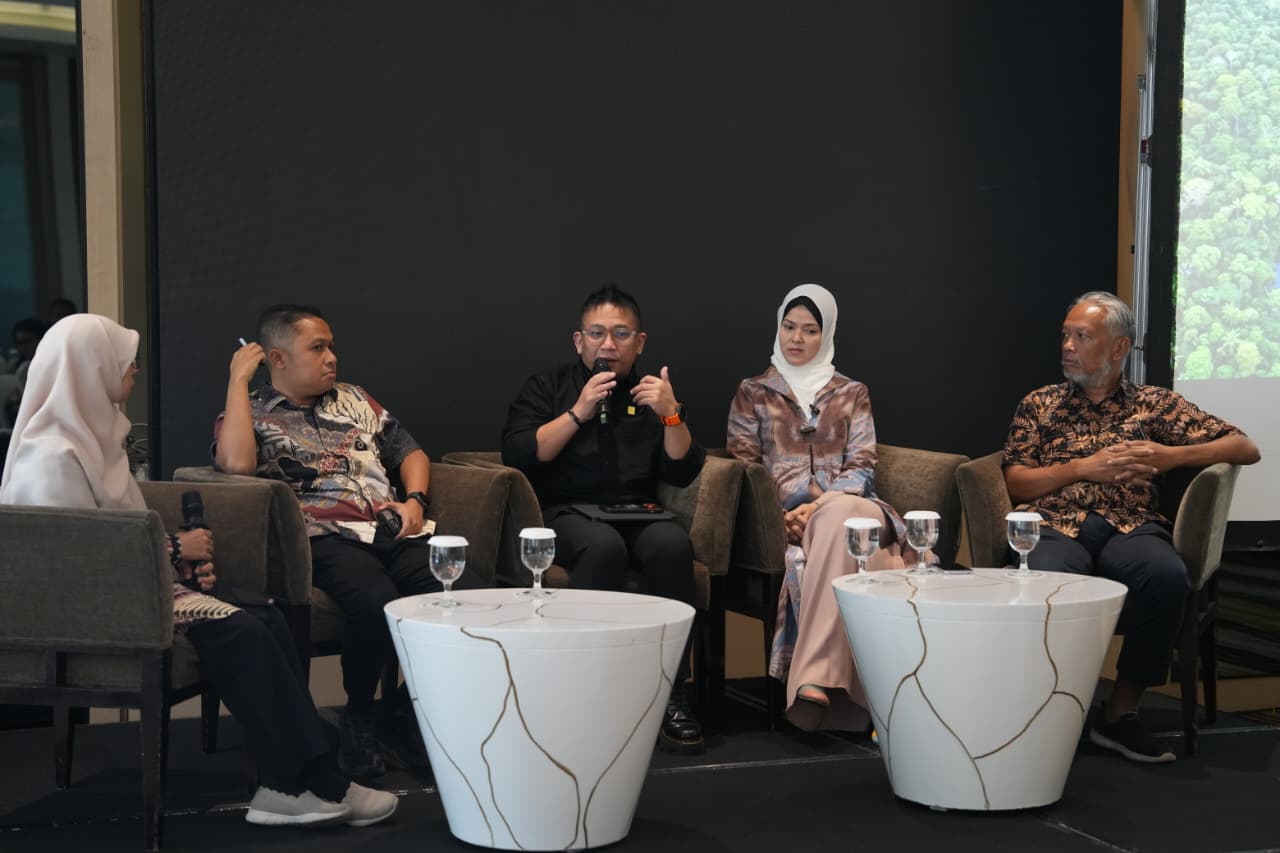
The technology’s potential extends beyond supporting the energy transition, also opening opportunities to utilize biomass waste as a value-added energy source. Chairman of the Indonesian Biomass Energy Society (MEBI) Milton Pakpahan said the biomass-solar hybrid energy concept developed by Comestoarra could serve as an alternative communal-scale energy supply, particularly in remote and island areas.
A similar view was expressed by National Energy Council Member for Technology Unggul Priyanto, who said Comestoarra’s innovation offers added value over conventional gasification technology.
“Gasification technology has been proven technically. The advantage of Comestoarra’s mini gasifier lies in its portable design and ability to integrate with solar energy within a single system. Beyond generating electricity, the technology also has the potential to serve as an alternative to LPG for household cooking needs,” Unggul said.
Support for the technology’s development also came from the Directorate General of New, Renewable Energy and Energy Conservation (EBTKE). Director of New Energy Senda Hurmuzan Kanam said the use of biomass waste and residues through gasification technology aligns with government efforts to expand the use of new and renewable energy while addressing waste management challenges.
Jan reaffirmed that the BRIN-Comestoarra collaboration is designed to address two national challenges simultaneously: the provision of clean energy and the management of biomass waste.
“Turning biomass waste into an energy source can help reduce waste accumulation, curb fossil fuel use, and expand energy access for communities in remote areas,” Jan said.
He added that the collaboration demonstrates how synergy among research institutions, businesses, government, and industry can accelerate the emergence of national innovations with a direct impact on sustainable development, energy resilience, and improved community welfare.
Comestoarra’s mini gasifier builds on earlier work through the company’s Source-Based Waste Processing Technology (TOSS), which converts organic waste and biomass residues into renewable fuel pellets — an innovation that has previously received technical and engineering design support from the government as part of efforts to build a sustainable waste management system. (*)