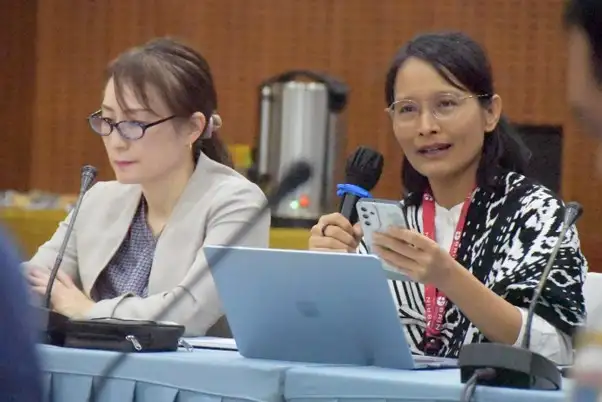


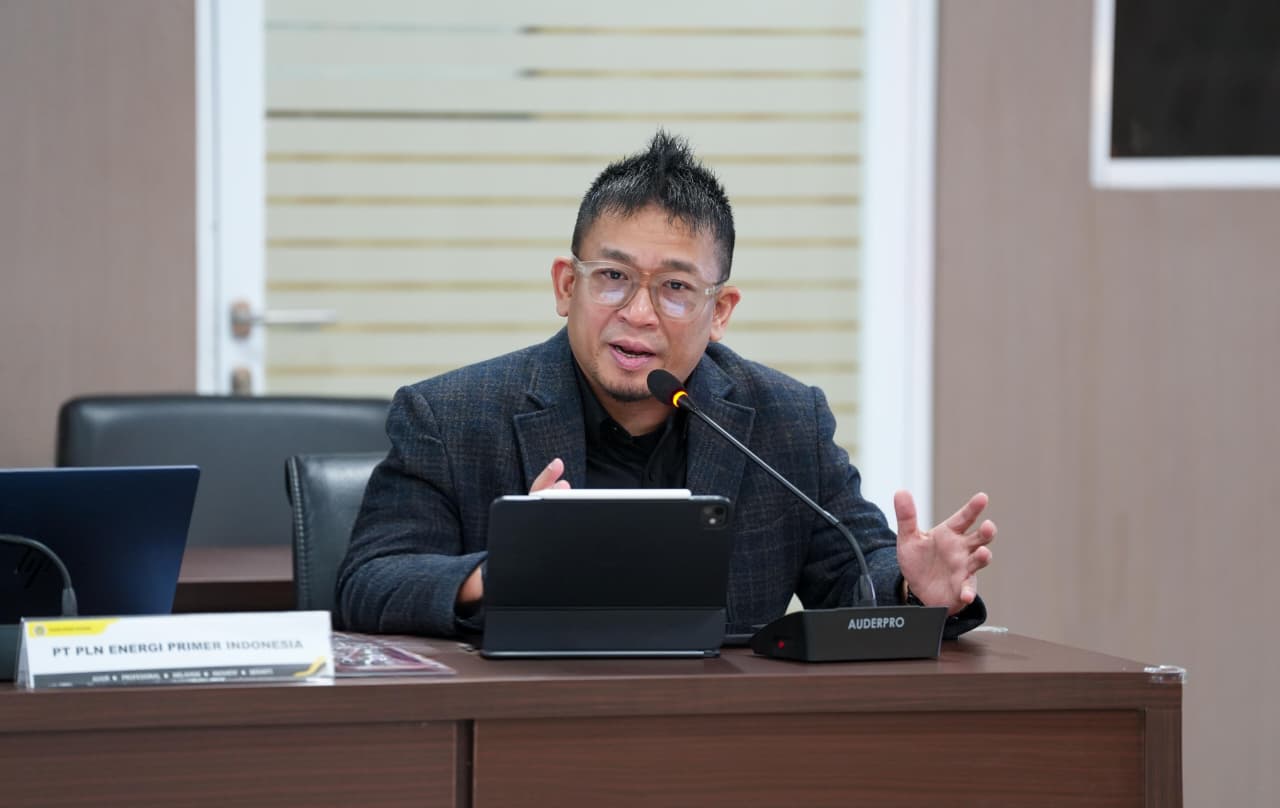
Enviro News Asia, Jakarta – PT PLN Energi Primer Indonesia (PLN EPI) has affirmed that bioenergy will serve as one of the key pillars of national energy security while supporting the country’s Net Zero Emissions (NZE) 2060 target. The commitment was conveyed by PLN EPI Biomass Director Hokkop Situngkir during an audience with the National Energy Council (DEN).
Hokkop explained that Indonesia holds biomass potential from agricultural waste of around 80 million tonnes per year, yet only around 20 million tonnes are currently utilized, with the bulk going to exports and industry rather than domestic power generation.
“In 2025, PLN absorbed only around 2.35 million tonnes of biomass for power plant needs, while biomass exports had already reached around 8.5 million tonnes, with the rest going to the industrial sector. This shows the national bioenergy potential is still enormous and can be further optimized for domestic benefit,” Hokkop said.
DEN Member Johni Jonathan Numberi said biomass will play an important role in the national energy mix on the path to NZE 2060, noting that the government through Government Regulation No. 40 of 2025 has established new and renewable energy as the backbone of the future energy system, with biomass projected to grow alongside solar energy and natural gas.
“Our coal-fired power plants generally have long economic operating lifespans. That is why biomass cofiring is an important step to reduce emissions while maintaining the reliability of national electricity supply,” Johni said.
PLN EPI is targeting biomass absorption of 10 million tonnes by 2030, up from a target of around 3.65 million tonnes in 2026. Achieving this target is projected to generate economic value of nearly Rp 4 trillion and reduce emissions by around 11 million tonnes of carbon equivalent.
Beyond biomass, PLN EPI is accelerating the development of Compressed Biomethane Gas (CBG) derived from Palm Oil Mill Effluent (POME). Indonesia has nearly 3,000 palm oil mills generating around 130 million metric tonnes of POME annually. Hokkop said trials using CBG at one of PT Nusantara Power’s plants have shown promising results.
“We hope that just as biomass can replace around 10 percent of energy needs in coal-fired power plants, CBG can also replace around 10 percent of energy needs in gas-fired power plants,” he said.
DEN stressed that bioenergy development requires cross-sectoral policy support, with Johni noting that the energy sector cannot be resolved by the Ministry of Energy and Mineral Resources alone, as it involves agriculture, forestry, industry, and finance ministries.
PLN EPI is also developing biohydrogen as part of its long-term strategy, citing growing global demand for clean energy and Indonesia’s abundant biomass and organic waste resources as key potential sources.
The development of bioenergy also carries significant economic benefits for communities. Based on PLN EPI calculations, every 100,000 tonnes of biomass utilized per year can involve around 500 farmers and 18 farmer groups while increasing community income by up to Rp 450,000 per month. PLN EPI has already developed biomass production facilities in Tasikmalaya and Ciamis through collaboration with farmers, cooperatives, village-owned enterprises (BUMDes), micro and small enterprises, regional enterprises, and private partners.
Overall, PLN EPI estimates that bioenergy development through 2030 could generate revenue of around Rp 5.1 trillion, additional state revenue of Rp 670 billion, utilization of up to 20 million tonnes of waste, and the creation of around 150,000 green jobs.
Despite its strong prospects, bioenergy development still faces challenges, particularly around price certainty and industry ecosystem development. PLN EPI has proposed the establishment of an Indonesian Bioenergy Index (IBI) as a national bioenergy price reference to stabilize the market and boost investor confidence.
Closing the meeting, DEN Chairman Satya Widya Yudha outlined three follow-up conclusions to accelerate national bioenergy industry development. DEN will push for cross-sectoral policy support, including urging the Ministry of Energy to study the establishment of an Indonesian Bioenergy Index independent of fossil fuel prices, mandatory biomass cofiring at coal plants, and the development of quality standards, certification, and traceability for bioenergy products. DEN will also facilitate the synchronization of energy and biomass logistics infrastructure development in key production areas, and will establish a strategic cross-sectoral coordination forum from upstream to downstream to align policies and oversee their implementation. (*)