Enviro News Asia, South Tanggerang — Indonesia is seeking to expand the palm oil industry beyond crude palm oil (CPO) production by strengthening downstream processing, developing higher-value products and utilizing palm oil waste and biomass for food, industrial and sustainable energy applications.
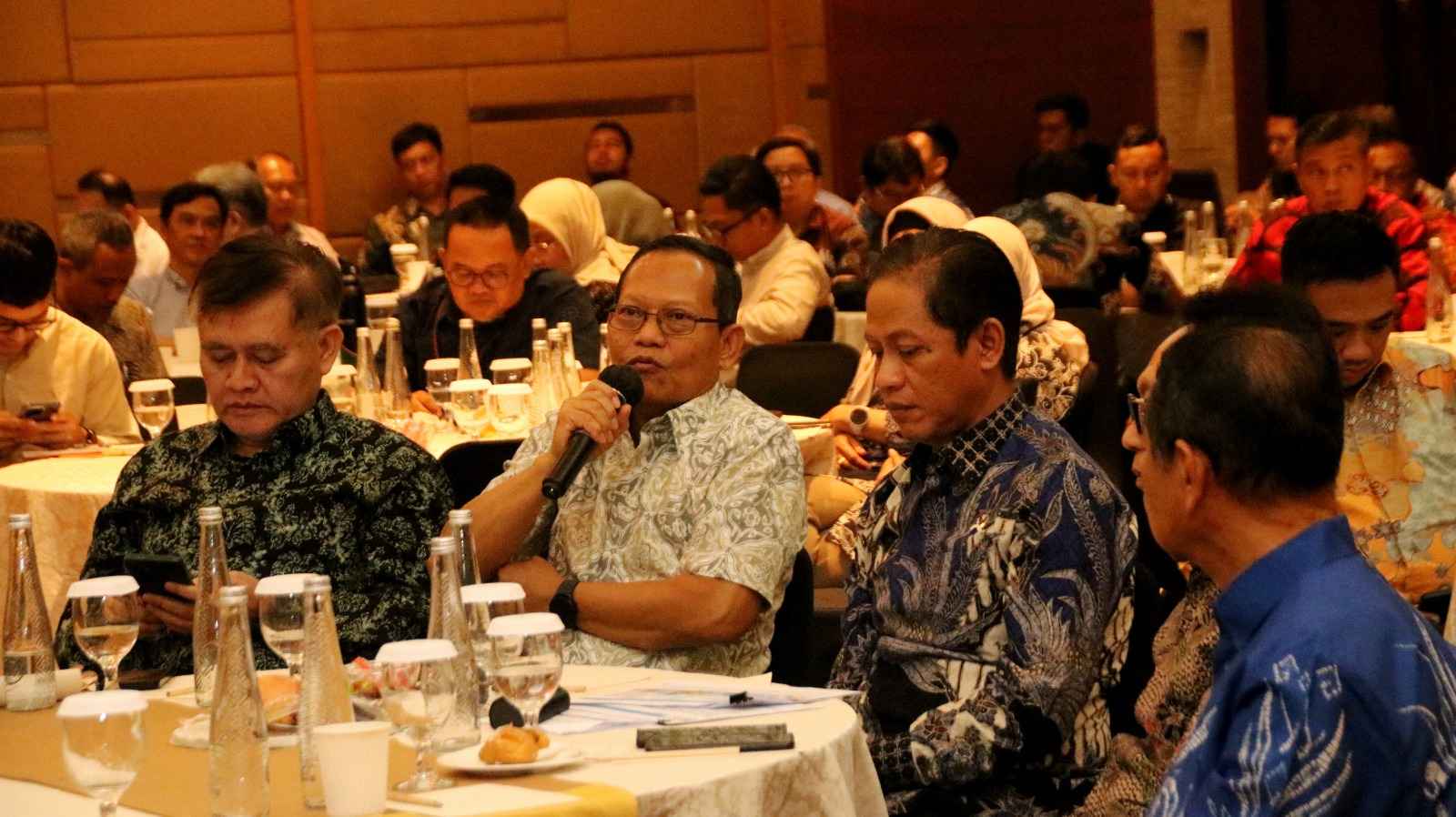
The National Research and Innovation Agency (BRIN) mapped the value chain, downstream opportunities and strategic investment priorities of the palm oil industry during a focus group discussion (FGD) held at the B.J. Habibie Science and Technology Park in Serpong, South Tangerang, on September 3, 2026.
The meeting brought together BRIN, smallholder farmer associations, industry representatives and state-owned enterprises to assess the industry’s needs, ranging from plantation productivity and replanting to downstream products, waste utilization and sustainable aviation fuel (SAF).
BRIN’s Head of the Research Center for Sustainable Industrial and Manufacturing Systems, Nugroho Adi Sasongko, said the discussion was intended to obtain direct input from industry players on the use of research and innovation in current industrial activities.
The findings will support the development of BRIN’s NAVIGASI national dashboard, or Nusantara Analytic for Valuation, Innovation, Growth and Sovereign Industries. The platform is being prepared to measure the use of research, innovation and downstream technologies across Indonesia’s industrial system and provide data to support policymaking and economic growth.
Smallholder productivity was among the key issues discussed. Gulat Manurung, chairman of the Indonesian Palm Oil Farmers Association (APKASINDO), said smallholder plantations currently produce around 1.7–2 tons of CPO per hectare annually.
He said the People’s Palm Oil Replanting Program (PSR) could raise productivity to between 3 and 6 tons of CPO per hectare annually. Greater productivity, he added, could strengthen the contribution of smallholder plantations to Indonesia’s food and energy security.
However, replanting challenges and land legality remain important issues for smallholder plantations.
The industry also called for research priorities to be more closely aligned with actual plantation and processing needs. Timbas Prasyad Ginting, chairman of the North Sumatra chapter of the Indonesian Palm Oil Association (GAPKI), urged researchers to work directly with industry to identify problems requiring technological solutions.
He also highlighted the potential of satellite imagery, drones and smart plantation technologies to improve plantation data and management.
Downstream processing was identified as another major opportunity for increasing the industry’s economic value. Muhammad Ansori Nasution, head of the Project Management Office Downstream Division at PT Perkebunan Nusantara IV’s PalmCo, said the company was seeking a better balance between upstream and downstream activities through 2029.
Its downstream products include cooking oil, margarine, biodiesel and cocoa butter substitute-based products. Palm oil residues are also being developed into biogas, compressed biogas (CBG), syngas and biochar.
Ansori said palm oil waste could become a source of energy and additional economic value rather than remaining a disposal burden, while supporting Indonesia’s decarbonization goals.
Another strategic opportunity discussed was the use of palm oil-derived materials for sustainable aviation fuel. Sahkundiyar, Lead Specialist for Bioenergy and Biofuel at Pertamina’s Downstream Subholding, said aviation remains one of the more difficult sectors to decarbonize, making SAF an important pathway for reducing emissions.
Pertamina has commercially produced SAF at its Cilacap refinery using used cooking oil (UCO). The company is also exploring additional feedstocks, including palm oil mill effluent (POME) and other palm oil by-products.
Indonesia’s large palm biomass resources could give the country a significant role in the global SAF supply chain. However, participants emphasized that this opportunity depends on meeting international sustainability requirements throughout the supply chain.
The BRIN-led initiative therefore seeks to connect research and innovation with industrial needs, while accelerating palm oil downstreaming and expanding the sector’s contribution to food security, industrial development, energy security and decarbonization. (*)