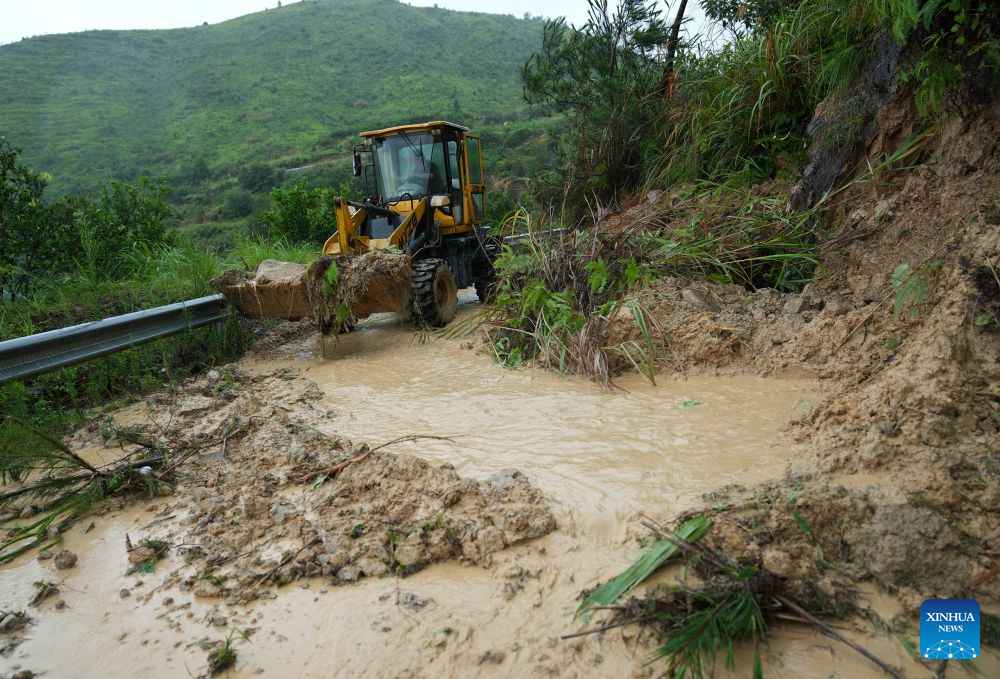


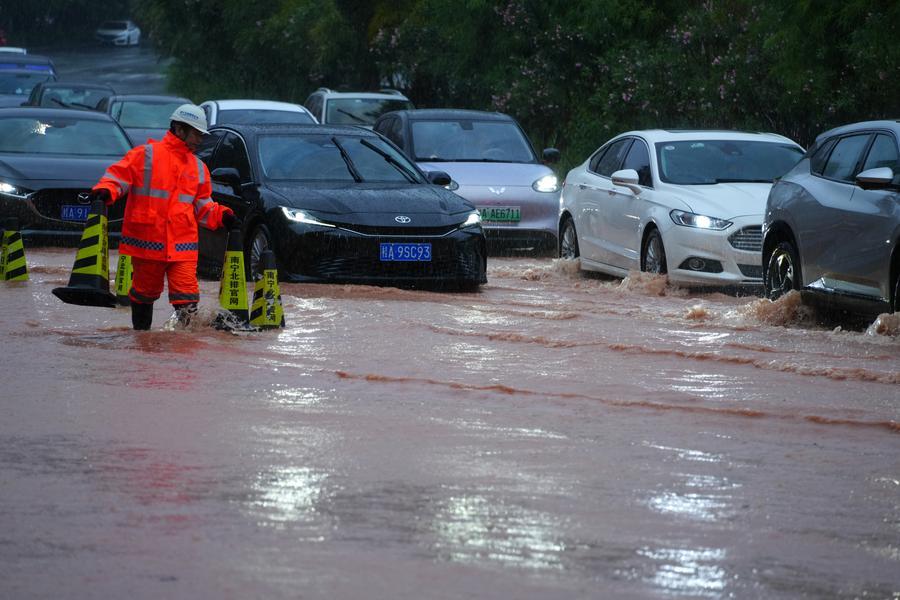
Enviro News Asia, Beijing – China has allocated 150,000 disaster relief items to the Guangxi Zhuang autonomous region as relief efforts continue following rainstorm-triggered floods affecting the regional capital Nanning and areas including Guigang, the Ministry of Emergency Management (MEM) announced on Monday.
The supplies, including tents, folding beds, summer quilts, summer clothing, and family emergency kits, were jointly allocated by the office of the national commission for disaster prevention, reduction and relief, the MEM, and the National Food and Strategic Reserves Administration. An emergency supply mechanism involving government agencies and social organizations has also been activated, with relief groups and charitable foundations coordinating donations of 5,000 family relief kits, 20,000 emergency lighting devices, and more than 120,000 items including food, drinking water, and daily necessities.
Parts of Guangxi have experienced multiple geological disasters since July 3, triggered by Typhoon Maysak, the tenth typhoon of the year. Heavy to extremely heavy rainstorms are forecast across parts of Guangxi from Monday to Friday, with high risks of further geological disasters in some areas, making disaster prevention and response work particularly challenging.
The MEM on Monday upgraded the national geological disaster emergency response for Guangxi from Level IV to Level III. On the same day, China’s Ministry of Water Resources upgraded its flood-control emergency response for the region from Level III to Level II. Water levels at 53 rivers in Guangxi exceeded warning levels between 8 a.m. Sunday and 8 a.m. Monday, with four small and medium-sized rivers recording their largest floods since meteorological records began. China operates a four-tier emergency response system, with Level I being the most severe. (*)