Enviro News Asia, Jakarta — Vice Speaker of the Indonesian People’s Consultative Assembly (MPR RI) Eddy Soeparno welcomes Chinese People’s Political Consultative Conference (CPPCC) Chairman Wang Huning upon his arrival at Soekarno–Hatta International Airport, marking the start of a series of high-level engagements between Indonesia and China. Ambassador of Indonesia to China Djauhari Oratmangoen and Chinese Ambassador to Indonesia Wang Lutong also attend the reception.
Eddy expresses his welcome through his official social media account, emphasizing that Wang’s visit is expected to strengthen strategic and mutually beneficial cooperation between both nations across multiple sectors. He highlights that the agenda includes meetings with leaders of the DPR, MPR, DPD, and President Prabowo Subianto.
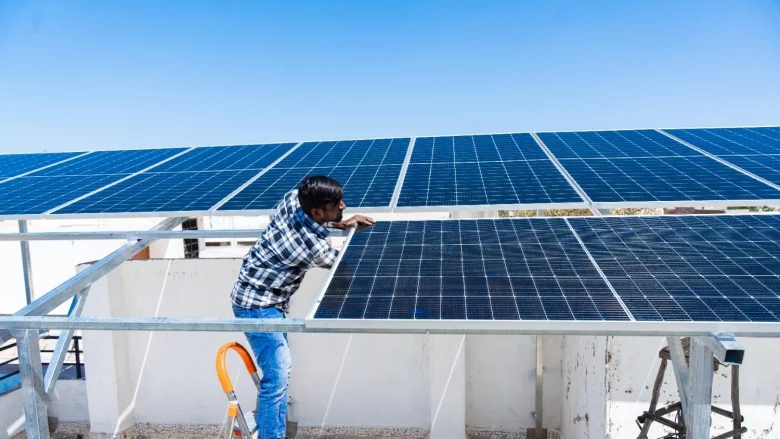
He states that Indonesia hopes to advance collaboration with China in accelerating the transition toward renewable energy. China, he notes, currently operates the world’s largest renewable energy system, with major investments in solar and wind power despite its continued reliance on coal. China’s renewable capacity is projected to reach 793 GW in 2025, an 11 percent increase from 717 GW in 2024.
Eddy affirms that China’s achievements align with President Prabowo’s commitment to speeding up Indonesia’s energy transition to meet the national decarbonization target of 2060 or earlier. He views this cooperation as an opportunity for joint policy development and large-scale investment in renewable energy infrastructure in Indonesia, which could generate extensive green jobs.
He further underscores that Wang’s meeting with President Prabowo is likely to enhance broader Indonesia–China economic cooperation, particularly within the BRICS framework. Eddy stresses that Indonesia must seize emerging opportunities to expand export markets, diversify trade commodities, and strengthen its economic positioning among emerging economies. (*)