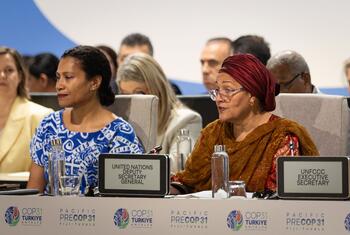
Enviro News Asia, Belém – The upcoming COP30 conference in Belém, Brazil, is set to become a defining moment linking global climate action, human rights, and the financial sector. The event follows the landmark ruling by the International Court of Justice (ICJ) in July 2025, which declared that the right to a clean, healthy, and sustainable environment is a fundamental human right. This decision compels nations and financial institutions to integrate human rights considerations into climate strategies, setting a new global precedent for responsibility and opportunity.
The ICJ’s conclusions reaffirm the 2022 United Nations General Assembly resolution that recognized environmental health as essential for the enjoyment of all other human rights. Under this new interpretation, States that are party to international human rights treaties must now address climate change as part of their legal obligations. As COP30 convenes in Brazil, discussions will focus on how governments and private sectors can jointly advance this integration, turning legal and moral imperatives into actionable investment and innovation.
This shift presents a dual opportunity: while States face increased obligations to comply with environmental and human rights standards, financial institutions are positioned to drive transformative change. By financing mitigation and adaptation measures, banks, insurers, and investors can play a critical role in supporting sustainable development while unlocking new business potential. The evolving regulatory landscape may also create pressure on States and private actors to avoid liability for inaction—thereby accelerating climate-conscious and rights-based investment.
Across the financial world, this transformation is already underway. The finance sector is progressively embedding human rights into climate risk management, recognizing that environmental degradation and social instability are material financial risks. Regulators, investors, and consumers are increasingly demanding transparency and responsibility, urging financial institutions to take proactive steps.
Tools such as the UNEP FI Human Rights Toolkit are helping banks and insurers incorporate human rights due diligence into their standard operations. Many are already demonstrating leadership through innovation. Triodos Bank UK, for instance, provided £3 million in senior debt and £500,000 in community bonds to transition a solar farm to full community ownership, generating renewable electricity for over 800 homes annually. Meanwhile, BNP Paribas’s My Sustainable Home initiative supports the decarbonization of residential properties by helping customers access grants, subsidies, and affordable financing.
Insurers are also responding creatively to the human impacts of climate change. In the Philippines, Pioneer Life Insurance launched MediCash – Dengue Insurance, helping families mitigate financial shocks from climate-related disease outbreaks. In Africa, Hollard Zambia introduced an affordable insurance package for micro-business owners, enhancing climate resilience for less than USD 2 per month.
At the heart of this transformation is the Just Transition framework—a principle emphasizing that the shift to a greener economy must also promote equity and social well-being. This means channeling capital toward sustainable industries while protecting workers, creating new employment opportunities, and ensuring that vulnerable communities benefit from cleaner environments and economic inclusion.
COP30 thus stands as a critical moment for redefining how climate, human rights, and finance intersect. As governments and financial institutions converge in Belém, the discussions will highlight how collaboration, innovation, and accountability can jointly secure a livable planet for future generations. The challenge ahead is not merely environmental—it is deeply social and economic. By recognizing the intrinsic link between climate justice and human rights, COP30 offers a blueprint for a global economy rooted in sustainability, equality, and shared prosperity. (*)