Enviro News Asia, Antalya — The United Nations Environment Programme (UNEP) is urging countries to accelerate the implementation of their climate commitments at the 31st UN Climate Change Conference (COP31), taking place in Antalya, Türkiye, from November 9 to 20, 2026. The world is not short of ideas to address the climate crisis, but continues to face significant implementation gaps. COP31’s success should therefore be measured by how quickly solutions are put into practice and the benefits they deliver to communities, rather than by political agreements alone.
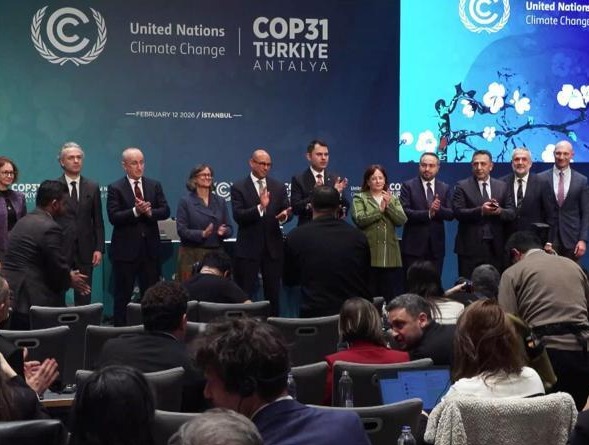
The conference, held at the ANFAŞ Antalya Expo Center, involves 197 parties to the United Nations Framework Convention on Climate Change (UNFCCC), comprising 196 countries and the European Union. Around 100,000 participants are expected to attend the conference. A total of 102 leaders from 95 countries and seven international organizations are scheduled to take part. They include 37 heads of state and 35 heads of government. The high-level leaders’ meeting is scheduled for November 11–12, 2026.
UNEP Executive Director Inger Andersen said that every fraction of a degree of avoided warming would bring benefits to people and the environment.
“Every fraction of a degree of warming avoided will save lives, protect ecosystems, and reduce economic losses. There is no good outcome if we remain above 1.5 degrees Celsius. Now is the time to strengthen climate action, not give up,” she said in a UNEP statement on November 10, 2026.
UNFCCC Executive Secretary Simon Stiell also urged countries to turn global targets into concrete action. In his COP31 opening address, he said, “The progress made remains far from sufficient and has not been fair.”
According to Stiell, COP31 must accelerate the implementation of solutions, including expanding renewable energy capacity, strengthening electricity grids, increasing adaptation finance, and reducing methane emissions, particularly from the oil, gas, and waste sectors. He noted that around 90 percent of large-scale renewable energy projects are now cheaper than fossil fuel alternatives.
UNEP has identified several priorities for accelerating climate action. These include reducing methane emissions and non-carbon dioxide super pollutants, strengthening the resilience of cities and communities, and developing sustainable cooling systems to address extreme heat.
The agency also supports the Zero Waste initiative to reduce food waste and methane emissions from landfills. In the building sector, UNEP is backing a target to reduce energy intensity by at least 25 percent by 2035 through building efficiency improvements and more environmentally friendly cooling technologies.
UNEP Climate Change Division Director Martin Krause previously warned that reducing methane emissions is one of the measures capable of delivering relatively rapid results.
“Methane emissions make a major contribution to global warming, and we have many solutions to curb and reduce them across the fossil fuel, waste management, and agricultural sectors,” he told Anadolu on November 5, 2026.
Beyond emissions reductions, UNEP is promoting increased financing and technology support for developing countries to help translate their Nationally Determined Contributions (NDCs) into projects that are ready for financing and implementation.
Stiell stressed that climate finance must become more accessible, be delivered more quickly, and be distributed more fairly.
“We have made commitments. Now we must deliver on them,” he said. (*)