Enviro News Asia, Bandung — Indonesia’s Environment Minister and Head of the Ministry of Environment and Environmental Control Agency, Hanif Faisol Nurofiq, has ordered the immediate suspension of an incinerator operating beyond permissible air emission limits in Bandung as part of efforts to address the city’s escalating waste crisis.
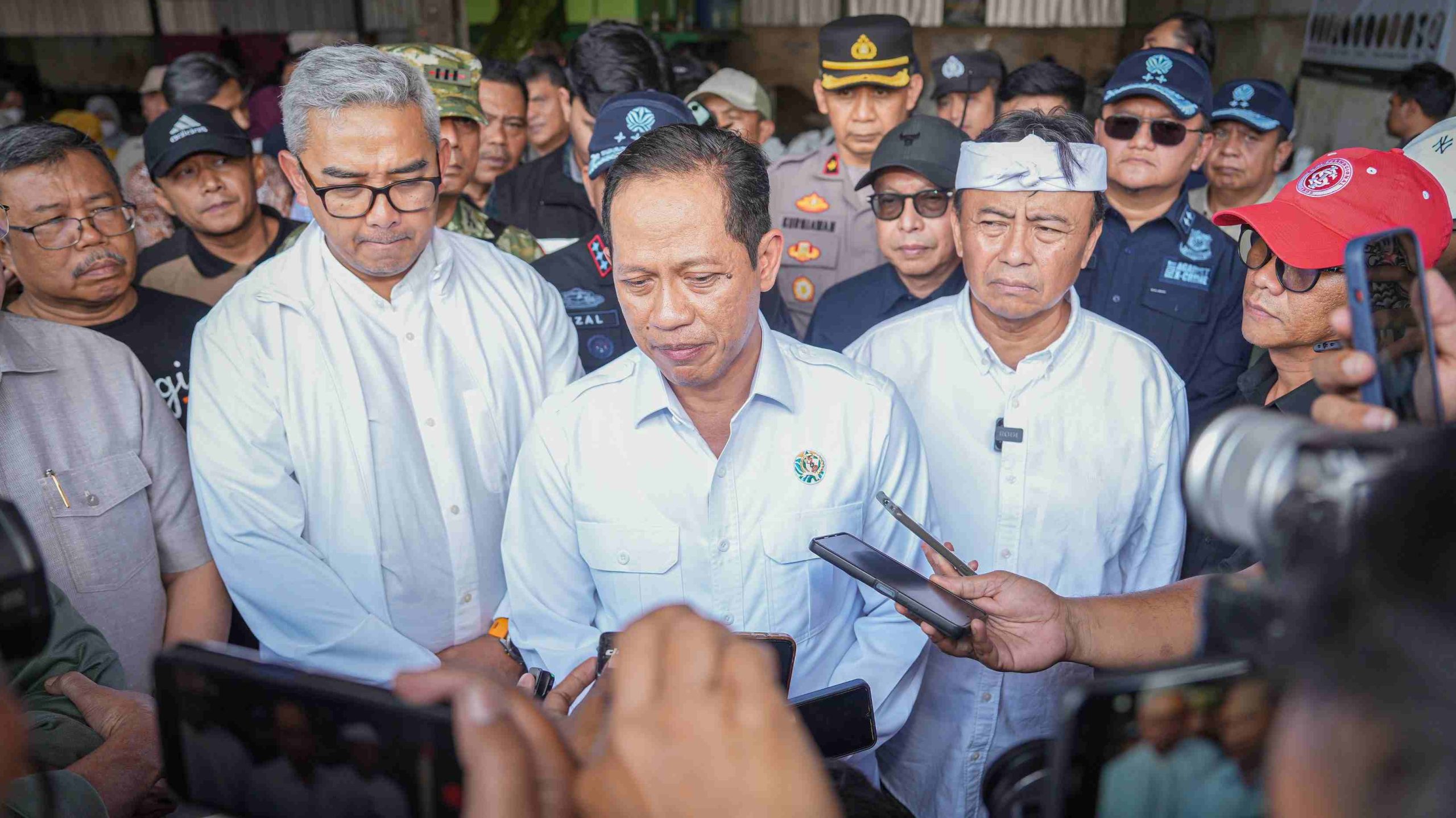
The directive followed a site inspection at Batu Rengat Waste Transfer Station (TPS) and Caringin Market to ensure that public health is protected from harmful air pollution. Minister Hanif emphasized that solving Bandung’s waste emergency should not come at the expense of clean air for residents.
Bandung’s waste management performance remains low, with only 22 percent of waste currently processed in accordance with environmental standards, according to recent data from the ministry. The Minister said this shortfall requires decisive and sustainable action by local government.
“Bandung faces significant challenges in waste management. With current performance at around 22 percent, serious and continuous improvements must be made,” Minister Hanif said in Bandung.
The Minister instructed the Mayor of Bandung to immediately halt operations of the waste combustion facility at the Batu Rengat site until it meets all technical and environmental emission standards. He stressed that waste processing technology must prioritize environmental protection and comply fully with existing regulations.
In addition to enforcement actions, Minister Hanif urged Bandung authorities to enhance waste reduction at the source notably through household-level waste sorting. He noted that effective upstream sorting could significantly reduce downstream waste burdens and increase the value of waste materials.
As part of technical solutions, the Minister recommended expanding the use of Refuse Derived Fuel (RDF), a form of processed solid waste that can serve as an alternative fuel for high-calorific waste streams, provided that adequate sorting and environmental safeguards are in place.
“RDF utilization can form part of the waste management solution, as long as it is supported by effective source segregation and strict environmental compliance,” Minister Hanif said.
The ministry reiterated its commitment to continue guidance, supervision, and strict oversight of regional waste management performance. However, the Minister reminded local governments that responsibility for public waste services lies primarily with regional authorities under existing legal mandates.
“We stand ready to support local governments, but commitment and compliance with environmental regulations are key. Waste management is a core duty of local government to ensure citizens’ constitutional right to a healthy environment,” he said. (*)