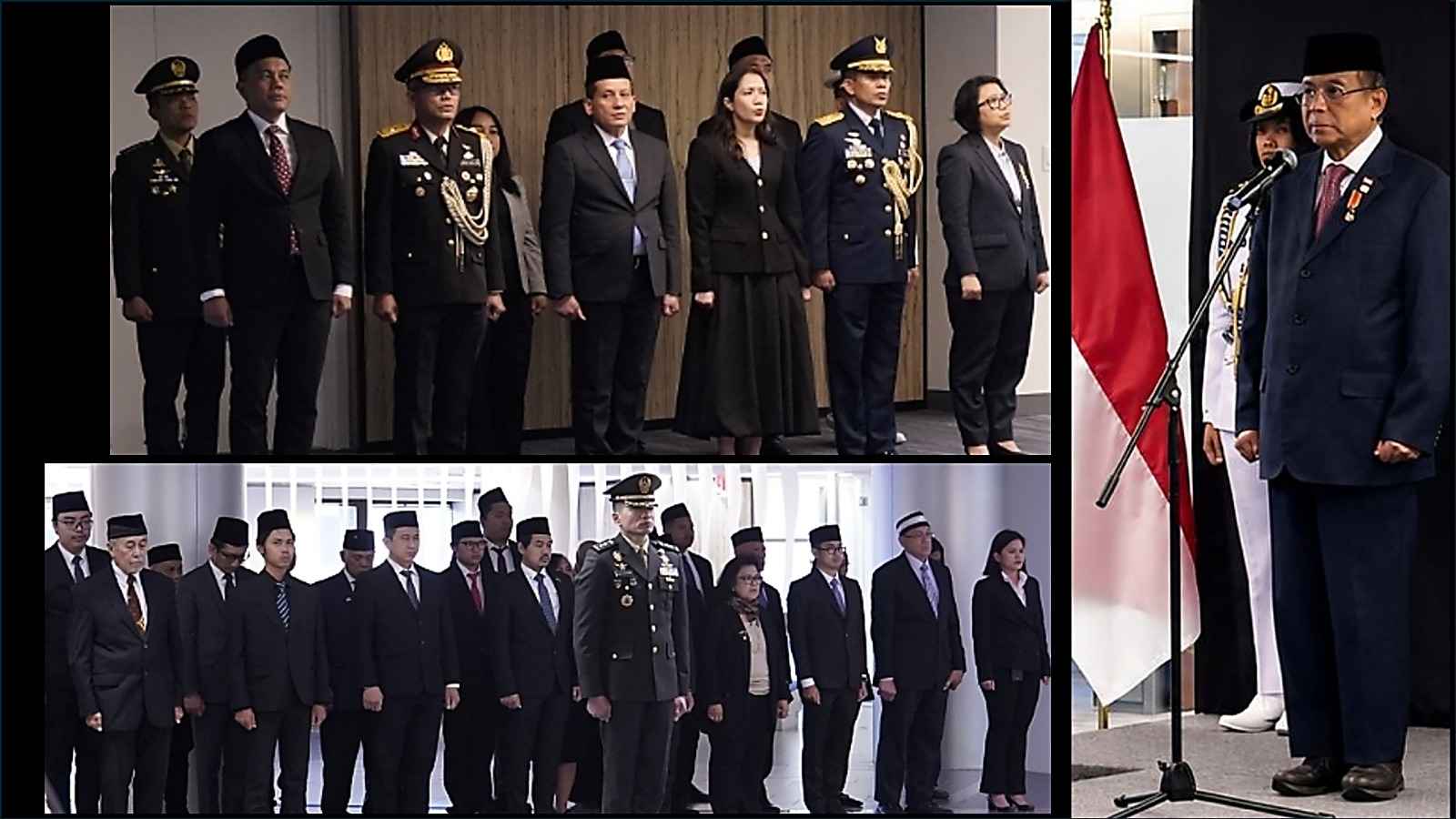
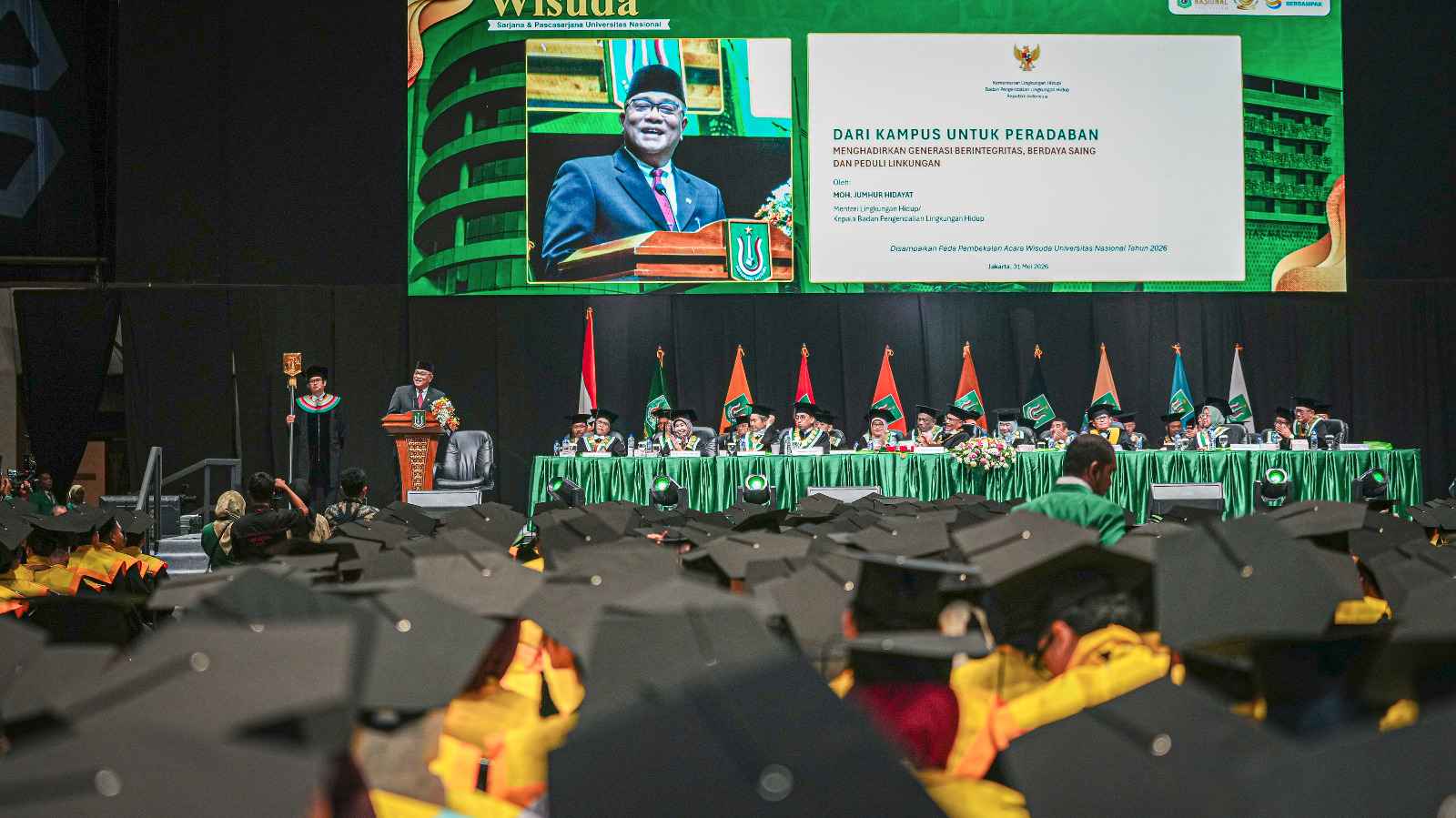
Enviro News Asia, Jakarta – Indonesia’s Ministry of Environment and Forestry (MoEF) officially launched the New Adipura concept on Thursday (August 7, 2025) in Jakarta.
With a target of achieving a Waste-Free Indonesia by 2029, Adipura is no longer merely an award but has been transformed into a powerful instrument for overhauling the waste management systems of regencies and cities across the country.
“If your city is still dirty today, it’s not because it’s impossible to clean, but because there hasn’t been a genuine effort. Starting now, no city can hide behind green billboards. Adipura is not a prize—it’s a mirror of integrity,” said Minister of Environment Hanif Faisol Nurofiq on Thursday (7/8/2025) in Jakarta.
The Adipura assessment scheme has been thoroughly revamped. Cities will no longer be judged based on superficial appearance or visual aesthetics.
Evaluations will now be based on field facts, upstream-to-downstream waste management capacity, and data directly verified by structural officials from the Ministry.
Any regency or city that still has illegal waste transfer points (TPS liar) or open dumping landfill sites (TPA open dumping) will be automatically labeled as a Dirty City and disqualified from further evaluation.
“In the current preliminary assessments, no city qualifies yet for Adipura Kencana. We’re starting from zero—there are no favorites. This is not about politics; it’s about the courage of local governments to shut down illegal TPS and improve their landfill management,” Minister Hanif emphasized.
The 2025 Adipura is divided into four tiers:
Dirty City,
Adipura Certificate,
Adipura, and
Adipura Kencana.
The evaluation spans seven full months, from July to January, conducted by a joint team from central and regional governments.
The scoring weights are as follows: 50% waste management and cleanliness, 20% budget allocation, and 30% human resources and infrastructure capacity.
The Ministry ensures that each region receives direct technical assistance to improve its waste systems.
To support this, MoEF has issued Ministerial Decree No. 1.418 of 2025 as the legal basis for assessing regional government performance in waste management under the Adipura program.
Regencies and cities are now required to have a roadmap for closing open dumping sites and transitioning to source-based waste management.
Non-compliant regions may face administrative sanctions or government-imposed enforcement measures as stipulated in Law No. 32 of 2009 on Environmental Protection and Management.
This new approach also promotes a paradigm shift from the traditional collect-transport-dump model to a reduce-reuse-recycle (3R) strategy.
Local governments are instructed to prioritize budget allocations for building TPS3R (integrated waste processing sites), waste banks, RDF (refuse-derived fuel) facilities, and waste-to-energy technology, instead of just transporting waste to landfills.
The national targets: 51.21% of waste managed by 2025, and 100% by 2029.
“We estimate the investment required is around Rp300 trillion. But this isn’t just about money—it’s about vision. Developed nations turn waste into energy. That’s the direction we’re heading,” said Minister Hanif in his official statement.
Secretary of the Environment Ministry, Rosa Vivien Ratnawati, further explained that the New Adipura system prioritizes transparency.
“No city can pass if it fails to meet basic indicators. Landfills must at least be sanitary landfills, and at least 25% of the waste must be properly managed. To qualify for Adipura Kencana, that number must rise to 75% and have zero illegal TPS,” she stated.
Adipura is also designed to help protect rivers and oceans. Cities or regencies that still dump waste into water bodies will receive strict warnings.
Monitoring will be carried out across entire watershed areas, coastlines, and other sensitive zones.
“Adipura is no longer about celebration. It’s a tool for supervision, transparency, and transformation. We will ensure the public knows which cities are truly committed—and which are merely pretending,” Minister Hanif concluded. (*)