Enviro News Asia, Jakarta — Disaster management for forest and land fires (karhutla) in Indonesia continues to prioritize repressive approaches and fault-finding over resolving underlying socio-economic root causes on the ground. To break this cycle of ecological disaster, stakeholders are advocating for enhanced structural prevention, clear land tenure, and cross-sectoral collaboration.
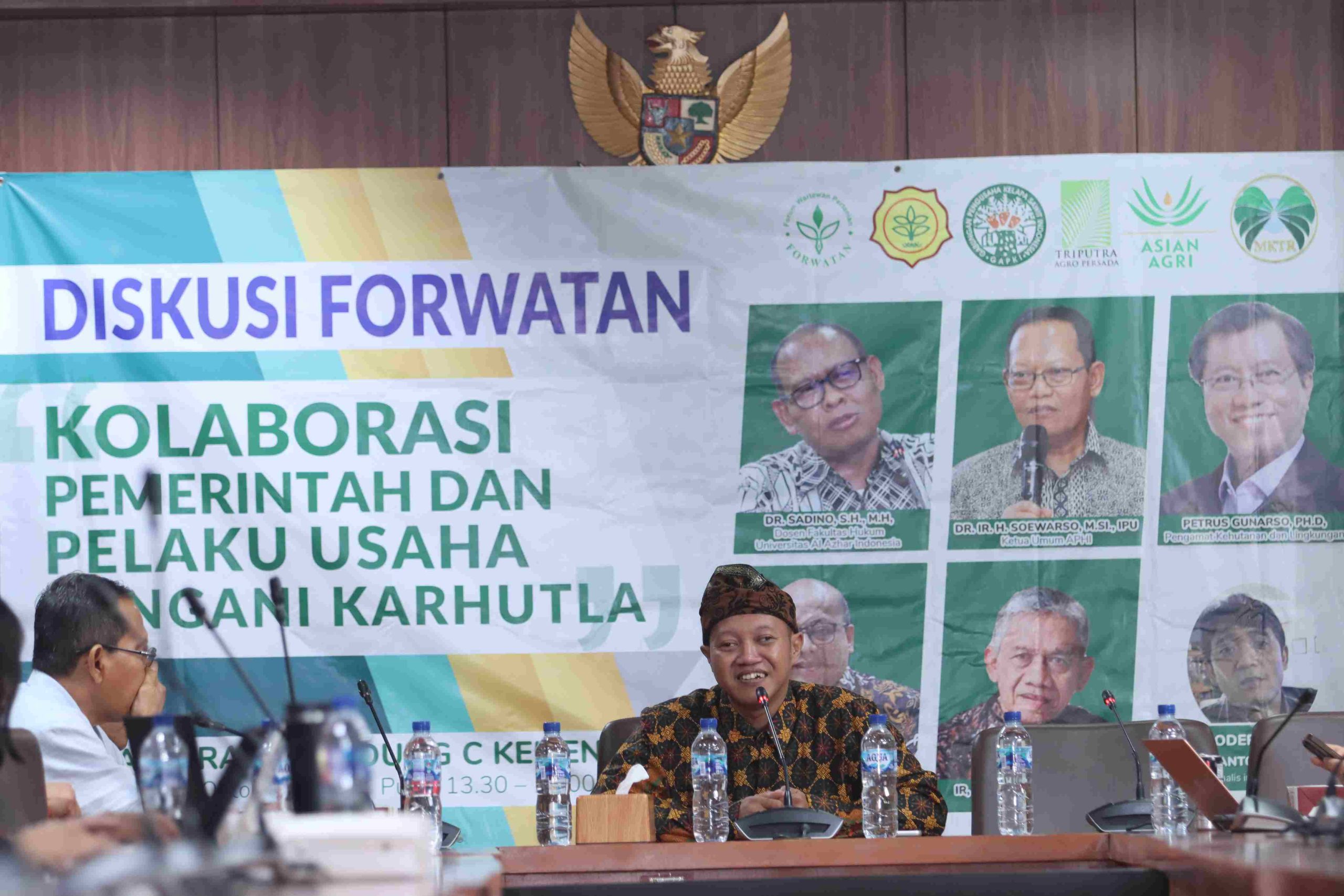
This issue took center stage during the Agricultural Journalists Forum (Forwatan) discussion titled “Government and Business Sector Collaboration in Tackling Karhutla” held at Building C of the Ministry of Agriculture, South Jakarta, on Thursday (October 1, 2026).
The discussion featured five key speakers: Soewarso (General Chairman of the Association of Indonesian Forest Concession Holders / APHI), Dr. Petrus Gunarso (Forestry Expert), Ir. Hendratmojo Bagus Hudoro, M.Sc. (Director of Plantation Protection at the Ministry of Agriculture), Mukti Sardjono (Executive Director of the Indonesian Palm Oil Association / GAPKI), and Dr. Sadino (Legal Expert from Al Azhar Indonesia University).
General Chairman of APHI, Soewarso, emphasized that karhutla is a symptom of fundamental problems at the field level.
“Karhutla is an outcome, not the primary cause. The real root causes stem from socio-economic factors, such as using fire for land clearing because it is viewed as the cheapest and fastest method, alongside traditional pest control practices. Additionally, extensive areas remain open access or occupied without spatial planning clarity, making fire triggers difficult to control,” Soewarso explained.
To heighten vigilance against karhutla risks across member concessions, APHI leadership has issued a Circular Letter (SE) to all members and hosted fire management experts for socialization and discussion sessions on prevention and suppression.
Forestry Expert Dr. Petrus Gunarso reinforced this argument through spatial data analysis combining Sipongi monitoring, oil palm cover, and forest area maps.
Dr. Petrus demonstrated that 84% of hotspots were located outside managed oil palm plantations—within non-managed or open-access lands such as conversion forests (15%), protection forests (10%), and other open areas. Meanwhile, 16% of hotspots were detected within formally managed plantation areas.
He contrasted this with Sarawak, Malaysia, which experiences minimal major fire disasters due to clear property rights and well-defined spatial planning boundaries.
Hotspot Escalation and Government Measures
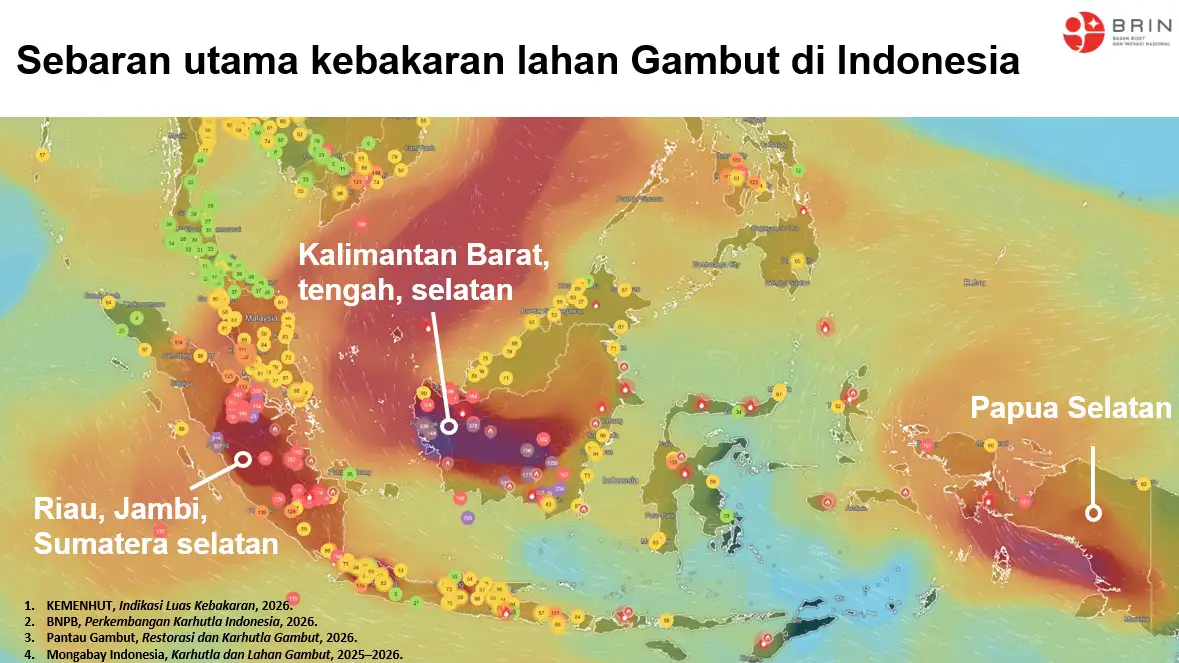
Data from the Ministry of Forestry’s (Kemenhut) Sipongi system recorded 28,692 hotspots across Indonesia between September 1 and September 30, 2026.
Director of Plantation Protection at the Ministry of Agriculture, Ir. Hendratmojo Bagus Hudoro, M.Sc., presented the five provinces with the highest hotspot concentrations: Central Kalimantan (10,896 points), West Kalimantan (3,969 points), South Sumatra (3,506 points), South Papua (1,396 points), and South Kalimantan (1,073 points).
Bagus pointed out that hotspots represent high-temperature indicators that still require physical verification (ground checks).
“Hotspots are high-temperature indicators that require ground-level factual verification; not all of them represent actual fire events. However, full alert is maintained given that plantation commodities are agronomically situated on drylands, facing heightened vulnerability during dry season adaptation phases,” Bagus stated.
Currently, government fire management policy operates under Law No. 39/2014, Presidential Instruction (Inpres) No. 3/2020, and Ministry of Agriculture Regulation (Permentan) No. 6/2025, enforcing criminal penalties of up to 10 years imprisonment and maximum fines of IDR 10 billion for violators.
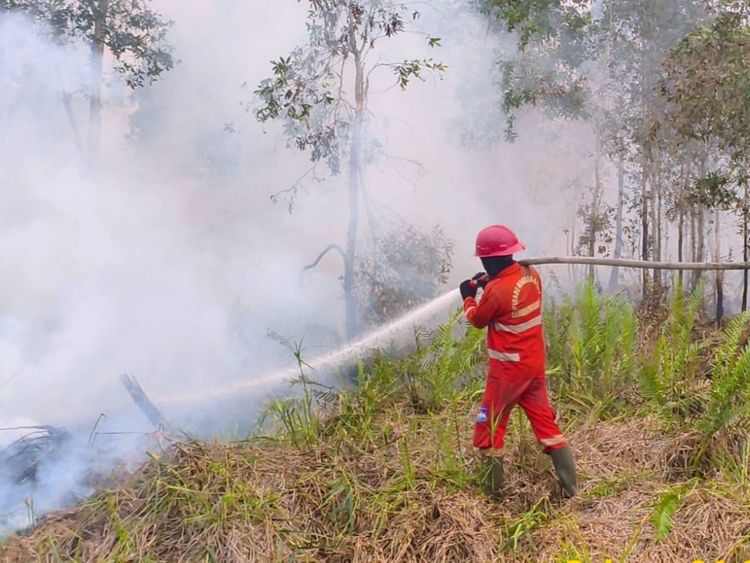
As part of mitigation efforts, the Ministry of Agriculture has established 251 hectares of Zero-Burning Land Clearing (PLTB) demonstration plots, formed Fire-Aware Farmer Groups across six red-zone provinces, and mandated over 2,000 plantation business permit holders to fulfill standard fire management infrastructure requirements.
Legal Certainty and Industry Commitment
Legal Expert from Al Azhar Indonesia University, Dr. Sadino, highlighted disparities in law enforcement resulting from the blanket application of strict liability without accounting for geographical factors or external third-party intervention. Civil lawsuits claiming trillions of rupiah often bankrupt corporations due to the absence of separate environmental loss calculation standards for natural forests, industrial forest plantations (HTI), and Other Utilization Areas (APL).
“While criminal provisions set fines up to 10 billion rupiah and prison sentences up to 10 years, many civil lawsuits demand compensation totaling trillions of rupiah using standardized mathematical formulas across both APL plantation lands and virgin forests. Consequently, court rulings are frequently unenforceable or bankrupt companies whose total assets fall far below the claim value,” Sadino asserted.
From the business perspective, Executive Director of GAPKI, Mukti Sardjono, confirmed that all 751 member companies under GAPKI have satisfied disaster response equipment qualifications and actively monitor ground-level fire triggers.
Furthermore, Mukti noted that GAPKI and its members actively collaborate with the Ministry of Forestry, the Ministry of Environment, APHI, and local governments in fire control efforts.
“To date, there have been no reports of fire spreading into concession areas owned by GAPKI members. We have tightened internal oversight through periodic written advisories and operational cooperation with the Ministry of Forestry and APHI on the ground. Fire respects no administrative boundaries, making village-based prevention surrounding concessions our primary focus,” Mukti concluded. (*)