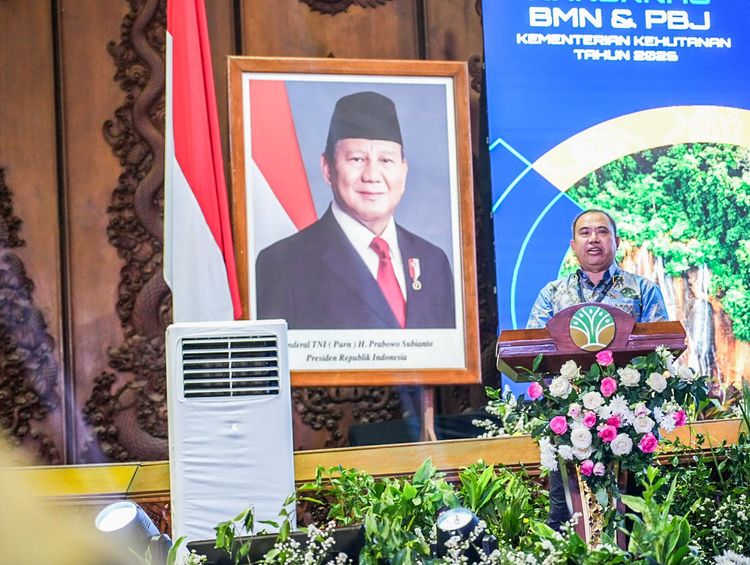


Enviro News Asia, Bengkulu — Forestry Minister Raja Juli Antoni conducted a field inspection at the Elephant Training Center (Pusat Latihan Gajah/PLG) within Seblat Nature Tourism Park (TWA Seblat), North Bengkulu, to strengthen conservation functions, improve animal care, and advance plans to develop the area as a community-based elephant education center.
The PLG TWA Seblat currently manages 10 elephants aged between 15 and 48 years. All elephants originate from conflict mitigation efforts or wildlife rescue operations. Since 1995, the area has undergone several functional changes before its designation as Seblat Nature Tourism Park in 2011, covering approximately 7,732.80 hectares.
The ministry prioritizes strengthening PLG TWA Seblat to become a modern conservation center by upgrading facilities, improving animal management standards, and expanding educational services for the public. The revitalization aims to position the center not only as a care facility for rescued elephants but also as a learning hub on elephant ecology, behavior, and the importance of maintaining ecological balance for present and future generations.
During the visit, the minister highlighted the increasing fragmentation of Sumatran elephant habitats. He stated that many elephant population pockets have become isolated and confirmed that the Ministry of Forestry will construct elephant corridors to reconnect separated habitats.
The minister emphasized that corridor development constitutes a long-term national policy priority. He noted that at least 12 fragmented elephant habitat pockets will be reconnected through planned corridors to secure wildlife movement routes, reduce human–elephant conflict, and ensure the long-term survival of Sumatran elephant populations.
The Ministry of Forestry has outlined several measures to revitalize PLG TWA Seblat, including upgrading elephant enclosures and training areas, establishing public education and information centers, organizing wildlife interpretation trails, developing community-based ecotourism around the park, and strengthening human–wildlife conflict mitigation programs.
The ecotourism model planned for PLG TWA Seblat will prioritize environmental carrying capacity and animal welfare to ensure tourism activities do not disrupt elephant movement or comfort. The program focuses on education and community participation, aiming to deliver economic benefits to local residents while maintaining elephant protection and ecosystem conservation as core priorities.
The ministry expects PLG TWA Seblat to evolve beyond a care facility into an integrated conservation center that provides environmental education and serves as a frontline institution for wildlife conflict mitigation in Bengkulu. (*)