Enviro News Asia, Bogor — Indonesia’s Ministry of Forestry is strengthening law enforcement against forestry crimes and illegal trade in plants and wildlife through a more integrated and targeted multidoor approach designed to dismantle criminal networks and cut off their economic gains.
The initiative is part of Forestry Minister Raja Juli Antoni’s policy direction to strengthen forest governance while ensuring the protection of Indonesia’s forests, ecosystems and biodiversity through effective law enforcement.
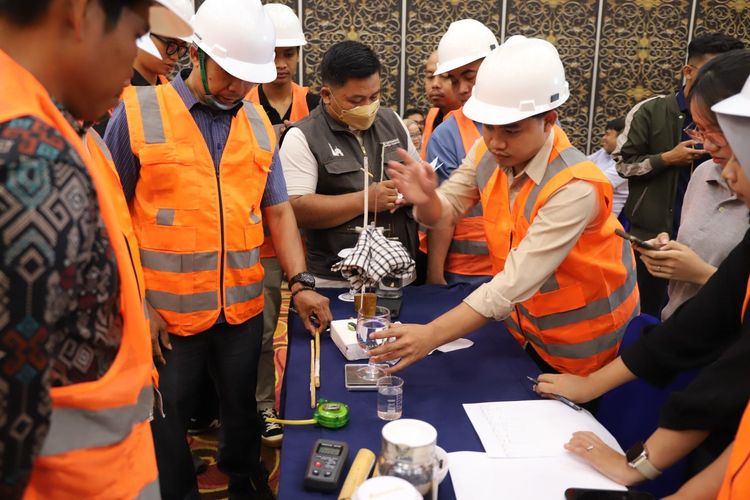
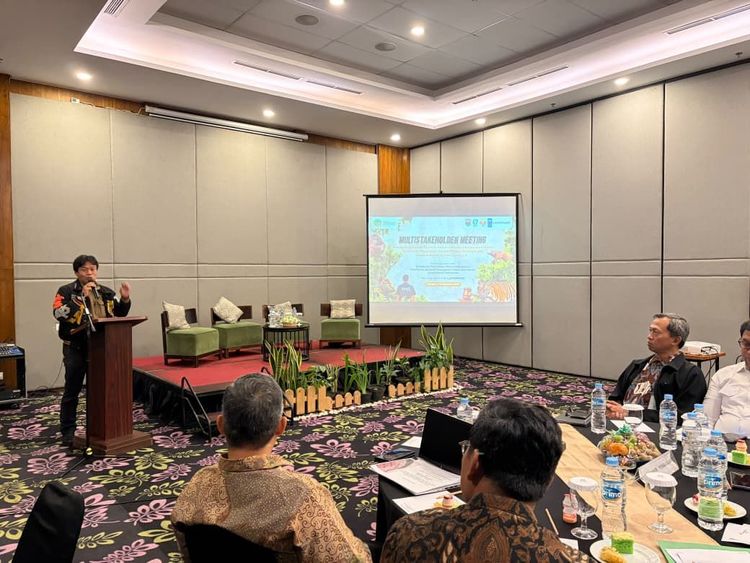
The issue was discussed during the Integrated Forestry and Wildlife Law Enforcement Multistakeholder Meeting, organized by the Directorate General of Forestry Law Enforcement in cooperation with the LEVERAGE Program in Bogor on August 7–8, 2026.
The forum brought together representatives from across the criminal justice system and relevant institutions, including civil servant investigators from various ministries and agencies, the Police, the Prosecutor’s Office, the Corruption Eradication Commission, the Supreme Court, Customs and Excise, the Financial Services Authority, the Ministry of Marine Affairs and Fisheries, the Quarantine Agency and academics.
The meeting served as a platform to align perspectives and strengthen the implementation of the multidoor approach in addressing forestry crimes and illegal wildlife trade.
Director General of Forestry Law Enforcement Dwi Januanto Nugroho said the multidoor approach is an important instrument for strengthening law enforcement against organized environmental crimes.
“The multidoor approach is becoming increasingly important. Available legal instruments need to be fully utilized, including those related to corruption, taxation, customs and the financial sector,” Dwi said.
According to Dwi, the approach can broaden the scope of law enforcement while increasing the government’s ability to dismantle larger criminal networks.
As one of the world’s megabiodiverse countries, Indonesia faces serious threats from organized and cross-regional illegal trade in plants and wildlife. Such crimes not only threaten ecosystems and biodiversity but can also generate complex economic losses.
The ministry therefore emphasized the need to shift law enforcement from focusing primarily on punishing perpetrators in the field toward disrupting criminal networks and eliminating the economic incentives that drive such crimes.
“Effective law enforcement should not only be measured by the number of perpetrators convicted, but also by the state’s ability to build scientifically based evidence and eliminate the economic motivation behind these crimes,” Dwi said.
The approach will also be strengthened through asset recovery, disruption of criminal proceeds and the use of forensic science in investigations and legal proceedings.
The multistakeholder forum identified four strategic priorities to strengthen integrated law enforcement.
First, institutional strengthening, including efforts to establish an Integrated Law Enforcement Task Force to address high-risk and large-scale illegal wildlife trade cases.
Second, the development of integrated standard operating procedures to clarify inter-agency law enforcement coordination mechanisms.
Third, regulatory strengthening through the harmonization of supporting regulations for law enforcement.
Fourth, human resource development, particularly for civil servant investigators, in applying the multidoor approach, asset recovery mechanisms and ecosystem damage recovery schemes.
Director of Forestry Crime Enforcement Rudianto Saragih Napitu said the success of integrated law enforcement requires consistent coordination and communication, as well as changes in institutional work culture.
He said strengthening human resource capacity, establishing communication platforms for civil servant investigators, and forming specialized teams to address money laundering offenses and asset tracing are important to improve investigations, prosecutions and environmental recovery.
As a follow-up to the meeting, the Directorate General of Forestry Law Enforcement and the LEVERAGE Program will publish a study on challenges in investigating illegal plant and wildlife trafficking offenses.
The study is expected to strengthen cross-institutional understanding of investigative challenges and provide a common basis for developing more effective enforcement strategies.
Through stronger cross-sectoral cooperation, the Ministry of Forestry, under the leadership of Forestry Minister Raja Juli Antoni, is committed to developing a stronger and more integrated forestry law enforcement system capable of creating a meaningful deterrent effect.
Law enforcement will focus not only on prosecuting perpetrators, but also on dismantling criminal networks, cutting off illicit economic gains, recovering environmental losses and ensuring that Indonesia’s natural resources remain protected for future generations. (*)