Enviro News Asia, Denpasar — The Indonesian government has reaffirmed its commitment to fully eliminate open dumping practices by 2026, alongside accelerating waste sorting initiatives at the source as part of a national waste management transformation.
The declaration was made during the Open Dumping Termination Commitment in Bali, attended by the Ministry of Environment and regional authorities, including the Provincial Government of Bali.
Minister of Environment, Hanif Faisol Nurofiq, emphasized that ending open dumping must go hand in hand with improving waste segregation practices.
“Waste can no longer be managed through a collect-transport-dispose approach. It must be handled from the source through sorting and sustainable processing,” he stated.
The policy aligns with Indonesia’s Medium-Term National Development Plan (RPJMN) under Presidential Regulation No. 12/2025, targeting 63.4% national waste management coverage by 2026.
As of the end of 2025, around 30% of Indonesia’s 485 landfills have stopped open dumping practices. However, approximately 369 sites still require transformation, including several in Bali.
Encouraging progress has been observed in Denpasar and Badung, where waste sorting rates have surpassed 60%, reflecting significant behavioral changes among local communities.
“I see rapid progress in Bali, with more than 60% of residents already practicing waste sorting. This achievement must be sustained through consistent law enforcement,” Hanif added.
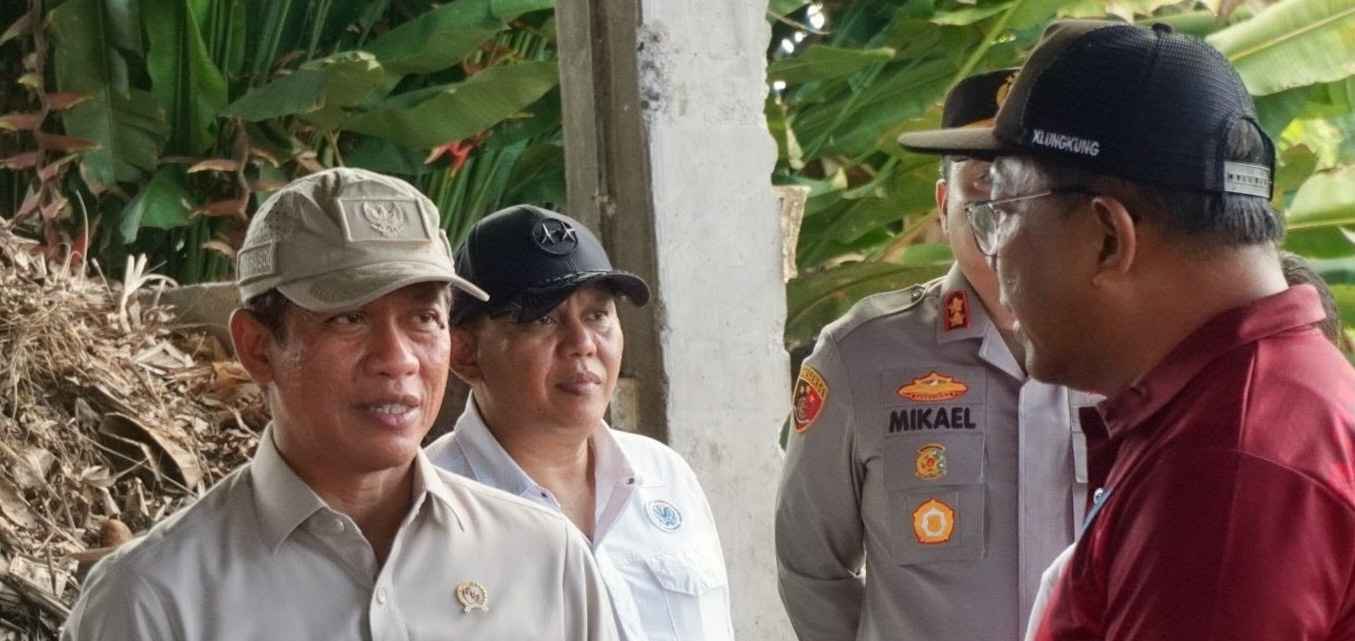
The minister also conducted field inspections at key waste management facilities, including TPST Kertalangu, TPS3R Sesetan, TOSS Center Klungkung, TPA Suwung, and TPST Tahura I, to ensure operational readiness and infrastructure support.
The government continues to strengthen waste processing capacity through facilities such as TPST and TPS3R, while promoting region-based waste distribution systems to support future waste-to-energy development.
Strict law enforcement will be implemented nationwide to ensure compliance and accelerate Indonesia’s transition toward sustainable waste management. (*)