


By Mahawan Karuniasa
Environmental Expert, University of Indonesia
As pressure mounts to reduce greenhouse gas emissions while improving distribution efficiency, green logistics has emerged not merely as an industry trend but as a comprehensive transformation in the way goods are transported, energy is consumed, emissions are measured, and economic competitiveness is strengthened.
Logistics serves as the backbone of modern economies. Nearly every product used in daily life has traveled through a complex network of production sites, warehouses, ports, distribution centers, and transportation systems before reaching consumers. When logistics systems are disrupted, production slows, prices rise, and national competitiveness declines. Yet despite its critical economic role, the logistics sector is also a major consumer of energy and a significant source of greenhouse gas emissions. Trucks, ships, aircraft, warehouses, cargo-handling equipment, and distribution facilities continue to rely heavily on fossil fuels.
According to the World Bank, freight transport and logistics account for approximately 10–11 percent of global greenhouse gas emissions. As the movement of goods continues to expand, energy consumption and emissions are expected to increase unless fundamental changes are introduced, particularly in developing economies. Green logistics should therefore be regarded as a strategic priority—not only to reduce environmental impacts but also to improve operational efficiency, strengthen supply chain resilience, and enhance Indonesia’s economic competitiveness.
Logistics: An Economic Engine and a Source of Emissions
The challenge of green logistics begins with the complexity of the logistics sector itself. Freight movement involves multiple stakeholders, transportation modes, geographic regions, and information systems. Every stage requires energy, from raw material transportation and warehousing to packaging, distribution, and reverse logistics.
Globally, freight transport is estimated to generate approximately 40 percent of carbon dioxide emissions from the transportation sector. Road transport emissions alone exceeded six billion metric tons of carbon dioxide in 2024, with heavy-duty trucks contributing roughly one-third of that total.
The issue extends beyond the number of vehicles in operation. Empty return trips, inefficient routing, traffic congestion, aging fleets, inadequate vehicle maintenance, and excessive dependence on road transportation significantly increase fuel consumption.
For Indonesia, logistics efficiency is also a matter of economic competitiveness. The National Medium-Term Development Plan (RPJMN) 2025–2029 reported that logistics costs represented approximately 14.29 percent of Indonesia’s Gross Domestic Product in 2022. The government aims to reduce this figure to around 12.5 percent by the end of the current planning period. This demonstrates that improving logistics efficiency and reducing emissions are mutually reinforcing objectives. Reducing empty trips, optimizing delivery routes, maximizing load capacity, and improving warehouse management simultaneously lower both emissions and operating costs.
Green Logistics Is More Than Fleet Electrification
Green logistics is often narrowly associated with electric vehicles. While fleet electrification is undoubtedly important—particularly as electricity generation becomes cleaner—simply replacing conventional vehicles without redesigning logistics systems merely shifts emissions rather than eliminating them.
Green logistics encompasses the entire supply chain. It includes sustainable procurement, supplier selection, packaging design, warehouse management, transportation mode selection, route optimization, load management, and reverse logistics that recover products, packaging, and reusable materials.
Modal shifts also play an important role. For many freight routes and commodity types, railways and waterborne transport generate significantly lower emissions per ton-kilometer than road transportation. The World Bank estimates that shifting freight from roads to rail or waterways, where appropriate, can reduce greenhouse gas emissions by approximately 70 percent per ton-kilometer.
Green logistics is therefore not simply about cleaner vehicles. It is about building an integrated logistics system capable of moving goods using the least possible distance, energy, time, and resources without compromising service quality.
Carbon Inventory: Emission Management Begins with Reliable Data
Organizations cannot reduce emissions that they do not measure. Consequently, the first step toward low-carbon logistics is establishing a comprehensive carbon inventory.
The underlying principle is straightforward: emissions are calculated by multiplying activity data by appropriate emission factors. Activity data include fuel consumption, electricity use, travel distances, shipment volumes, operating hours, and warehouse energy consumption. Emission factors represent the amount of greenhouse gases produced per unit of activity.
For example, vehicle emissions may be calculated using fuel consumption records or total distance traveled. All emission factors, reference years, units of measurement, and data sources should be transparently documented.
Activity data collection is therefore far more than an administrative exercise. It provides the evidence needed to identify major emission sources, establish priorities, set reduction targets, and evaluate the effectiveness of mitigation measures. Companies often discover that their largest emission sources are not necessarily vehicle fleets but empty return journeys, energy-intensive warehouses, refrigeration systems, single-use packaging, or inefficient supplier networks. Such insights are only possible through systematic and consistent carbon accounting.
Technology Matters, but Partnerships Determine Success
Digital technologies can significantly accelerate the transition toward green logistics. Transportation management systems optimize routing, reduce idle time, and consolidate shipments. Telematics monitor fuel consumption and driver behavior. Smart sensors measure warehouse energy use, while artificial intelligence improves demand forecasting and reduces excess inventory.
However, technology alone cannot transform logistics systems. Efficiency gains achieved by individual companies do not necessarily improve overall system performance if ports, warehouses, freight operators, manufacturers, energy providers, and government institutions continue operating independently.
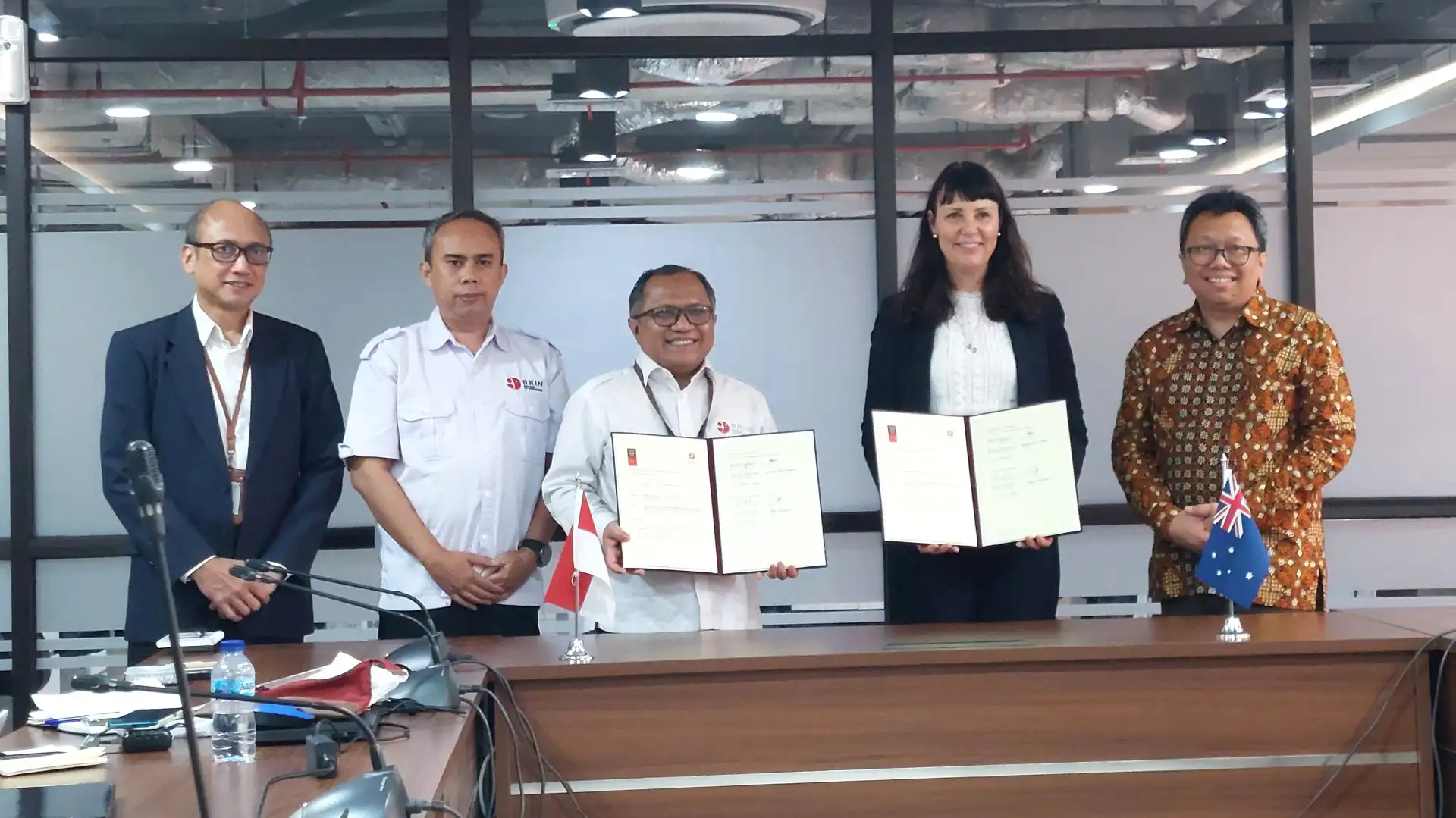
Green logistics requires strong partnerships. Governments must provide standards, infrastructure, incentives, and regulatory certainty. Businesses must invest in cleaner technologies and redesign operational processes. Universities and research institutions contribute scientific methodologies, technological innovation, and capacity building. Financial institutions play a critical role by developing financing mechanisms that enable companies—including small and medium-sized enterprises—to invest in sustainable logistics.
Partnerships are equally important to prevent greenwashing. Every emission reduction claim should be supported by clearly defined accounting boundaries, transparent and traceable data, consistent methodologies, and independently verifiable results.
From Environmental Compliance to Competitive Advantage
Green logistics should not be viewed merely as an environmental compliance obligation. In many cases, the sources of carbon emissions are also sources of operational inefficiency. Excess fuel consumption, empty vehicle movements, delays, underutilized cargo capacity, and excessive electricity use all increase business costs.
Companies that successfully manage their emissions will be better positioned to meet evolving market expectations. Global buyers increasingly assess the carbon footprint of products, including emissions associated with transportation and distribution. Likewise, financial institutions are incorporating environmental performance into risk assessments and investment decisions.
Ultimately, green logistics aligns three strategic objectives: economic efficiency, emissions reduction, and enhanced competitiveness. These goals are complementary rather than contradictory.
Indonesia Must Move Beyond Green Initiatives Toward Systemic Transformation
Indonesia has no shortage of pilot projects, innovative ideas, or emerging technologies. The real challenge lies in integrating these individual initiatives into a measurable, scalable, and nationally coordinated low-emission logistics ecosystem.
The transformation should begin with credible carbon inventories, followed by measurable targets, strategic roadmaps, and practical actions based on the most significant sources of emissions. Fleet electrification represents one important solution, but it must be complemented by route optimization, improved load utilization, modal shifts, cleaner energy, digitalization, and continuous workforce development.
Green logistics is not simply about making transportation appear environmentally friendly. Its true purpose is to redesign how goods are produced, stored, transported, consumed, and recovered throughout the economy. If implemented consistently, low-emission logistics will not only help Indonesia achieve its climate commitments but also create a more efficient, resilient, and globally competitive logistics system for the future. (*)