

Enviro News Asia, Jakarta — Indonesia’s National Research and Innovation Agency (BRIN) is partnering with Australia’s Swinburne University of Technology to develop low-carbon technologies for recycling end-of-life solar panels, as the expansion of renewable energy raises questions about how to manage future waste.
The collaboration focuses on the Si-ZERO project, or Silicon Zero Emission Recycling, Refining and Production, which explores ways to recover valuable materials from discarded photovoltaic (PV) panels and support the development of a circular economy.
The research covers mechanical and thermal pretreatment, hydrometallurgical processes to recover valuable materials, and technologies intended to support greener industrial production.
BRIN deputy for science and technology human resources Edy Giri Rachman Putra described the partnership as a strategic step toward expanding international research cooperation and strengthening Indonesia’s research capacity, particularly in minerals and metallurgy.
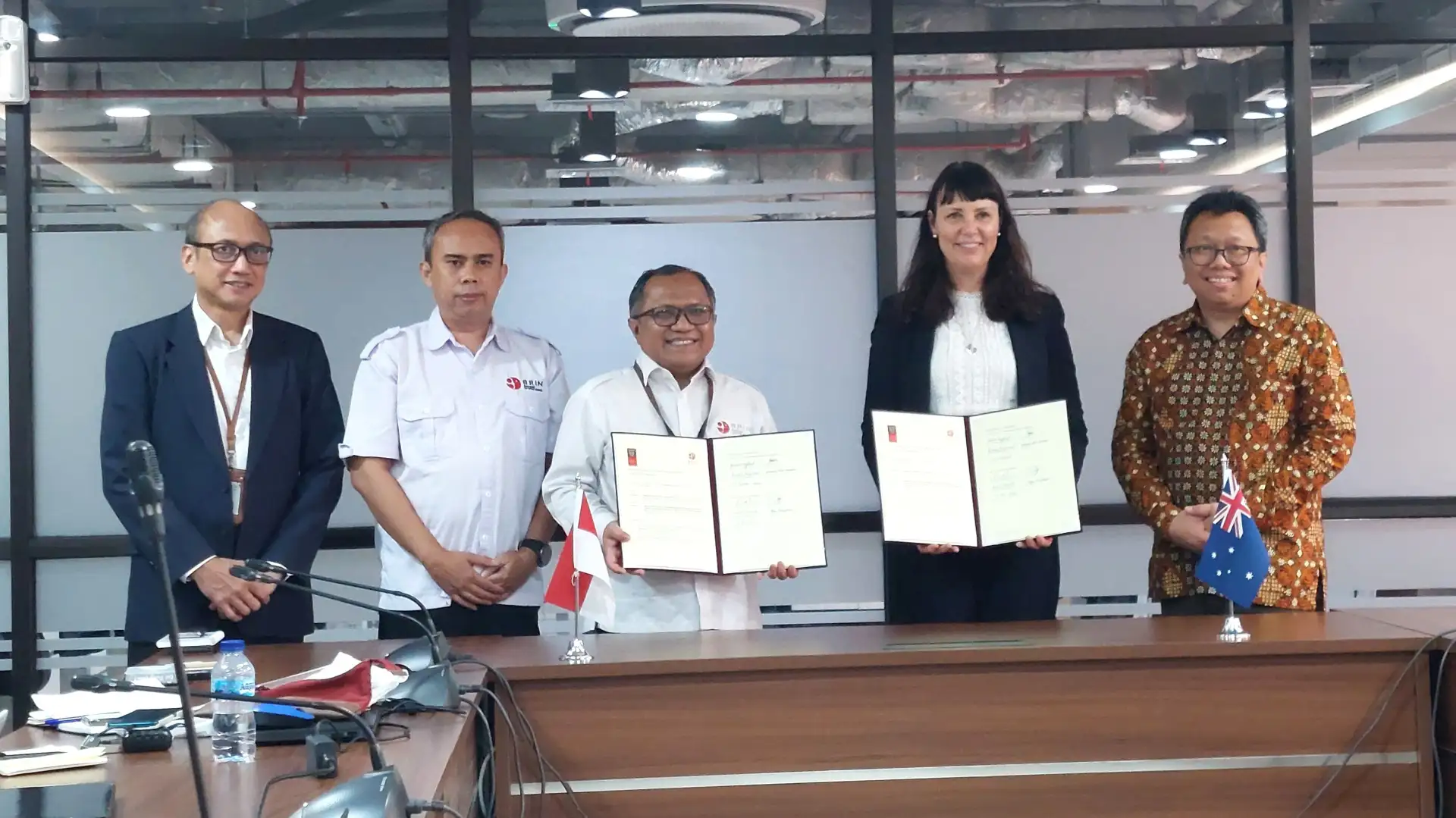
The cooperation agreement was signed at the B.J. Habibie Building in Jakarta on Monday, Oct. 19. Edy said Swinburne had specialized expertise relevant to BRIN researchers and that the partnership could expand existing collaboration into broader research activities.
Ratno Nuryadi, head of BRIN’s Research Organization for Nanotechnology and Materials, said the two institutions could combine their technological expertise and laboratory facilities to advance research and develop new innovations.
He described the agreement as an extension of research programs already underway between the institutions, with knowledge and technology sharing expected to strengthen their respective research capabilities.
The partnership also includes postgraduate education through a degree-by-research program for BRIN researchers and students pursuing master’s and doctoral qualifications. The initiative is intended to improve researchers’ skills and encourage the exchange of scientific knowledge.
Swinburne representative Bronte Neyland welcomed the collaboration, saying the university sought to build long-term relationships with a smaller number of strategic partners. She said the partnership was grounded in strong personal relationships between researchers at both institutions.
The two organizations aim to produce technical recommendations, develop sustainable materials innovations and publish findings in international scientific journals.
Ratno said international collaboration should be accompanied by continued investment in researchers’ capabilities, arguing that advanced laboratory facilities alone would not improve research quality without a corresponding increase in expertise.
The initiative comes as solar power deployment expands and end-of-life panels become an increasingly important waste-management issue. By investigating ways to recover materials and recycle components, the project aims to contribute to more sustainable management of solar technology throughout its life cycle. (*)