

Enviro News Asia, Demak — Indonesia is combining mangrove restoration with coastal protection infrastructure to address erosion, tidal flooding and land subsidence along the northern coast of Java, where rising environmental pressures threaten settlements and local livelihoods.
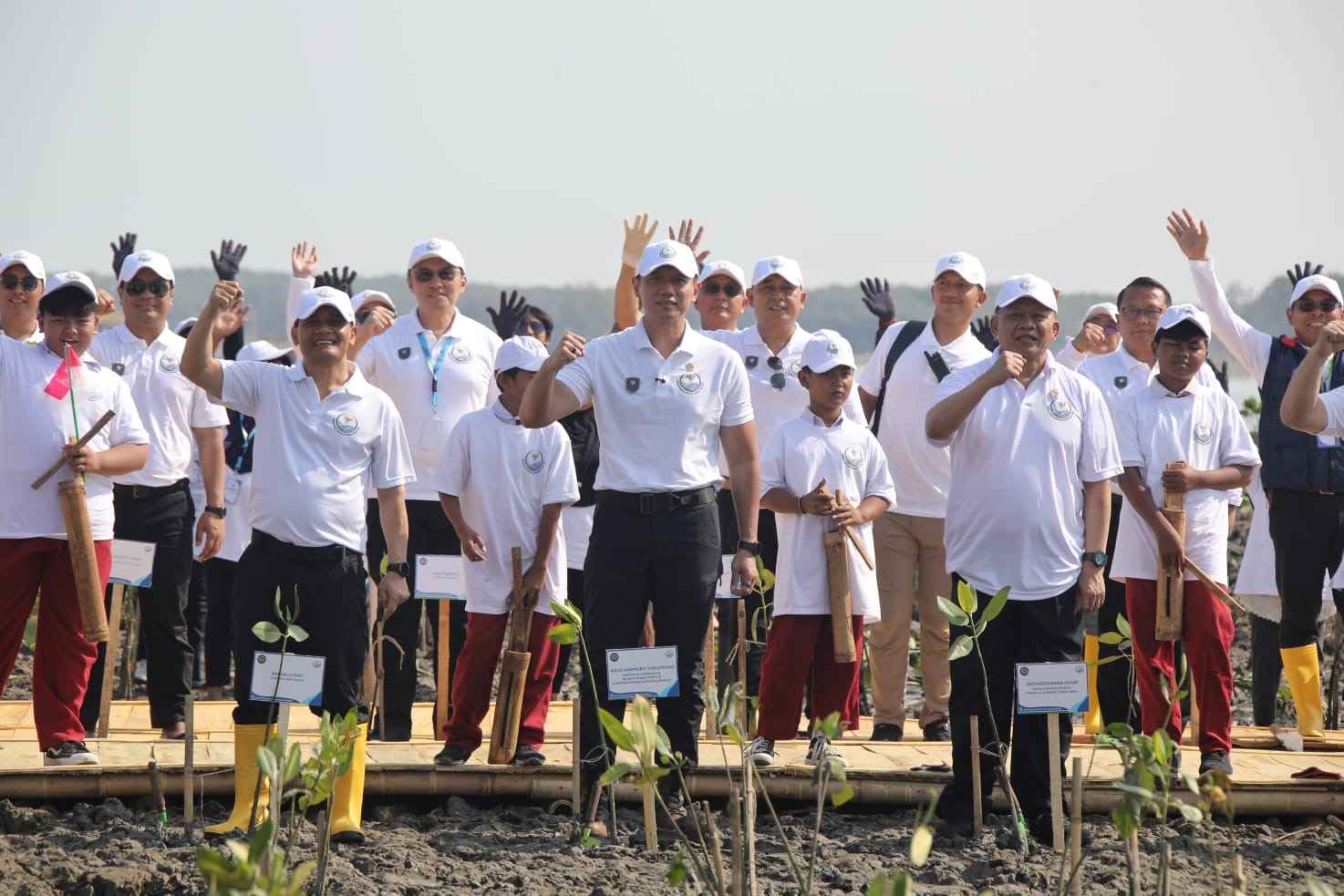
Coordinating Minister for Infrastructure and Regional Development Agus Harimurti Yudhoyono, widely known as AHY, highlighted the approach during a mangrove planting event in Timbulsloko village, Sayung district, Demak regency, Central Java, on Monday.
The initiative combines nature-based solutions with physical infrastructure, including coastal and sea walls, to reduce wave energy, limit erosion and strengthen protection for coastal communities.
“Large-scale coastal protection infrastructure should be understood as a hybrid approach, combining hard infrastructure, such as coastal and sea walls, with natural solutions,” AHY said.
Timbulsloko illustrates the challenges facing communities along the Pantura, or northern coast of Java. Areas once known for productive agriculture and fishponds now face growing threats from erosion, tidal flooding and land subsidence, affecting homes and sources of income.
Mangroves can help reduce wave energy, trap sediment and limit coastal erosion. The government is therefore integrating mangrove rehabilitation into broader coastal protection planning rather than relying solely on engineered structures.
In Timbulsloko, the pilot project combines mangrove planting with HexBricks technology, raised planting beds and bamboo structures. The planned coverage includes 6.56 hectares of mangroves and a 2.94-kilometer protection corridor.
The Java Northern Coast Management Authority (BOPPJ), which coordinates the program under a steering council chaired by AHY, is supporting planning and coordination among government agencies and other stakeholders.
BOPPJ head Didit Herdiawan Ashaf, who also serves as a deputy minister of marine affairs and fisheries, said coastal protection must account for the livelihoods of fishers and fish farmers as well as environmental recovery.
The project also uses HexBricks produced by local residents, with the aim of creating employment opportunities and increasing household income in coastal communities.
AHY said the program’s success should not be measured solely by the amount of infrastructure built or the number of mangroves planted. Plant survival, the effectiveness of coastal protection and long-term maintenance must also be assessed.
He called on BOPPJ and other stakeholders to involve residents throughout planning, implementation and maintenance. Access for fishers, livelihood security and local economic opportunities should remain central to the project, he said.
The government is also working to strengthen the broader planning framework for coastal protection. Didit said a draft master plan had been completed and arrangements were underway for the implementation of a presidential regulation.
The pilot in Timbulsloko is expected to provide lessons for similar protection efforts elsewhere along Java’s northern coast. The government says coordination among national and regional authorities, businesses, universities and local communities will be important to building coastal areas that are safer, more productive and more resilient to environmental risks.
“Environmental recovery must deliver tangible benefits for the people,” AHY said. (*)