Enviro News Asia, Ciamis — The Minister of Environment and Head of the Environmental Control Agency (KLH/BPLH), Hanif Faisol Nurofiq, underscored the decisive role of households in breaking Indonesia’s national waste emergency through the implementation of circular economy practices at the community level.
The statement was delivered during an inspection visit to Ciamis Regency on 1 February 2026, conducted to verify the consistency of community-based waste management that positioned Ciamis as the highest-scoring regency in the 2026 Adipura assessment. KLH/BPLH aims to elevate Ciamis as a national reference model to be replicated across Indonesia’s 514 regencies and municipalities.
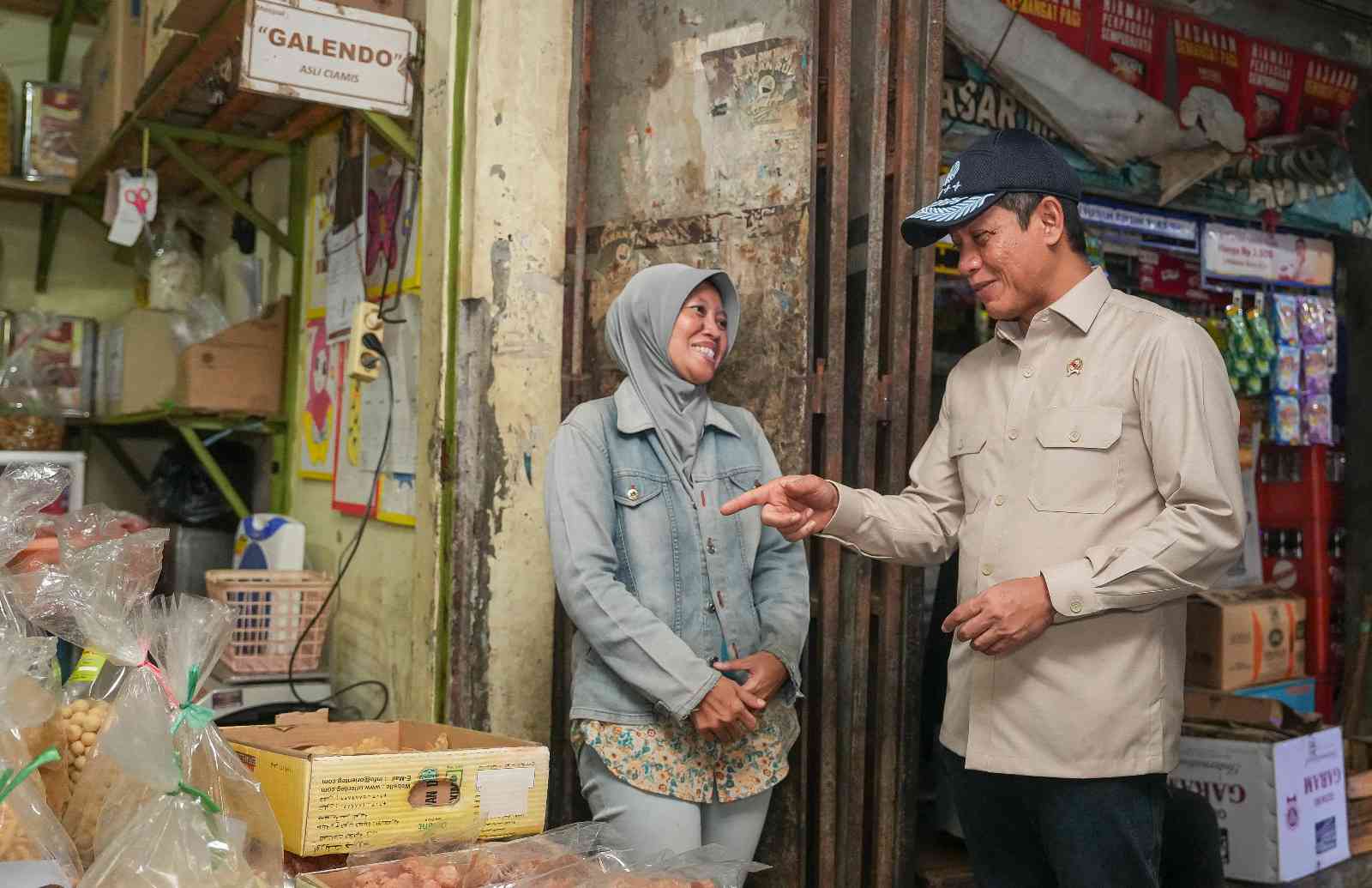
The inspection began in Bojongmengger Village, where Minister Hanif directly engaged residents on the importance of waste segregation at the source. Technical data show that food waste accounts for 38 percent of total waste generated in Ciamis, while households contribute 49 percent of overall waste volume. These figures form the basis of the ministry’s position that household-level intervention is no longer optional but essential to reducing pressure on final disposal sites.
Minister Hanif emphasized that minimizing organic waste at the upstream level significantly improves the efficiency of national waste management systems and reduces dependency on landfills.
The visit continued at the Ciamis Central Waste Bank, where the minister reviewed the integration of circular economy practices. The facility currently manages more than 100 types of inorganic waste through a network of 324 unit-level waste banks and 620 individual customers. Beyond waste sorting, the center functions as an education hub and a partner for recycling industries across regions, including Cirebon and Tangerang.
The inspection also covered daily waste handling operations at Ciamis Market. KLH/BPLH evaluated the effectiveness of waste segregation, organic waste processing through maggot cultivation, and composting methods. Collaboration between local authorities and market vendors in reducing daily waste volumes serves as a key indicator in the national waste governance assessment.
Ciamis Regency demonstrated strong performance across governance indicators, including policy frameworks, budget allocation, human resources, and public participation—core criteria in the Adipura evaluation.
“Based on the national waste governance assessment framework, Ciamis Regency is the only regency among 514 local governments to achieve the highest score following one year of monitoring. The assessment covers waste banks, 3R facilities, and active community participation,” Minister Hanif stated.
The minister stressed that maintaining this achievement requires strict consistency and continuous monitoring to ensure alignment between reported data and on-the-ground practices. KLH/BPLH also highlighted the need to enhance low-value waste processing technologies to ensure that all residual waste can be managed effectively.
Ciamis’ success is expected to serve as a catalyst for other regions to adopt similar systems and accelerate household-based solutions in addressing Indonesia’s national waste challenge. (*)