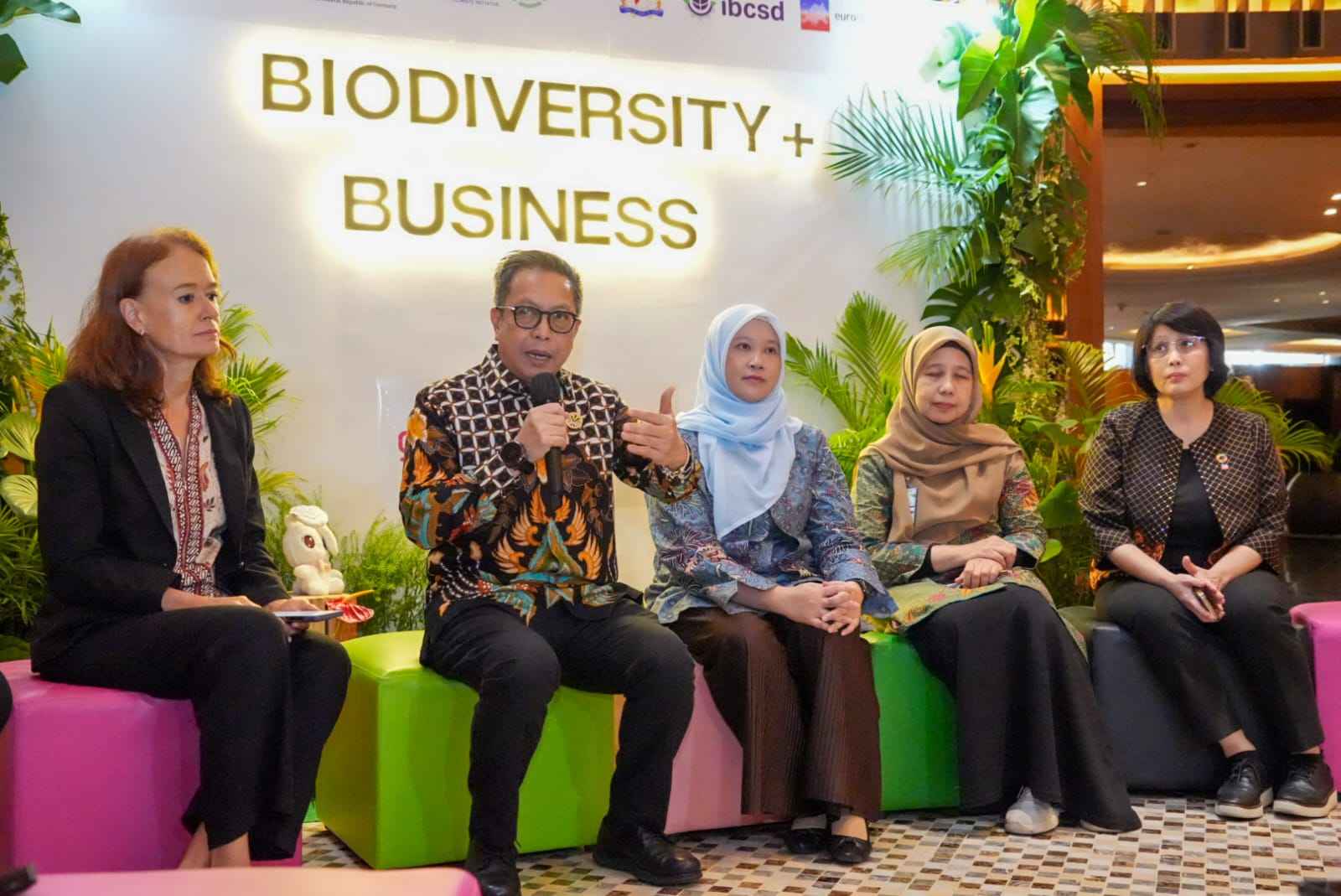
Enviro News Asia, Jakarta – The International Conference on Islamic Ecotheology for the Future of the Earth (ICIEFE) 2025, organized by the Directorate General of Islamic Community Guidance of the Ministry of Religious Affairs, concluded in Jakarta on Tuesday (July 15, 2025), producing the Ecotheological Charter.
This document serves as a moral call and spiritual contribution of Islam in responding to climate change and environmental degradation that increasingly threaten the future of the planet.
The Charter was read aloud by Director of Islamic Religious Affairs and Sharia Development, Arsad Hidayat, in front of the participants before the conference closed. He stated that protecting the environment is part of worship and a shared responsibility of all humanity.
“This Charter reminds us that safeguarding the Earth is not only an ethical obligation but also an act of worship. It is a trust from Allah that we must fulfill together,” said Arsad in his official statement on Wednesday (July 16, 2025).
Six Key Points of the Ecotheological Charter
Foundations in the Qur’an and Sunnah
The Charter emphasizes that the Qur’an and the Sunnah of the Prophet Muhammad (peace be upon him) contain profound teachings on environmental ethics.
Humans are appointed as khalifah (stewards) of the Earth—not destroyers. Principles of ecological justice, prohibition of fasad (destruction), and the Prophet’s example in treating water, land, plants, and animals form the moral basis for Islamic ecological awareness.
“Islam never teaches exploitation of nature. On the contrary, we are taught to care for and balance life,” said Arsad.
Integrating Environmental Issues into Islamic Education and Services
Conference participants agreed on the importance of mainstreaming environmental issues into Islamic education and religious services.
Curricula in Islamic boarding schools (pesantren), madrasahs, and Islamic universities must systematically integrate ecotheological values.
Religious outreach, sermons, and study groups should aim to nurture ecological spirituality in society.
Islamic Ethical Framework for Global Climate Justice
The conference formulated an Islamic ethical framework as a contribution to the global climate justice movement.
The principles of tawazun (balance), maslahah (public good), and ukhuwwah insaniyyah (human solidarity) are seen as relevant for building interfaith and cross-sector collaboration.
“Interfaith dialogue is a theological strategy for caring for the Earth as a shared home—not the property of a single group,” he explained.
Local Wisdom and Islamic-Based Social Movements
The Charter highlights local wisdom and Islamic-based social movements in the Indonesian archipelago as sources of ecological praxis.
Green pesantren traditions, Muslim environmentalist communities, and nature-friendly Islamic spiritual practices are seen as rich religious-cultural assets that need to be documented, revitalized, and expanded.
Mainstreaming Ecotheology in Public Policy
The Charter calls for the mainstreaming of ecotheology into public policy.
National and local governments, religious leaders, academics, communities, the media, and businesses are encouraged to form a pentahelix network to formulate regulations, conduct advocacy, and implement real actions oriented toward environmental sustainability.
“Youth play a crucial role. They are the spearhead of the digital and cross-sector ecotheological movement,” Arsad emphasized.
Protecting Environmental Defenders
The conference underscored the importance of protecting environmental activists and stakeholders working for ecological sustainability.
Just and pro-conservation regulations must be firmly and ethically enforced.
In addition to the Charter presentation, the conference featured academic papers discussing contemporary interpretations of Islamic texts, ontological critiques, maqāṣid al-‘aqāid (objectives of belief), pesantren wisdom, and Islamic cultural artifacts.
This demonstrates that ecotheology is not merely a discourse but can be mainstreamed as a new paradigm of religious practice.
“With the spirit of Green Deen, we are called to bring religion down to Earth. This is not just a green trend, but a theological commitment to safeguard the planet as a sacred trust,” Arsad concluded.
The ICIEFE 2025 forum, held from July 14–16, served as the closing event of the Peaceful Muharram 1447 H program, which began on June 22, 2025. The event brought together government representatives, academics from Indonesia and abroad, civil society groups, media, youth from Islamic boarding schools and universities, and environmental communities. (*)