Enviro News Asia, Jakarta — Indonesia is reporting progress in wildlife conservation, forest restoration and community-based green economic development, with recent initiatives ranging from the release of protected animals into natural habitats to funding for coastal businesses linked to mangrove conservation.
The Forestry Ministry said the efforts demonstrated how environmental protection could support local livelihoods while strengthening the country’s long-term ecological resilience.
On Nov. 5, four orangutans named Catherine, Dennis, Ames and Marlon were released into the Kehje Sewen Forest in East Kalimantan after completing an extensive rehabilitation process.
The release was carried out by the East Kalimantan Natural Resources Conservation Agency (BKSDA), under the Forestry Ministry, in partnership with the Borneo Orangutan Survival Foundation (BOS Foundation).
The programme forms part of broader efforts to restore orangutan populations through wildlife rehabilitation, habitat protection and cooperation between government agencies and conservation organisations.
In western Java, seven Javan green peafowl were also released into Ujung Kulon National Park as part of efforts to maintain populations of the island’s endemic wildlife.
The ministry has also strengthened wildlife protection through law enforcement. Its central forestry law enforcement directorate recently sent a team to Sukabumi, West Java, to follow up on a case involving a protected changeable hawk-eagle that had drawn public attention.
Alongside wildlife conservation, the government is promoting green economic activities that place local communities at the centre of environmental protection.
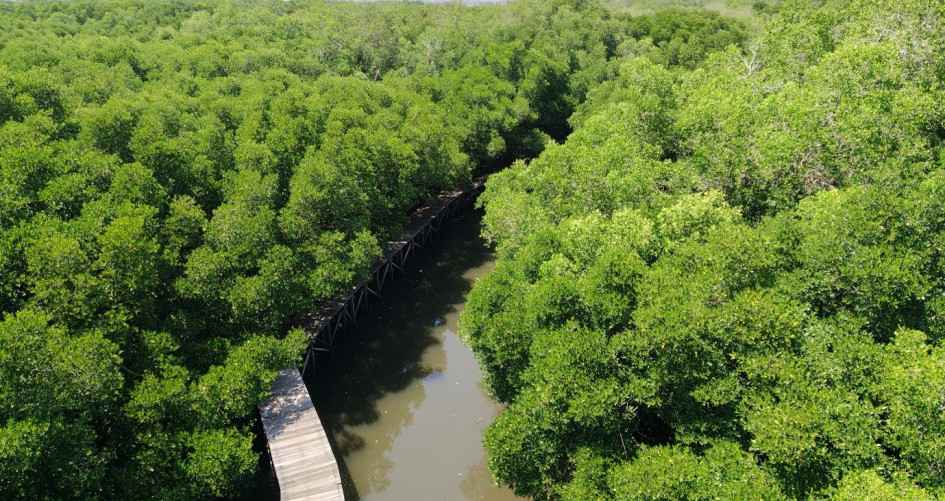
Through the Mangroves for Coastal Resilience (M4CR) programme, the ministry provided Rp534 million in productive business assistance to five coastal community groups in Tana Tidung and Bulungan regencies, North Kalimantan.
The funding supports businesses based on local resources, including fishery product processing, layer chicken farming and mud crab cultivation.
Beyond providing capital, the programme aims to strengthen food security and promote silvofishery, an environmentally friendly approach that combines aquaculture with mangrove conservation.
Under this approach, improved incomes are linked to community participation in protecting mangrove ecosystems. The ministry also aims to position North Kalimantan as a national model for mangrove rehabilitation.
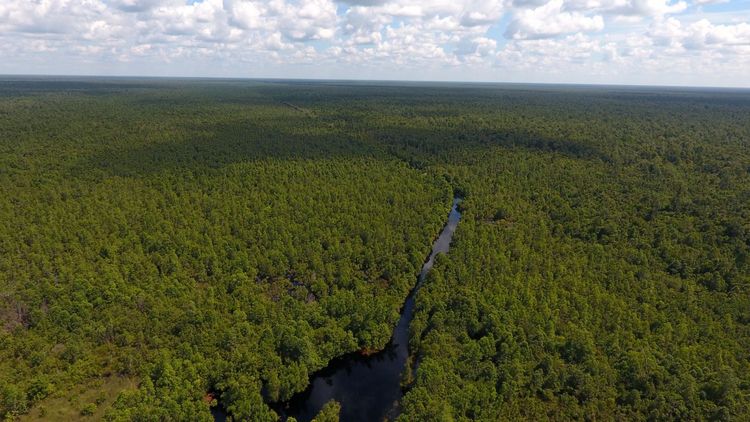
Forest restoration remains another priority. Forestry Minister Raja Juli Antoni has reiterated that forest areas, including land previously affected by fires, must be restored according to their original ecological functions and must not be converted into oil palm plantations.
The government has enforced the policy by sealing former fire-affected land illegally planted with oil palms in Sungai Awan Kiri village, West Kalimantan. Heavy equipment was seized, while legal proceedings were pursued in coordination with law enforcement agencies.
In Riau, the government is accelerating ecosystem recovery in Tesso Nilo National Park, where thousands of hectares of forest have been brought back under state control for restoration.
The ministry is also working with local customary leaders to restore peatland ecosystems in the Lamandau area, while promoting forest rehabilitation and agroforestry in other regions.
In Cikidang Protection Forest, farmer cooperatives are being involved in agroforestry initiatives. Similar community-based rehabilitation efforts in Bondowoso, East Java, aim to restore forest areas while improving the livelihoods of surrounding residents.
Meanwhile, forestry authorities are investigating suspected illegal trade in merbau timber in Papua as part of efforts to combat illegal logging and protect eastern Indonesia’s forests.
The ministry said these initiatives reflected an integrated approach to forestry management, combining wildlife protection, ecosystem restoration, law enforcement and community economic empowerment.
The broader objective is to ensure that conservation delivers measurable benefits both for nature and for people whose livelihoods depend on healthy forests and coastal ecosystems. (*)