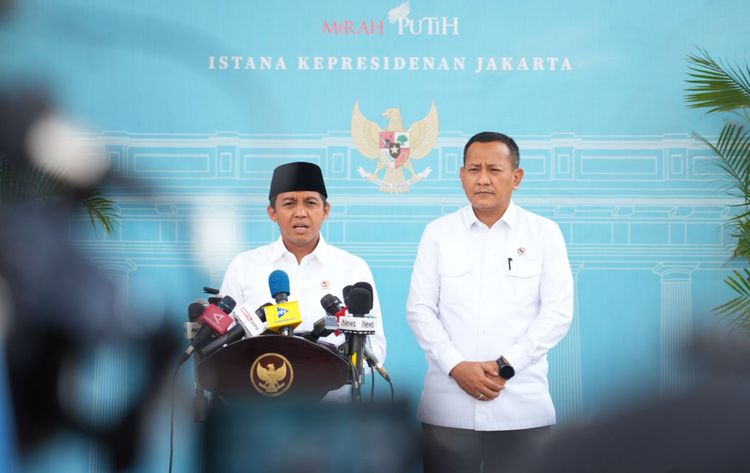


Enviro News Asia, São Paulo — Indonesia reaffirmed its leadership in global climate cooperation by advancing a high-integrity carbon market as a tangible and sustainable solution toward a green economy. Minister of Environment and Head of the Environmental Control Agency Hanif Faisol Nurofiq delivered this statement during the High-Level Roundtable at the Sustainable Business COP30 (SBCOP), themed “Advancing Indonesia’s High-Integrity Carbon Market: Toward a Green, Resilient, and Inclusive Future,” held in São Paulo, Brazil.
The forum, initiated by the Special Envoy of the President of Indonesia for Climate and Energy, Hashim Djojohadikusumo, brought together senior Indonesian officials and leaders of international organizations such as the Integrity Council for the Voluntary Carbon Market (ICVCM). The event served as a strategic step to strengthen Indonesia’s climate diplomacy ahead of the 30th UNFCCC Conference of the Parties (COP30) in Belém, Brazil.
Minister Hanif underscored that Indonesia is entering a new era of carbon management following the enactment of Presidential Regulation No. 110 of 2025 on Carbon Economic Value (NEK). The regulation expands the national carbon trading framework, including the voluntary carbon market, and opens opportunities for international cooperation rooted in integrity and transparency. “The Ministry of Environment and Environmental Control Agency (KLH/BPLH) is committed to ensuring that every unit of Indonesia’s carbon credit represents real, verified, and high-integrity environmental value. This is not merely a market mechanism but a green bridge connecting Indonesia with the world,” Minister Hanif stated.
As part of the implementation of the new regulation, Indonesia has launched international voluntary carbon trading through Mutual Recognition Agreements (MRA) with five global independent crediting schemes: Gold Standard for Global Goals, Global Carbon Council (GCC), Plan Vivo, Verra, and Puro Earth. This initiative broadens the scope for both nature-based and technology-based mitigation actions while enhancing the global competitiveness of Indonesia’s carbon market.
Adding to the national policy direction, Special Envoy Hashim Djojohadikusumo emphasized the importance of global partnerships and policy certainty in driving credible carbon investments. “Indonesia is open to international carbon investments grounded in transparency and credibility. Through this new regulation, we aim to ensure that the carbon economy not only generates financial benefits but also contributes directly to environmental sustainability and community welfare,” Hashim said. He added that the event marked Indonesia’s tangible step in building a green bridge between governments, businesses, and the global community.
KLH/BPLH also invited global investors and business actors to participate in the Indonesia Pavilion at COP30 Belém, which will host a seller-meets-buyer forum connecting providers and buyers of high-integrity carbon credits. Around 90 million tonnes of CO₂ equivalent (CO₂e) in potential carbon credits from mitigation actions in forestry and land use (FoLU), energy, industry, and waste management will be presented in detail starting Monday, 10 November 2025. The Pavilion will serve as Indonesia’s green diplomacy showcase, featuring national projects, partnerships, and innovations ready for international collaboration.
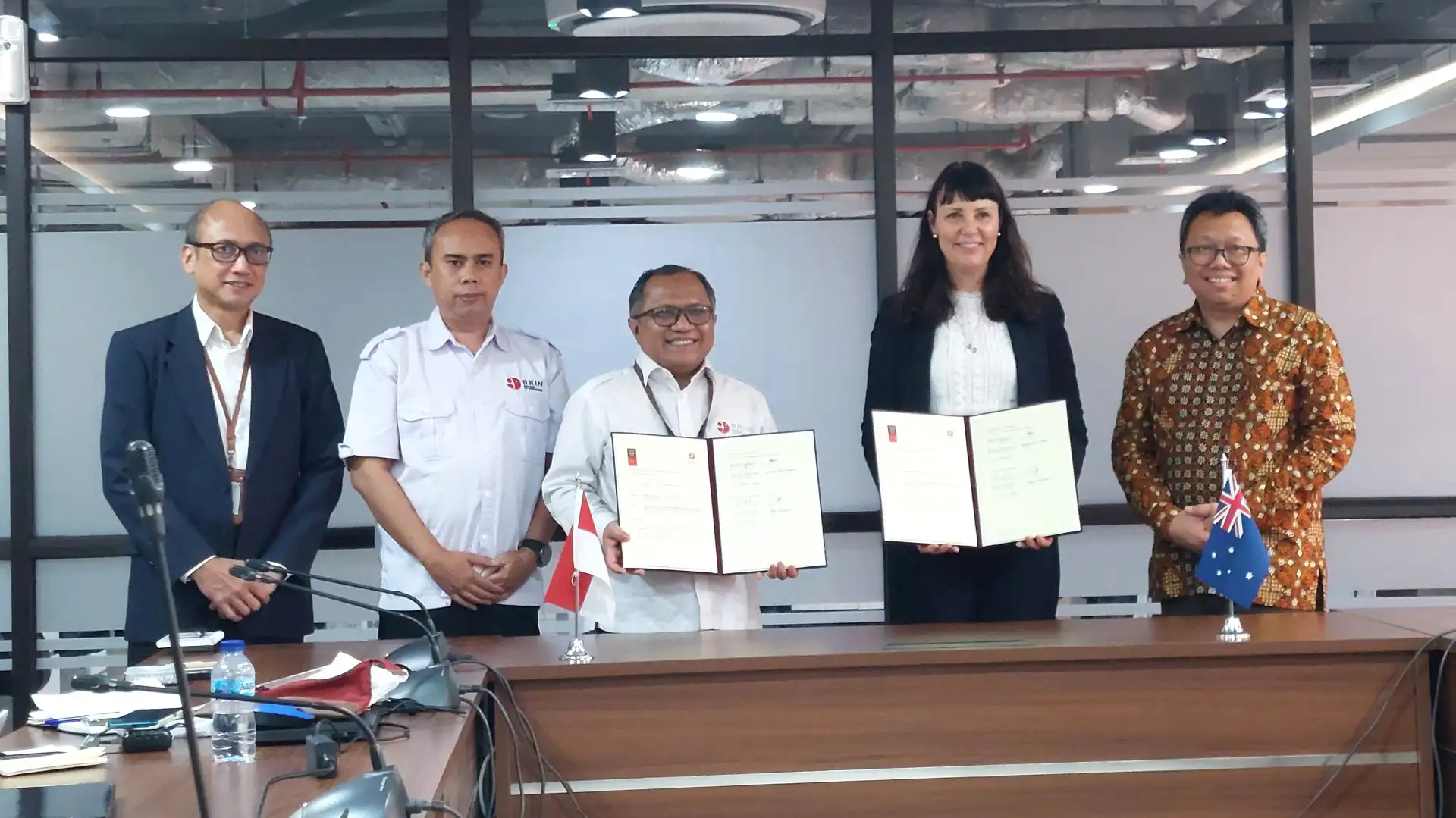
During the COP30 agenda, KLH/BPLH will further strengthen bilateral cooperation to expand access to green financing and technology transfer. In the pre-COP30 week, the Ministry signed a Letter of Intent (LoI) with The Royal Foundation and a Memorandum of Understanding (MoU) with the UK Department for Energy Security and Net Zero (DESNZ). These partnerships form part of Indonesia’s strategic efforts to reinforce global synergy toward energy transition and a low-emission economy.
“The carbon market is not merely an economic transaction,” Minister Hanif emphasized. “It represents Indonesia’s leadership in delivering real solutions to the global climate crisis. Through cross-border cooperation, we uphold integrity and strengthen global trust in Indonesia’s carbon system.”
With its active participation at COP30, Indonesia positions itself as a builder of the world’s green bridge — strengthening climate diplomacy, unlocking green investment opportunities, and placing the nation at the forefront of the global transition toward a low-emission and sustainable economy. (*)