

Enviro News Asia, Jakarta — The National Research and Innovation Agency (BRIN) is encouraging stronger Indonesia–China cooperation in technology transfer, human resource development, research and innovation to generate greater value for Indonesia’s development toward the Golden Indonesia 2045 vision.
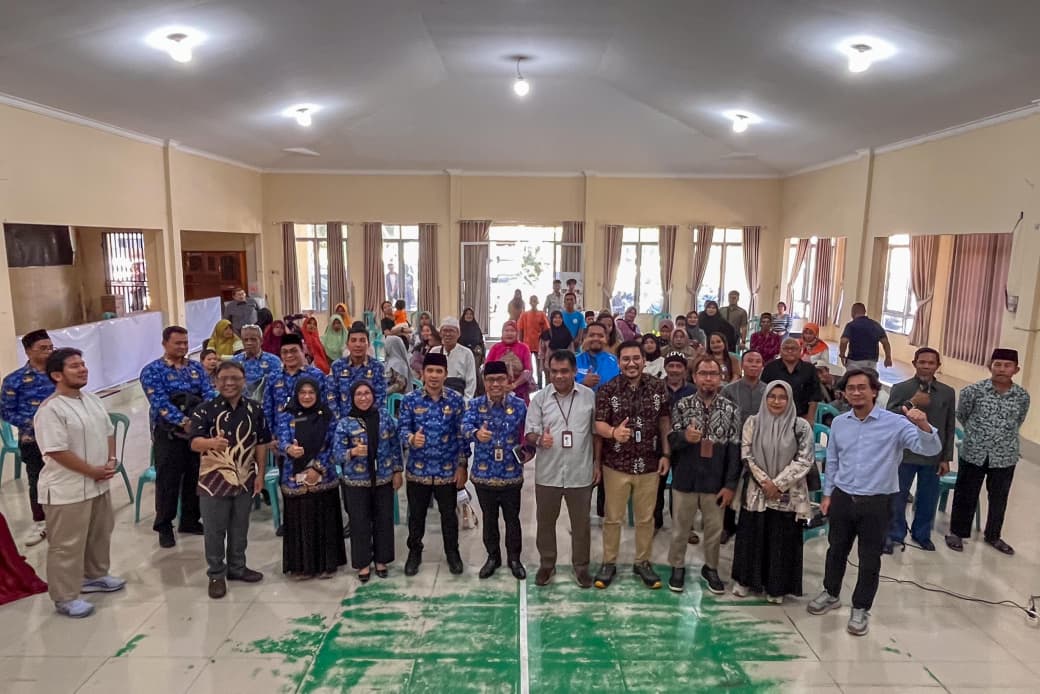
Acting Head of BRIN’s Research Organization for Social Sciences and Humanities, Muhammad Najib Azca, delivered the message during an academic symposium titled “Aligning Chinese-Style Modernization with Golden Indonesia 2045: New Opportunities and New Prospects” at the BRIN Widya Graha Building in Jakarta on Thursday (August 20).
Najib said Indonesia–China relations, which have reached 76 years, have expanded beyond diplomacy and trade to include academic cooperation. He emphasized that global geopolitical shifts, technological disruption and the climate crisis require Indonesia to pursue international partnerships while maintaining strategic autonomy.
According to Najib, Chinese-style modernization and Indonesia’s Golden Indonesia 2045 vision can be examined comparatively despite emerging from different historical, political and social contexts. He stressed that Indonesia should not simply replicate another country’s development model, but critically assess its successes, failures and the conditions under which particular approaches work.
Najib identified four strategic areas for strengthening Indonesia–China cooperation.
The first is structural transformation and increased value-added development through technology transfer, industrial deepening, local human resource development and stronger environmental governance. He warned that investment focused solely on resource extraction would not be sufficient to support Indonesia’s long-term development goals.
The second area is the green transition. Indonesia’s critical minerals, renewable energy potential, tropical forests and marine ecosystems could complement China’s manufacturing capabilities and green technology expertise. Najib said cooperation in these areas could create significant opportunities while requiring careful consideration of social and ecological impacts.
The third priority is research, innovation and human resource development. Research collaboration, researcher exchanges and joint publications were identified as long-term investments that could strengthen knowledge capacity in both countries.
The fourth area is public trust. Najib argued that bilateral relations should not be assessed solely through trade figures, as public perceptions, collective memory and community sentiment also influence the sustainability of international partnerships.
He emphasized that sustainable cooperation must be based on reciprocity, transparency and a sense of fairness among communities. In this context, social sciences and humanities play an important role in ensuring that development is evaluated not only through economic and technological indicators but also through its social implications.
Najib described the symposium as more than an academic gathering, calling it a form of knowledge diplomacy that provides an opportunity for the two scientific communities to engage in open, equal and critical dialogue.
He expressed hope that the forum would serve as a starting point for a more structured research agenda between BRIN and the Chinese Academy of Social Sciences (CASS), including collaborative research, researcher exchanges and joint publications. Such cooperation is expected to contribute to the development of social sciences in the region while strengthening collaboration among Global South countries. (*)