Enviro News Asia, Belém — Indonesia has called on the global community to collaborate through the World Mangrove Center (WMC), an international hub for sharing, learning, and advancing best practices in sustainable mangrove management.
Vice Minister of Forestry Rohmat Marzuki made the appeal during a Dialogue Session on “World Mangrove Center: Showcasing Global Efforts on Mangrove Rehabilitation and Conservation” on Tuesday, November 11, 2025, at the COP30 United Nations Framework Convention on Climate Change (UNFCCC) in Belém, Brazil.
Marzuki emphasized that Indonesia’s leadership through the WMC represents a science-based, technology-driven, and innovation-oriented approach to mangrove management. He highlighted the importance of community empowerment and international collaboration through platforms such as the UNEA, UNFCCC, CBD, and South-South Cooperation frameworks.
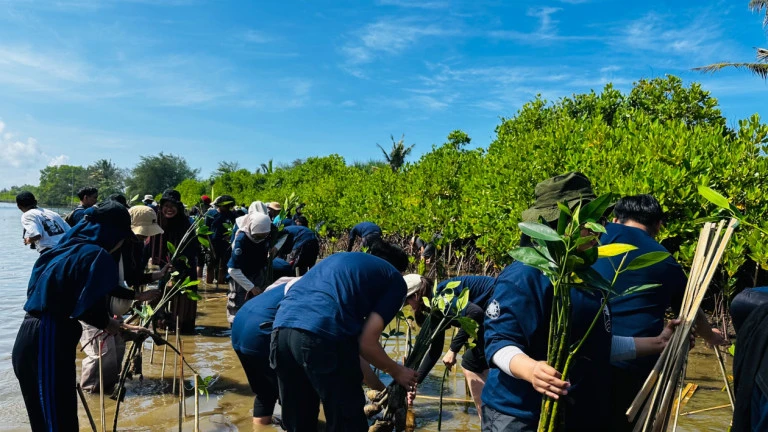
Indonesia currently holds the world’s largest mangrove area, covering 3.44 million hectares. These ecosystems play a crucial role in climate change mitigation and adaptation, while also contributing significantly to coastal community livelihoods and global ecological balance.
Since the Paris Agreement in 2016 and Indonesia’s G20 Presidency in 2022, the country has demonstrated strong climate leadership by implementing large-scale mangrove rehabilitation and conservation initiatives. These efforts contribute to the nation’s Nationally Determined Contribution (NDC) and the Net Sink Carbon 2030 target for the Forests and Other Land Uses (FOLU) sector.
“Indonesia bears a great responsibility and has positioned itself as a global leader in mangrove conservation and rehabilitation,” Marzuki affirmed.
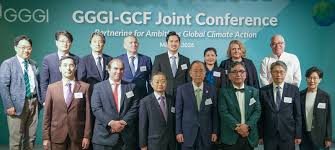
The dialogue also featured speakers from the Ministry of Environment of Sri Lanka, JICA Japan, the World Bank, and the Global Green Growth Institute (GGGI). The Sri Lankan delegate underscored the need to strengthen sustainable mangrove management in line with UNEA Resolution 4 on global mangrove health.
Representatives from JICA highlighted the strategic role of the Bali Mangrove Information Center as part of WMC’s international hub framework, while speakers from the World Bank and GGGI emphasized the importance of multi-stakeholder cooperation, resource mobilization, and knowledge-sharing mechanisms to support global mangrove initiatives.
In his closing statement, Marzuki reaffirmed Indonesia’s readiness to lead inclusive global collaboration through the WMC to tackle environmental degradation and slow climate change by promoting sustainable mangrove conservation and rehabilitation. (*)