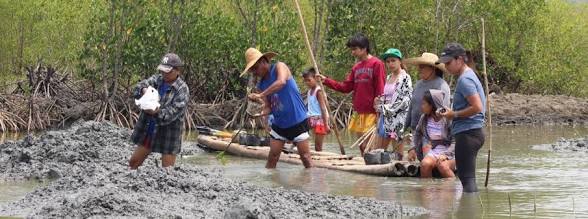
Enviro News Asia, La Union — Communities in the Philippines are strengthening natural coastal defenses through large-scale mangrove restoration efforts following a series of devastating storms that struck the country in 2025. The initiative is being led by the Dulao Fishpond and Fishpen Producers Cooperative in partnership with conservation group Oceanus Conservation to restore damaged coastal ecosystems and improve climate resilience in La Union, western Luzon.
The restoration program focuses on abandoned fishpond areas in Barangay Dulao, where mangrove forests had been heavily cleared over decades to make way for aquaculture activities. The loss of mangroves left coastal communities increasingly vulnerable to storm surges, flooding, and biodiversity decline.
The urgency of restoration efforts intensified after Typhoon Tino and Super Typhoon Uwan hit the Philippines between September and November 2025, affecting millions of people, damaging homes and infrastructure, and forcing thousands into evacuation centers. In La Union alone, more than 10,000 families were impacted by Super Typhoon Uwan.
Oceanus Conservation and local community members have been working together since 2021 to transform abandoned fishponds into functioning mangrove ecosystems capable of protecting coastlines from future storms. The project combines scientific research, ecological monitoring, and local stewardship to restore biodiversity and strengthen community livelihoods.
Project teams conduct biodiversity assessments, monitor site conditions, establish mangrove nurseries, and train residents in ecological mangrove restoration techniques, including soil preparation, hydrology management, and long-term ecosystem monitoring.
According to Oceanus Conservation Project Lead Mariz Obsina, the restoration process prioritizes understanding local ecosystems before planting activities begin. The organization also collaborates closely with local governments and community groups to ensure long-term sustainability.
The initiative has planted multiple mangrove species, including bakhaw (Rhizophora), kalapini (Lumnitzera), and api-api (Avicennia), across degraded coastal areas. Community members construct soil mounds inside former fishponds to recreate natural conditions suitable for mangrove growth.
The restoration effort is also improving local fisheries and household incomes. Community leader Delilah Lacadue said fish and mud crab populations have increased as mangrove ecosystems recover, helping stabilize livelihoods for fishing families. The cooperative has also expanded into processing and selling smoked milkfish products to generate additional income.
Support for the restoration program has expanded through partnerships with private companies such as ride-hailing platform Grab and the Provincial Government of La Union, which are contributing to wetland and mangrove rehabilitation initiatives.
Environmental groups view mangrove restoration as a critical nature-based solution to climate change, coastal erosion, biodiversity loss, and food insecurity in the Philippines, one of the world’s most disaster-prone countries. (*)