Enviro News Asia, Jakarta — The Indonesian government affirmed its commitment to accelerate domestic climate action following the 30th UN Climate Change Conference (COP30) in Belém, Brazil. The Ministry of Environment and Environmental Control Agency (KLH/BPLH) outlined a strategy that combines diplomacy, regulatory reforms, and carbon-market mechanisms to translate global climate targets into investment opportunities and public benefits.
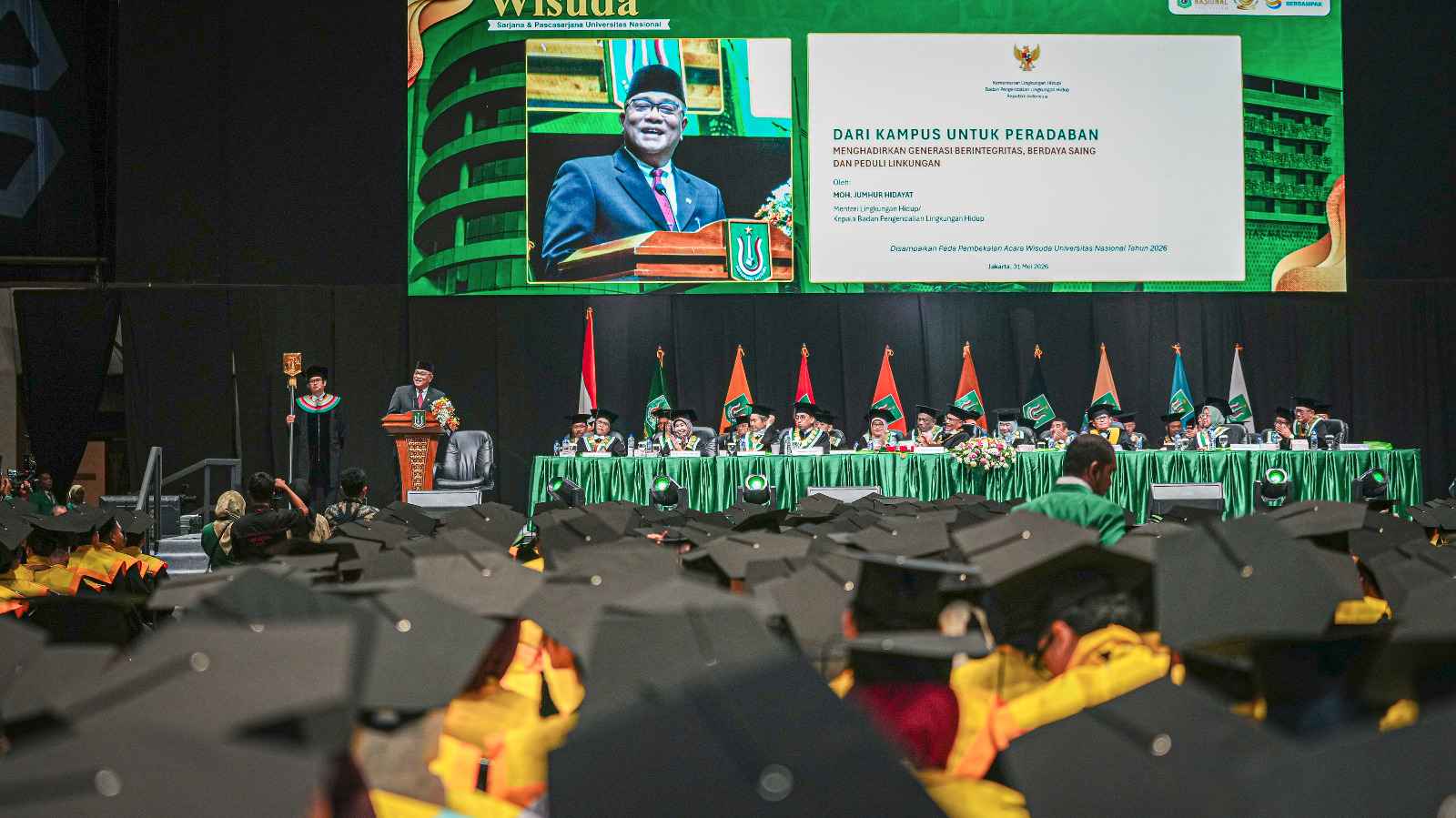
Environment Minister and Head of BPLH Hanif Faisol Nurofiq said the government will advance climate implementation by strengthening national policies and scaling cooperation initiated during COP30. He emphasized that Indonesia now focuses on transforming international negotiations into measurable climate action at home.
Indonesia positioned itself as an early mover in Article 6.2 implementation under the Paris Agreement by launching the first international technology-based carbon trading cooperation through a framework between PT PLN and the Global Green Growth Institute with Norway. Hanif said this initiative demonstrates Indonesia’s readiness to move ahead even as global debates on Article 6 continue.
During COP30, Indonesia promoted 44 mitigation projects offering a potential emissions reduction of 90 million tons of CO₂e, supported by an initial transaction potential of 2.75 million tons of CO₂e through the IDX Carbon platform. The delegation also contributed to the Belem Political Package, which comprises 29 consensus decisions strengthening adaptation, just transition initiatives, and discussions on the New Collective Quantified Goal (NCQG) that may mobilize USD 1.3 trillion annually.
Indonesia secured international partnerships during the conference, including a USD 5 million commitment from the Climate and Clean Air Coalition to reduce methane emissions in the waste sector, and cooperation agreements with the United Kingdom, The Royal Foundation, Australia, Austria, Canada, China, Brazil, and Sweden.
The government formally submitted its Second Nationally Determined Contribution (NDC), First Biennial Transparency Report (BTR), and National Adaptation Plan (NAP) to the UNFCCC Secretariat, receiving positive recognition for timely compliance.
Deputy for Climate Change Control and Carbon Economic Value Governance Ary Sudijanto reported that the 2023 emissions inventory shows a mitigation gap of around 506 million tons of CO₂e between current projections and Indonesia’s climate targets. He said the gap requires accelerated cross-sector policies through 2030.
KLH/BPLH proposed priority actions, including regulatory harmonization, revision of the SNDC and subnational roadmaps, investment expansion in renewable energy and industrial electrification, and strengthened mitigation of blue carbon and FOLU sectors. The Ministry also plans to improve domestic carbon-market governance, expand the Carbon Economic Value (NEK) mechanism, and enhance monitoring, reporting, and verification through the integration of SIGN-SMART and the National Registry System.
Hanif said the government will intensify climate financing strategies, including the use of climate budget tagging, technology transfer partnerships, and collaborations with private investors for priority mitigation projects. He stressed that accountability and transparent public communication will remain central to safeguarding the credibility of Indonesia’s NDC implementation. (*)