

Enviro News Asia, Jakarta — The Indonesian government is accelerating efforts to end open dumping practices nationwide by July 2026, while intensifying waste sorting at the source as a key strategy to improve national waste management.
Vice Minister of Environment, Diaz Hendropriyono, emphasized that waste sorting from upstream is essential to achieving effective and sustainable waste management.
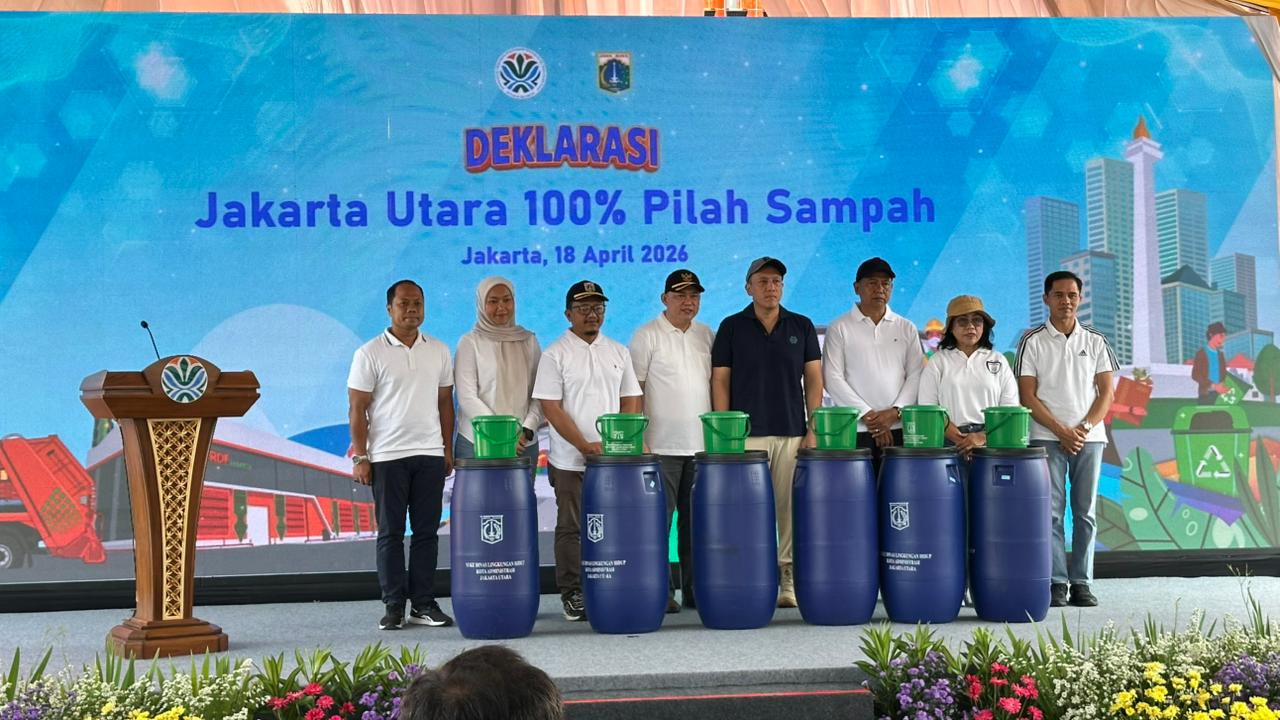
“Without proper waste sorting, waste management cannot be completed effectively. We are also committed to closing all open dumping practices by the end of July,” he stated during the “North Jakarta 100% Waste Sorting Declaration” event at the RDF Rorotan facility in Cilincing.
The policy targets the transformation of 472 landfill sites across Indonesia, aligning with the national directive to improve waste governance. The initiative is part of a broader effort to meet the government’s target of achieving 100% managed waste by 2029.
According to Diaz, eliminating open dumping is expected to significantly boost the country’s waste management performance from the current 26% to 57.7%.
The program also highlights community-based waste sorting initiatives in Rorotan, where residents have actively implemented waste segregation through waste banks and household-level sorting systems.
He praised the community’s participation, noting that only residual or low-value waste would be sent to landfills or processed at RDF facilities, reducing environmental impact and improving waste transport conditions.
The government aims to replicate the Rorotan model across 30 other urban villages in North Jakarta, strengthening grassroots participation in waste management.
To support the initiative, the Ministry of Environment has distributed waste management tools, including 400 drop points, 12,000 sorting bins, and 650 kitchen waste containers.
This move marks a significant step toward sustainable waste management and environmental protection in Indonesia. (*)