Enviro News Asia, Jakarta – Indonesia’s Ministry of Forestry is advancing reforms to create a more predictable, productive, and sustainable forestry business ecosystem by strengthening investment certainty, improving the performance of Forest Utilization Business Licensing (PBPH), increasing forest-product productivity and marketing, and optimizing non-tax state revenue (PNBP).
The policy direction was discussed during the ninth and final session of the National Webinar Series on Forest Utilization Transformation, organized by the Directorate General of Sustainable Forest Management (PHL) with support from the Multistakeholder Forestry Programme (MFP5).
The webinar focused on transforming the sustainable forestry business ecosystem to encourage investment, improve PBPH performance, and optimize state revenues from forest utilization.
Erwan Sudaryanto, Secretary of the Directorate General of Sustainable Forest Management, who represented the Director General, said the series of public consultations was important for ensuring that regulatory improvements, particularly the revision of Minister of Environment and Forestry Regulation No. 8 of 2021, could be implemented effectively by businesses while providing broader benefits to communities.
“The revision of Regulation No. 8 should meet our expectations, be applicable to businesses, and be accepted by civil society. The Ministry of Forestry is not only focused on corporations but also on the interests of communities,” Erwan said.
He said stakeholder input had become an important part of the regulatory revision process. The review of Regulation No. 8 of 2021 is being conducted comprehensively because it covers various aspects of forest utilization governance.
The Ministry is targeting completion of the revised regulation in September 2026 before submitting it to the Minister of Forestry. Stakeholders will continue to have opportunities to provide input during the finalization process.
Strengthening Investment Certainty
One of the main issues discussed during the ninth webinar was strengthening the Forest Utilization Direction Map (PAPH) as an instrument to provide greater spatial certainty and open new opportunities for forestry investment.
Drajad Kurniadi, Head of the Subdirectorate for Production and Protection Forest Area Planning at the Directorate of Forest Utilization Planning, said the PAPH is being developed into a more comprehensive and transparent information platform based on reliable data.
The map is expected to provide potential investors with a clearer picture of forest utilization opportunities, including information on land suitability, existing land cover, commodity potential, local communities, non-timber forest products, and environmental services.
The Ministry is also encouraging the transformation of the PAPH into a digital investment map containing more detailed information on land suitability, commodity potential, and the status of areas available for investment.
This approach means that spatial certainty will no longer be defined simply by the availability of forest areas, but also by clear information about their physical conditions, potential, and development opportunities.
Improving PBPH Performance
The Ministry emphasized that investment should translate into productive, well-managed, compliant, and sustainable forestry businesses.
Risno Murti Candra, Head of the Subdirectorate for Business Performance Evaluation at the Directorate of Forest Utilization Business Control, said PBPH performance evaluation is being strengthened through data-driven monitoring and field-based assessments.
“For us, the development and guidance approach remains the primary concept,” Risno said.
He explained that performance assessments conducted by independent institutions are among the indicators used in business development and supervision. The approach is intended to help PBPH holders improve their performance, strengthen compliance, and contribute positively to sustainable forestry management.
PBPH performance, he added, cannot be assessed solely through productivity. Social and environmental considerations must also form an integral part of the evaluation.
As a result, high investment or productivity alone does not necessarily indicate strong PBPH performance if social and environmental responsibilities are neglected.
Optimizing Forest Product Revenue
Krisdianto, Director of Forest Product Levies and Marketing, highlighted the importance of improving forest utilization productivity and strengthening forest-product marketing as part of efforts to optimize non-tax state revenue.
The webinar linked spatial certainty, investment, PBPH performance, productivity, and PNBP as interconnected elements of a single forestry business ecosystem.
Under this approach, greater spatial certainty is expected to encourage investment, investment is expected to support better-performing PBPH businesses, stronger performance can increase productivity, and higher productivity can ultimately contribute to state revenue.
Krisdianto said PNBP is used to finance national development, including through revenue-sharing mechanisms with local governments.
“We are committed to establishing fair and sustainable forest governance. Everything has been regulated, and we implement it transparently in accordance with existing regulations for the progress of the nation and the country,” he said.
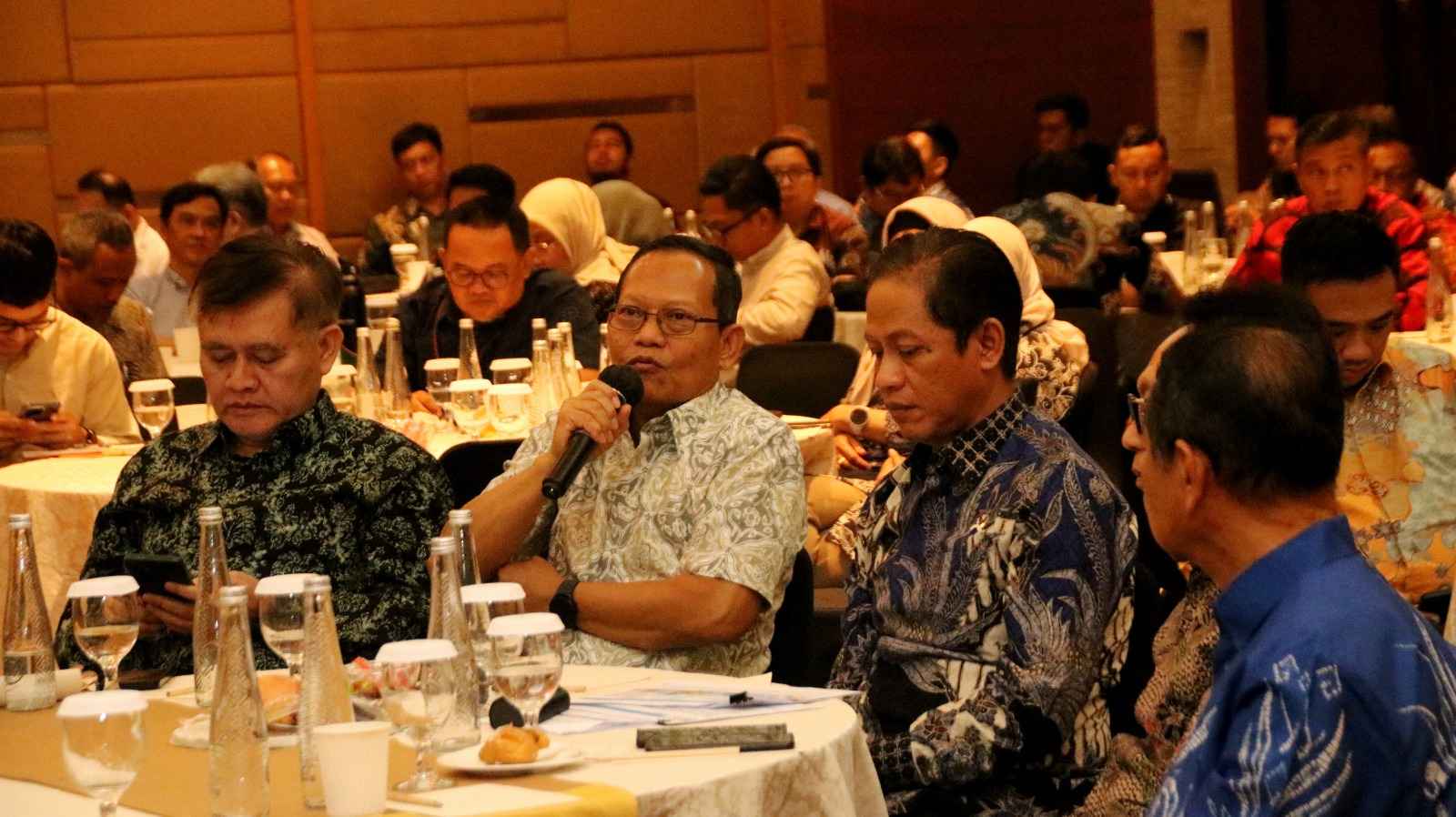
The ninth webinar brought together representatives from government, research and policy institutions, verification bodies, and the private sector. Participants included representatives from the National Research and Innovation Agency (BRIN), the Association of Independent Verification and Validation Institutions (Forum LPVI), and the Indonesian Forest Concessionaires Association (APHI).
The forum served not only to discuss future forestry policies but also to collect experiences, recommendations, and perspectives from stakeholders as part of the public consultation process.
The Ministry said feedback gathered throughout the webinar series would be considered in finalizing the revision of Minister of Environment and Forestry Regulation No. 8 of 2021.
Through the regulatory reform, the Ministry of Forestry aims to establish a forestry business ecosystem that provides greater investment certainty, improves PBPH performance, increases the added value of forest products, optimizes state revenue, and maintains forest sustainability and social benefits for communities. (*)