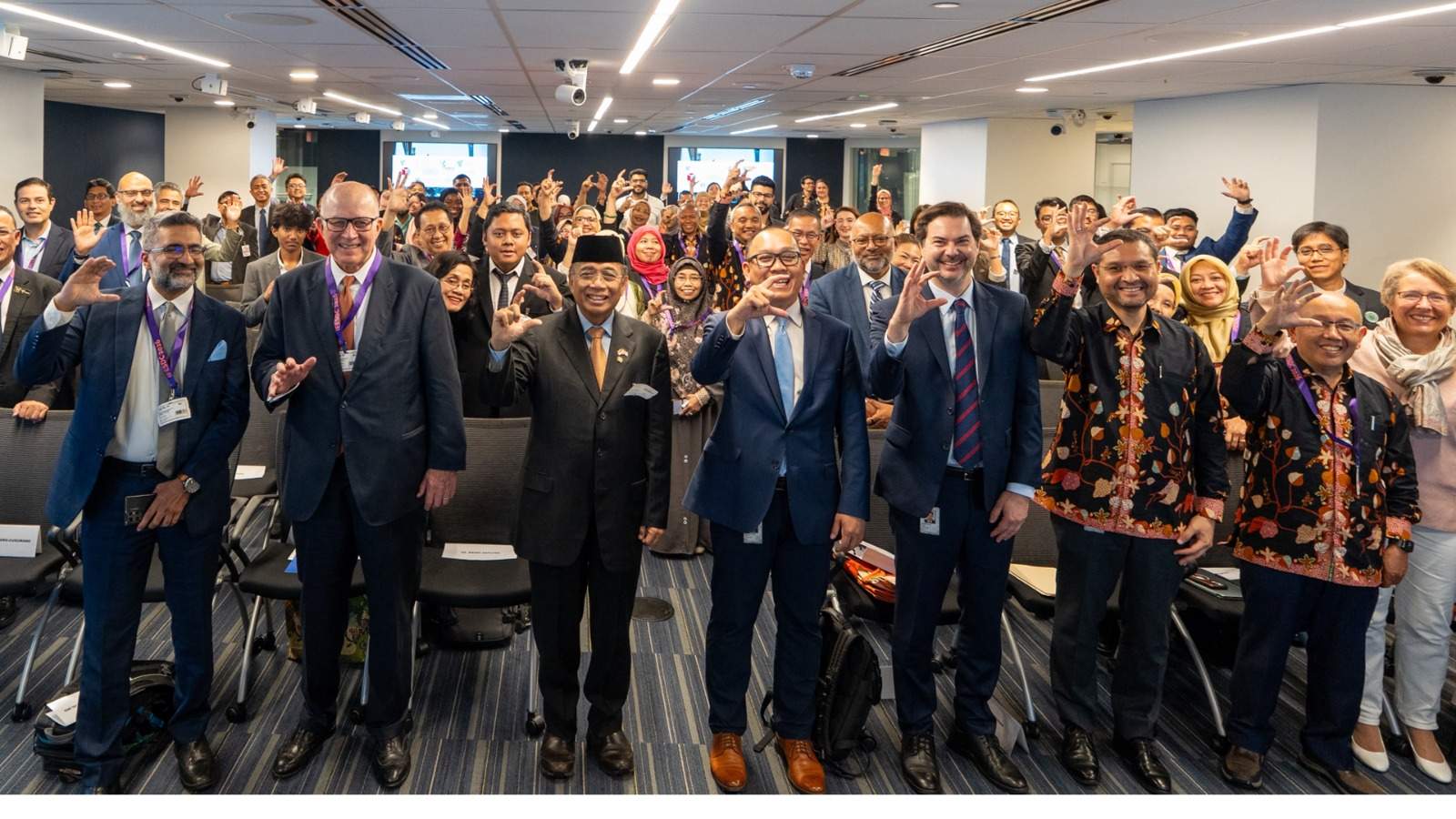
Enviro News Asia, Washington, D.C. — Indonesia reaffirmed its growing role in advancing the global Islamic economy by actively participating in the International Islamic Economics and Finance Conference for Sustainable Development (IFESDC) 2026, held at the World Bank headquarters on July 15–16.
The conference brought together policymakers, academics, financial institutions, and development organizations to explore how Islamic economics and finance can contribute to more inclusive and sustainable global development. Organized within the EDS16 World Bank framework, the forum facilitated dialogue and collaboration among experts from Southeast Asia, the United States, and other regions.
Indonesia was represented by several institutions, including Universitas Indonesia, Tazkia University, Dompet Dhuafa, and the Center for Technology & Innovation Studies (CTIS) Jakarta. They joined leading international organizations and universities, including the University of Pennsylvania, Columbia University, Georgetown University, the IMAAM Center Maryland, the Islamic Bank of Thailand, and the World Bank.
Indonesian Ambassador to the United States Indroyono Soesilo said Islamic economics and finance have significant potential to address global development challenges, particularly in developing countries.
Despite continued global economic uncertainty, approximately 700 million people still live in extreme poverty. Meanwhile, the global Islamic finance industry has grown to an estimated value of USD 3.6 trillion, offering substantial opportunities to support sustainable development through ethical and inclusive financial systems.
As the country with the world’s largest Muslim population—more than 240 million people—Indonesia is well positioned to become a global hub for Islamic economic innovation, although Islamic finance currently represents only around 10–11 percent of the country’s domestic financial sector.
Indonesia has strengthened its Islamic economic ecosystem through the establishment of the National Committee for Islamic Economy and Finance (KNEKS), the expansion of Bank Syariah Indonesia (BSI), and the issuance of sovereign sukuk, which has exceeded USD 120 billion in cumulative value to finance infrastructure and sustainable development projects.
Participants highlighted several strategic priorities to accelerate the growth of the Islamic economy, including harmonizing regulations, expanding digital innovation through Islamic fintech, strengthening international academic collaboration, and improving the governance of Islamic social finance instruments such as zakat and waqf.
Indonesia’s annual zakat potential is estimated at around USD 20 billion, yet less than USD 1 billion is currently collected, underscoring the need for stronger governance, digital innovation, and greater public awareness.
The forum also highlighted the rapid expansion of the global Islamic economy, which serves approximately two billion people and was valued at around USD 6 trillion in 2025. The halal food sector remains the largest segment, followed by modest fashion and media and recreation.
Participants concluded that Islamic economics offers more than an alternative financial system by promoting fairness, sustainability, and social inclusion. Indonesia’s participation in the World Bank forum reflects its ambition to play a leading role in shaping a more equitable and sustainable global economic architecture. (*)