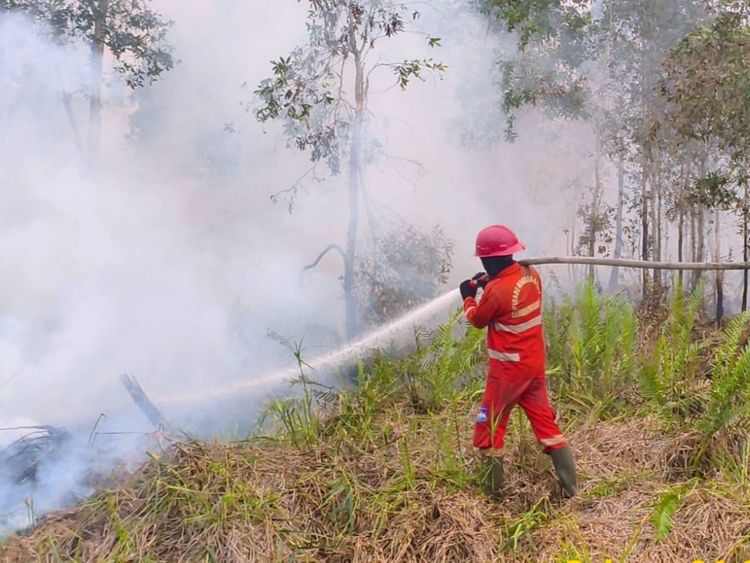
Enviro News Asia, Jambi — Indonesia’s Ministry of Forestry has strengthened coordination with the Jambi Provincial Forest and Land Fire (Karhutla) Task Force to improve preparedness and response to forest and land fires as the dry season intensifies.
The coordination was strengthened through a 2026 regional forest fire control assistance visit to Jambi led by Director General of Watershed Management and Forest Rehabilitation (PDASRH) Dyah Murtiningsih, who also serves as coordinator of the regional forest fire control assistance team for Jambi, Riau and the Riau Islands.
The delegation included Director of Forest Utilization Business Control (PUPH) Khairi Wenda and Head of the Ministry of Forestry’s Strategic Policy Center Ahdiyar Syahrony.
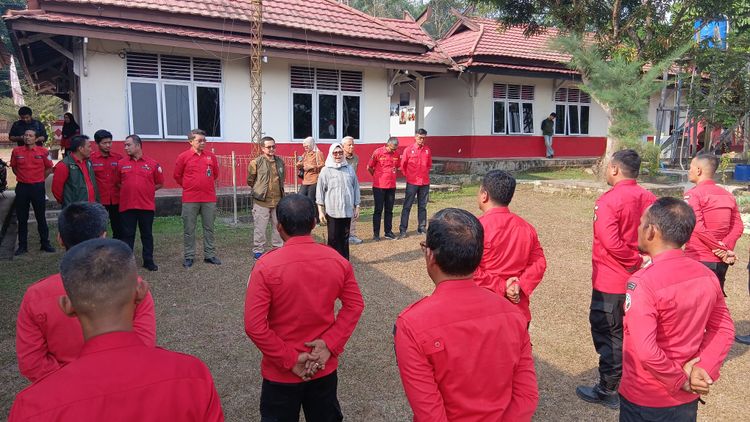
The activities included a briefing with the Jambi Provincial Forest and Land Fire Task Force, an aerial patrol with the Air Task Force to monitor fire conditions, a visit to Manggala Agni Sumatra IX Operations Area in Jambi, and the delivery of logistical support for personnel working in the field.
The team also received updates on national forest and land fire developments and the latest situation in Jambi. The activities were intended to strengthen coordination between the central government, regional authorities and other stakeholders involved in fire prevention and response.
Dyah Murtiningsih said effective forest and land fire control requires stronger coordination, early prevention, public and stakeholder education, as well as law enforcement against those responsible for illegal burning.
“The Minister of Forestry is coordinating supervision of forest and land fire management across Indonesia. As the area affected by fires has increased in August, support and coordination among stakeholders continue to be strengthened, including in dealing with burned areas,” Dyah said.
She added that the Ministry of Forestry continues to strengthen support for Manggala Agni personnel, including efforts to improve their welfare and provide better support for their field operations.
Khairi Wenda said logistical assistance for field personnel was an important part of the ministry’s efforts to strengthen forest and land fire control.
“The logistical assistance is a tangible expression of the Ministry of Forestry’s presence in supporting our Manggala Agni colleagues who are working directly in the field. We hope this support will help them carry out their duties and strengthen their commitment to forest and land fire control in Jambi,” Khairi said.
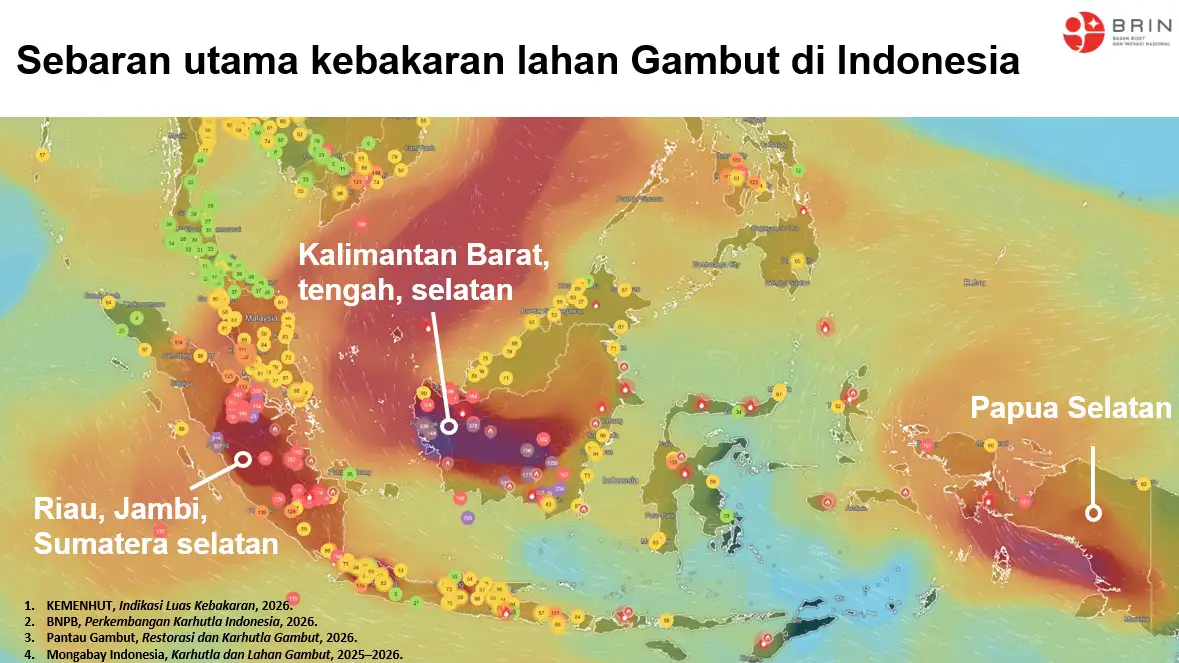
Jambi’s preparedness is also being strengthened by the provincial government. According to the Jambi Regional Disaster Management Agency (BPBD), fire-prone areas are spread across eight districts.
Four districts—West Tanjung Jabung, East Tanjung Jabung, Muaro Jambi and Sarolangun—contain peatland areas. The regional government has also established 81 fire-prone area command posts supported by the regional budget and other stakeholders.
During the aerial patrol, the team monitored areas considered vulnerable to forest and land fires. According to the National Disaster Management Agency (BNPB), approximately 338 hectares of land in Jambi have been affected by fires.
Representatives of the Meteorology, Climatology and Geophysical Agency (BMKG) also provided updates on climate conditions and the potential for increased fire risks. The information is being used to strengthen preventive measures and preparedness for potential forest and land fires.
The activities were supported by the Forest Management Unit (BPHL) Region IV Jambi, which coordinates the Ministry of Forestry’s technical implementation units in the province, along with the Jambi Natural Resources Conservation Agency (BKSDA), BPS Kampar, Batanghari Watershed Management Agency (BPDAS), and Manggala Agni Sumatra IX Operations Area in Jambi.
The Ministry of Forestry said continued coordination, aerial and ground monitoring, personnel preparedness, infrastructure support, public education and law enforcement would remain central to preventing forest and land fires at an early stage and protecting forests and the environment. (*)