Enviro News Asia, Jakarta — Indonesia is intensifying efforts to combat forest and peatland fires by strengthening human resource capacity and regional collaboration, with Vice Minister of Forestry Rohmat Marzuki emphasizing the critical role of skilled personnel in managing complex peatland ecosystems.
Speaking at the opening of the 2nd Training of Trainers for Forest Fire Suppression in Peatland, Rohmat highlighted that effective fire management cannot rely solely on equipment and technology, but must be supported by well-trained and prepared human resources.
The training programme, held from 13–24 April 2026 in Bogor and South Sumatra, is part of the Forest Fire Management in Asia (FFMA) initiative led by the Asian Forest Cooperation Organization (AFoCO) in collaboration with Indonesia’s Ministry of Forestry, with support from international partners including France, the Korea Forest Service, and IPB University.
The programme brings together participants from Indonesia, Malaysia, the Philippines, Timor-Leste, and Cambodia, aiming to enhance technical capacity while strengthening cross-border coordination in addressing forest fires, which often have regional impacts.
Rohmat noted that the initiative is expected to establish a regional trainer network capable of replicating knowledge and strengthening institutional capacity across ASEAN countries. This, he said, will help build a more sustainable and coordinated system for peat fire management.
Meanwhile, International Tropical Peatlands Center (ITPC) representative Ayu Dewi Utari stressed the importance of integrated peatland management to prevent fires. She highlighted key approaches such as rewetting, revegetation, and community-based economic revitalization within a unified peat hydrological system.
Ayu warned that partial restoration efforts are ineffective and may lead to ecosystem imbalance and increased fire risk. She emphasized ITPC’s role as a global platform for science-based knowledge exchange and international collaboration in tropical peatland management.
Gun Gun Hidayat, Head of the Sustainable Forest Development Center at the Ministry of Forestry, underscored the growing strategic role of ITPC in sharing knowledge and best practices. He noted that strengthening ITPC’s involvement will provide more comprehensive, science-based insights into peatland characteristics and fire behavior.
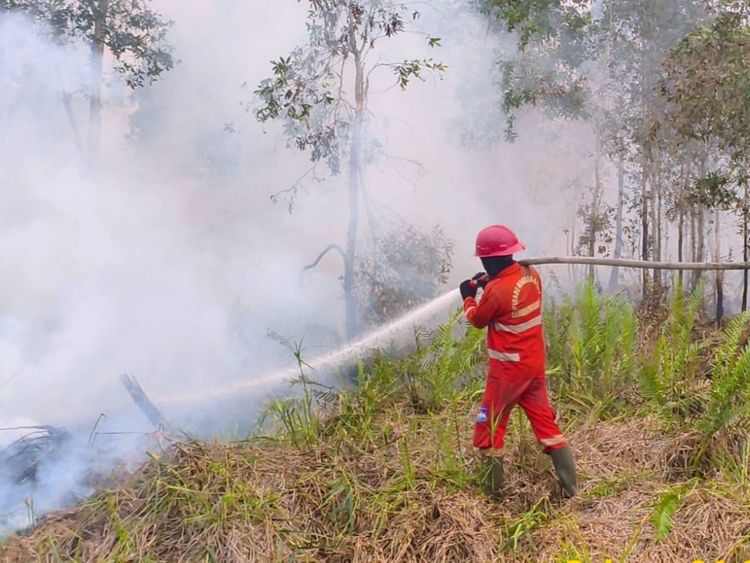
The training adopts an integrated approach combining classroom learning, simulations, and field exercises, including practical understanding of peat fire dynamics such as underground smouldering and water management techniques like rewetting.
As part of the FFMA Main Phase 2026–2030, the programme aims to establish a structured and replicable training system across the region. It is also expected to produce key outputs, including training modules, implementation reports, and policy briefs to support stronger national and regional policies on peat fire management. (*)