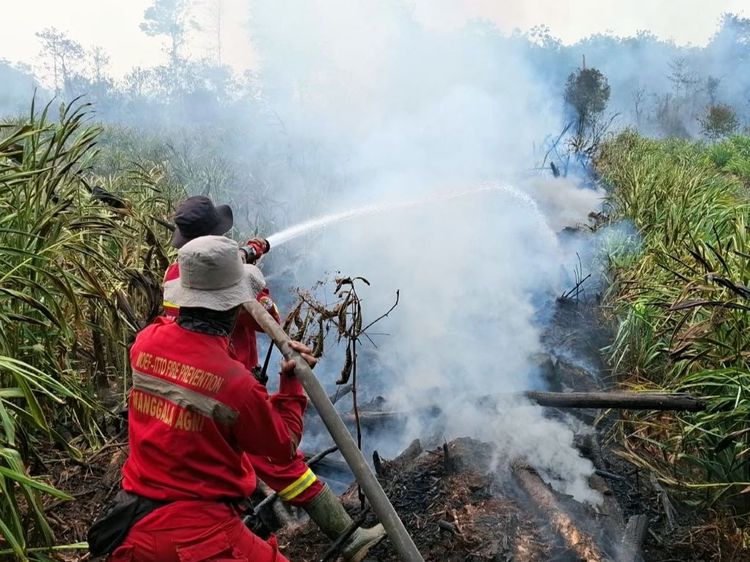
Enviro News Asia, Jakarta — Indonesia recorded a sharp decline in high-confidence forest and land fire hotspots, with the national total falling by 605 points in the latest monitoring. However, the Forestry Ministry is maintaining fire-control operations in priority areas as hotspot activity remains high in several provinces.
The Forestry Ministry’s SiPongi early fire detection system recorded 666 high-confidence hotspots as of 9:10 p.m. on October 3, 2026, based on data from NASA Terra/Aqua, NASA SNPP and NASA NOAA-20 satellites. The figure fell from 1,271 hotspots recorded a day earlier.
South Sumatra recorded the highest number among the six priority provinces, with 254 hotspots, up sharply from 83. Central Kalimantan recorded 96, down from 355, while Riau reported 32 after recording none the previous day.
West Kalimantan recorded 26 hotspots, down from 246, while South Kalimantan recorded 18, compared with 42 previously. Jambi recorded three hotspots after reporting none a day earlier.
Combined, the six priority provinces recorded 429 high-confidence hotspots, down from 726 the previous day.
The ministry stressed that satellite-detected hotspots represent surface-temperature anomalies and cannot be directly equated with the number of fires or the area burned. A single fire may generate multiple hotspot detections, making ground verification necessary to determine actual conditions and the appropriate response.
Ground and Aerial Operations Continue
The Forestry Ministry continues to coordinate fire-control operations with Manggala Agni, BNPB, TNI, Polri, BMKG, BPBDs, local governments, communities, volunteers and businesses.
A total of 61 aircraft remain on standby, including 17 aircraft for patrols and weather modification operations and 44 for water-bombing missions.
Particular attention is being given to fires on peatlands, where embers can persist and spread below the surface even after visible flames disappear. Firefighters therefore need to continue wetting and cooling affected areas until they are considered safe.
Air Quality Remains Under Monitoring
Authorities are also monitoring air quality through PM2.5 concentrations as part of public health protection measures.
Most parts of Indonesia continue to record good to moderate air quality, although unhealthy to very unhealthy conditions have been reported in parts of Sumatra, Kalimantan, Java and Papua. Some locations have also recorded hazardous conditions.
Air quality can change rapidly depending on fire activity, particulate concentrations, wind direction and atmospheric conditions. Residents in affected areas are advised to follow official air-quality updates, reduce outdoor activities if conditions deteriorate and wear masks when outdoor activity is unavoidable.
Children, pregnant women, older people and those with respiratory or chronic illnesses require particular attention.
Wildlife Response Based on Field Assessments
Forest and land fires can disrupt wildlife habitats, food sources and movement corridors. The Forestry Ministry, through conservation agencies and related units, continues to monitor and respond to affected wildlife.
Measures may include rescue and evacuation, medical examinations, treatment, rehabilitation, translocation and eventual release when the animals and their habitats are considered ready.
Authorities have urged the public not to handle or evacuate wild animals independently. Anyone who finds injured or fire-affected wildlife should keep a safe distance, avoid actions that could cause stress or aggression, record the location and condition when possible, and report the case to the nearest conservation or forestry officer.
Public Urged to Remain Vigilant
The Forestry Ministry has reiterated its call for communities and businesses not to clear or prepare land by burning.
The decline in national hotspots does not mean the fire threat has ended. Conditions can change quickly depending on weather, land conditions and activities on the ground.
Residents are encouraged to immediately report smoke, fires, land-burning activities or wildlife requiring assistance so that authorities can respond as early as possible. (*)