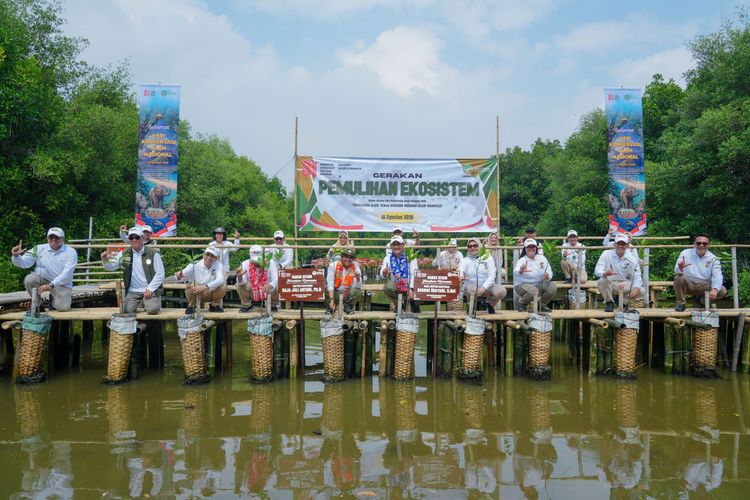
Enviro News Asia, Luang Prabang – The collective efforts of ASEAN countries in preserving mangrove ecosystems are showing significant progress.
At the 28th Meeting of the ASEAN Senior Officials on Forestry (ASOF) held in Luang Prabang, Laos, on August 7–8, 2025, Dr. Ristianto Pribadi, Director of Mangrove Rehabilitation at the Ministry of Forestry of the Republic of Indonesia, presented a report on the implementation of mangrove management strategies.
His presentation highlighted ASEAN’s commitments, project achievements, and strategic steps moving forward to protect the vital “mangrove forests” that play a crucial role for the environment and coastal communities.
ASEAN’s commitment to mangrove management began during the 14th ASOF meeting in Thailand in July 2011, where mangrove ecosystem conservation was discussed.
This was reinforced at the 15th ASOF meeting in Vietnam in 2012, where mangrove conservation became a key agenda.
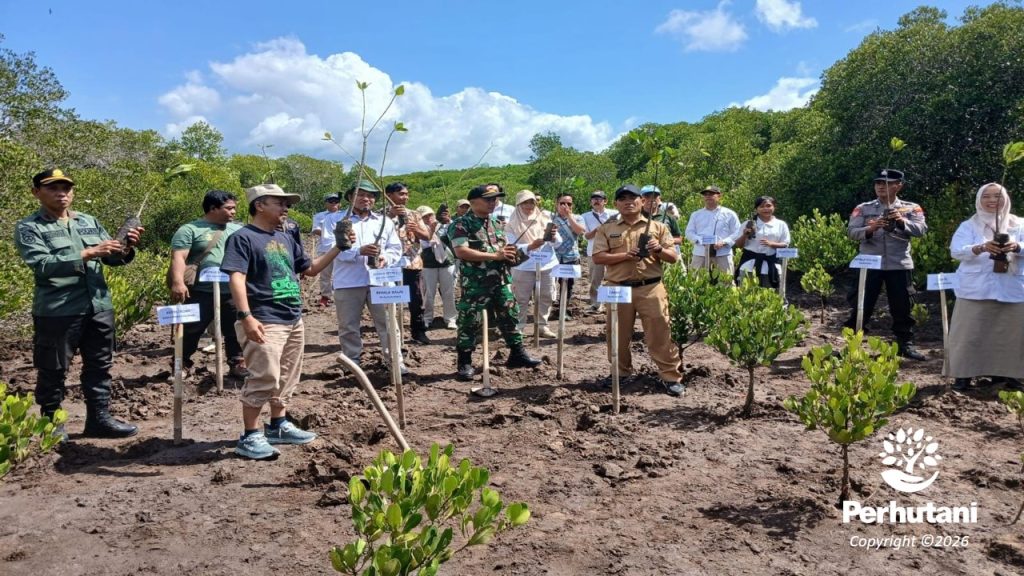
As a follow-up, the ASEAN Mangrove Network (AMNET) was established in Surabaya, Indonesia, in February 2013. AMNET serves as a collaborative platform to promote regional cooperation in sustainable mangrove conservation and management.
Between 2023 and 2025, AMNET—supported by the Japan ASEAN Integration Fund (JAIF)—successfully implemented a mangrove ecosystem management project, achieving several key milestones.
Among them was the development of an integrated information system. The project also introduced a high-yield silvofishery model in Sawojajar village, Brebes, Central Java, with productivity ranging from 248 to 1,300 kg/ha/cycle.
The best practices and lessons learned from this project were shared through workshops and inter-country seminars in Indonesia and Malaysia.
A major highlight was the formal adoption of the ASEAN Strategy on Sustainable Mangrove Ecosystem Management 2024–2030 by the ASEAN Working Group on Forest Management (AWGFM) on June 7, 2024.
This regional strategy has been translated into 17 technical guidelines, serving as references for ASEAN member states to develop context-specific policies.
These guidelines cover five core strategies: Commitment, Mangrove Mapping, Promotion, Intervention, and Governance. For instance, under the Mangrove Mapping strategy, guidelines are provided for mangrove economic valuation and carbon stock assessment.
These documents are intended to serve as dynamic “living documents” to be updated continuously.
Indonesia, which holds 23% of the world’s mangrove ecosystems, along with ASEAN collectively owning 40% of the global mangrove area, is expected to show strong leadership in global mangrove management.
As a concrete manifestation of this commitment, Indonesia has initiated the establishment of the World Mangrove Center (WMC)—a global research and development hub for mangroves.
This initiative not only reflects Indonesia’s significant role but also invites ASEAN member states and Timor-Leste to jointly participate in this global endeavor.
Dr. Ristianto Pribadi concluded his presentation by encouraging ASOF to formally adopt the 17 technical guidelines as living documents.
He also emphasized the importance of strengthening AMNET, promoting integrated mangrove cultivation programs, and developing community-based mangrove ecotourism.
Through these efforts, ASEAN reaffirms its commitment to ensuring the sustainability of mangrove ecosystems for a greener and more resilient future. (*)