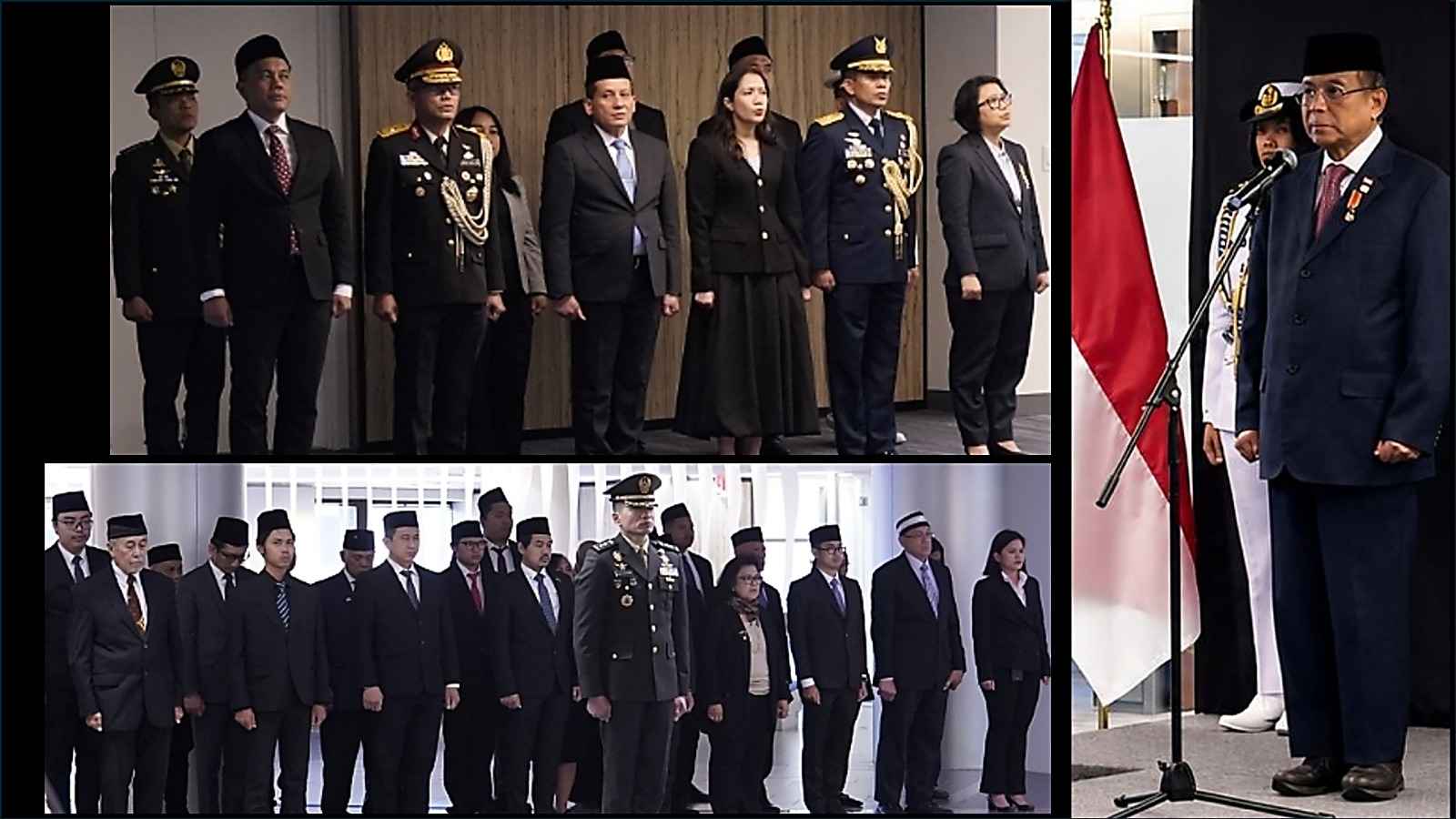
Enviro News Asia, Jakarta – The Dewan Energi Nasional (DEN) intensified collaboration with the United States and Japan to strengthen human resources and governance frameworks supporting Indonesia’s energy transition, particularly in nuclear power development. The cooperation materialized through the Foundational Infrastructure for Responsible Use of Small Modular Reactor Technology (FIRST) Workshop, a trilateral initiative focused on capacity building, regulatory readiness, and the development of a safe and sustainable civil nuclear ecosystem.
Secretary General of DEN, Dadan Kusdiana, representing the Vice Minister of Energy and Mineral Resources, stated that Indonesia is reinforcing international cooperation with the United States and Japan to develop globally aligned nuclear governance standards. The partnership covers the strengthening of Small Modular Reactor (SMR) design and regulatory frameworks, enhancement of advanced manufacturing capabilities, and implementation of strict nuclear safety and security protocols.
He emphasized that Indonesia remains committed to ensuring that every stage of nuclear power plant development adheres to the highest safety standards, transparent governance, and well-prepared human resources. According to Dadan, nuclear energy offers a stable and low-emission solution capable of supporting long-term economic growth, especially with the advancement of SMR technology that makes nuclear development more adaptive and suitable for developing countries.
Indonesia’s initiative aligns with Government Regulation No. 40/2025 on the National Energy Policy (KEN), which positions nuclear energy as part of the country’s long-term strategy to strengthen energy security and support an 8 percent economic growth target by 2029. The government projects nuclear energy to contribute between 11.7 and 12.1 percent of the national primary energy mix by 2060, with installed capacity reaching 35–42 gigawatts (GW). Indonesia targets its first nuclear power plant to begin commercial operation in 2032 with an initial capacity of 250 megawatts (MW), as outlined in the Electricity Supply Business Plan (RUPTL) 2025–2034.
Beyond supporting decarbonization goals with a projected 45 GW capacity by 2060, nuclear energy is considered efficient in land use and competitive in long-term operational costs. DEN expressed confidence that combining domestic expertise with advanced technologies from international partners will strengthen Indonesia’s power system resilience and global competitiveness.
Peter M. Haymond, Chargé d’Affaires of the U.S. Embassy, affirmed that the United States, alongside Japan, is honored to serve as Indonesia’s trusted partner in advancing safe and responsible nuclear energy development. He stated that U.S. technology supports Indonesia’s vision of building a secure and resilient energy future.
Meanwhile, Mitsuru Myochin, Chargé d’Affaires of the Japanese Embassy, highlighted Japan’s commitment under the Asia Zero Emission Community (AZEC) framework to support Indonesia’s energy transition. He emphasized Japan’s readiness to cooperate in policy coordination, regulatory strengthening, industrial development, and human resource capacity building to accelerate Indonesia’s long-term energy targets.
The FIRST Workshop represents collaboration between the National Energy Council, the Institut Teknologi PLN, the Masyarakat Energi Terbarukan Indonesia, and international partners including the United States Department of State FIRST Program, Advanced Systems Technology & Management (AdSTM), The Association for Overseas Technical Cooperation and Sustainable Partnerships (AOTS), and JAIF International Cooperation Center (JICC).
The forum convened policymakers, academics, industry representatives, and nuclear energy experts to discuss key aspects of nuclear power development, including SMR technology, regulatory frameworks, licensing processes, human resource development, and opportunities for domestic industry participation. (*)