Enviro News Asia, Northumberland — Conservation authorities have confirmed that a nationally significant population of white-clawed crayfish, an endangered native species, has survived a major incident in the River Wansbeck catchment, following extensive investigations and surveys carried out since autumn 2024.
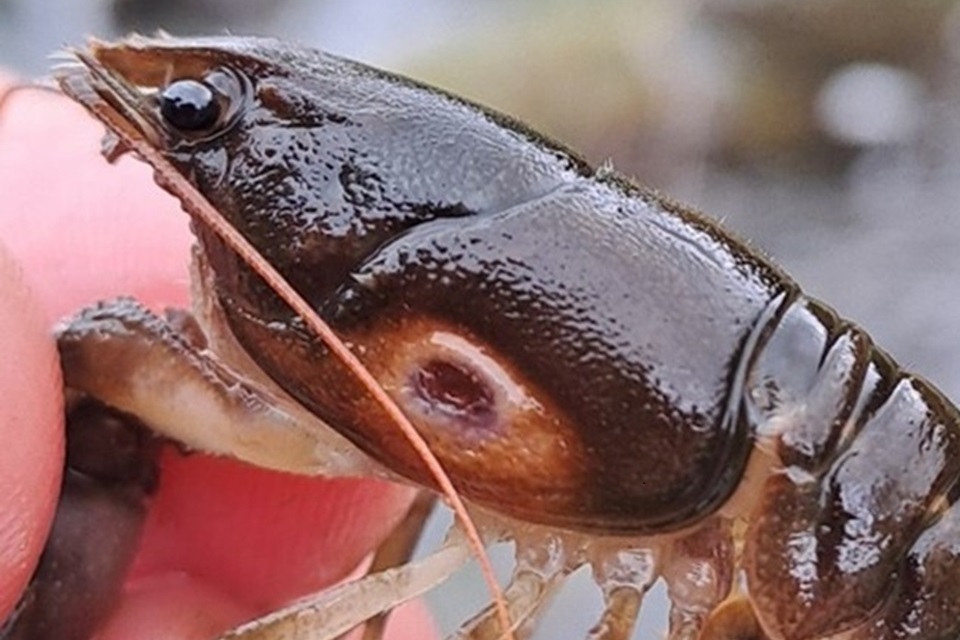
Around 100 crayfish were found dead in autumn 2024, raising concerns over the future of one of the highest-density populations of the species in the world. Subsequent investigations revealed that crayfish displaying unusual orange ulcer-like lesions on their shells were widespread across the Wansbeck catchment and neighbouring Tyne and Blyth river systems.
In response, the Environment Agency, in partnership with the National Trust, conducted a series of intensive surveys during the summer of 2025 to determine the cause of the symptoms and assess impacts on population health. In total, 76 surveys have been completed since the initial incident.
The investigation found that the symptoms do not appear to be fatal at the population level. Some crayfish—particularly younger individuals—were observed to recover through the natural moulting process, while others continued to live with the symptoms. Several crayfish exposed to affected individuals did not develop symptoms at all.
Researchers noted that the majority of mortalities occurred during a natural moulting period and were more frequent among older and larger crayfish, where the lesions appeared to interfere with successful moulting. Since autumn 2024, the severity and frequency of symptoms have declined, and no further crayfish deaths have been reported in any catchment.
Further scientific analysis is ongoing, led by the Centre for Environment, Fisheries and Aquaculture Science (Cefas) and Dr Jamie Bojko, Associate Professor in Disease Ecology at Teesside University’s Tees Animal Pathology Laboratory, based at the National Horizons Centre. While several known and previously unrecorded biological associations have been identified, the precise cause of the symptoms remains unclear.
Sarah Jennings, Area Environment Manager at the Environment Agency, said early fears of a devastating impact had eased, although long-term monitoring remains essential. She stressed that conservation efforts are now focused on safeguarding the population and understanding whether environmental stressors such as drought or heatwaves could trigger future outbreaks.
Conservation actions are continuing through collaboration with partners, including the expansion of “ark sites”—secure water bodies isolated from common threats to white-clawed crayfish. Following the 2024 incident, healthy crayfish were relocated from the River Wansbeck at the National Trust’s Wallington Estate, with egg-carrying females transferred to Northumberland Zoo for specialist care.
The eggs hatched in April 2025, and the juvenile crayfish are expected to be released into designated ark sites later this year to strengthen long-term population resilience.
Authorities have also urged the public, particularly river users, to follow Check, Clean, Dry biosecurity guidance to prevent the spread of disease and invasive organisms between waterways. (*)