Enviro News Asia, Malang – The Minister of Environment and Head of the Environmental Control Agency (KLH/BPLH), Hanif Faisol Nurrofiq, underscored the strategic role of postgraduate intellectuals in addressing global challenges (polycrisis) and driving Indonesia’s Golden Vision 2045.
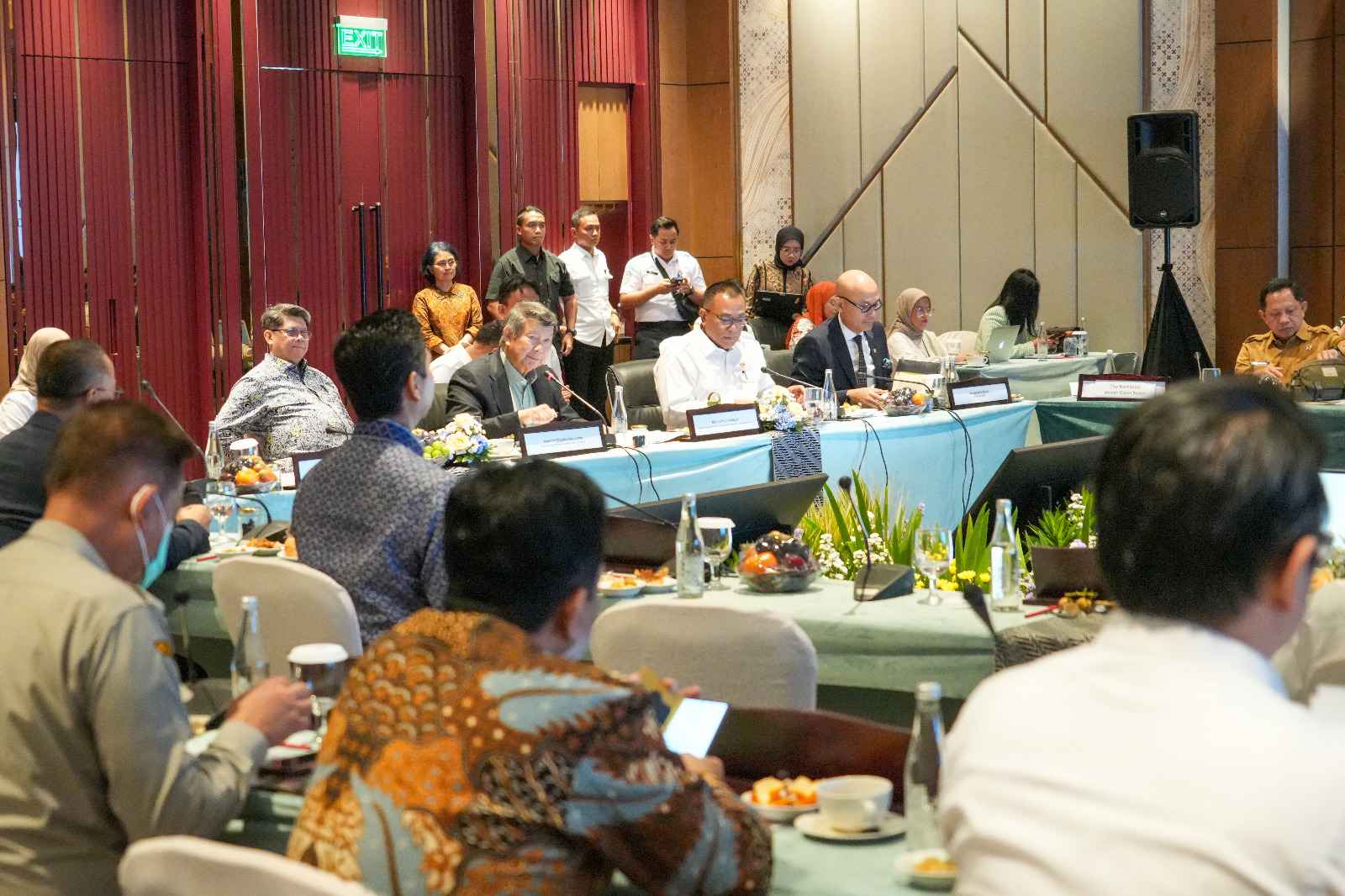
He conveyed this during the Orientation Program for New Postgraduate Students at Universitas Brawijaya for the 2025/2026 academic year.
“The world is currently facing what is known as a polycrisis—overlapping crises in climate, energy, food, health, and geopolitics, each amplifying the impacts of the others. Indonesia is not immune to this. In fact, amid these challenges, universities and postgraduate students have a strategic role as engines of change,” said Minister Hanif in an official statement from the Ministry of Environment on Monday (August 18, 2025).
A polycrisis refers to a condition where major crises—such as climate, energy, food, health, and geopolitics—occur simultaneously and exacerbate one another.
This makes global challenges increasingly complex, as one crisis can worsen another; for example, climate change triggering food insecurity and resource conflicts.
For this reason, cross-sector collaboration, innovation, and visionary leadership are required to build national resilience in an era of uncertainty.
Citing the UNEP 2024 Navigating New Horizons report, he highlighted that the world is falling far behind in achieving the 2030 Sustainable Development Goals (SDGs).
Therefore, concrete actions are needed to strengthen national resilience through evidence-based policymaking, sustainable innovation, and cross-sector collaboration (pentahelix).
“Indonesia has already set strategic agendas such as achieving the FOLU Net Sink 2030, ensuring a just energy transition, and building a circular economy. All of these require tangible contributions from universities, whether through research, green technology innovation, or strengthening public literacy. Postgraduate students must become intellectuals who are not only academic but also capable of navigating the complexities of our time,” Minister Hanif continued.
He further emphasized the transformation toward Industry 5.0, which focuses on humanity, sustainability, and resilience. Universities, he noted, must serve as both knowledge hubs and public ethical beacons so that technological progress does not create new inequalities but instead becomes an instrument for social welfare and environmental sustainability.
“Indonesia’s Golden Vision 2045 can only be realized if we nurture postgraduate intellectuals who are professional in their fields, uphold integrity and ethics, and are visionary in understanding global trends. All of you here today are future leaders who will guide this nation through an era of uncertainty,” Minister Hanif asserted before 2,255 new postgraduate students at Universitas Brawijaya.
At the same event, Universitas Brawijaya Rector Widodo stressed the importance of improving both the quantity and quality of postgraduate graduates.
“Currently, only about 0.45 percent of Indonesia’s population holds a postgraduate degree. This figure is still very low compared to advanced countries, where the proportion stands at 9–10 percent,” Rector Widodo explained.
Hence, postgraduate education must be continuously strengthened, “because knowledge and scientific research play a vital role in addressing global challenges and advancing Indonesia as a competitive nation,” he added.
The orientation, themed “Building Professional, Ethical, and Visionary Postgraduate Intellectuals Toward Indonesia’s Golden Vision 2045”, also marked Universitas Brawijaya’s commitment to producing resilient, innovative graduates who make real contributions to national development.
KLH/BPLH reaffirmed its commitment to strengthening synergies with universities in tackling the polycrisis while overseeing the transformation toward inclusive, just, and sustainable development. (*)