Enviro News Asia, Pontianak — The Government of Indonesia has reaffirmed Social Forestry as a key policy instrument for community-based sustainable peatland management and a critical pillar in achieving national climate change mitigation targets.
The statement was delivered by Bambang Supriyanto, representing the Director General of Social Forestry, during the International Workshop titled “Guardians of the Peatlands: Strengthening Social Forestry and Enhancing the Role of Indigenous Peoples and Local Communities in Sustainable Peatland Management”, held in Pontianak, West Kalimantan, on 26 January 2026.
The workshop brought together government representatives, indigenous peoples, local communities, and international partners to discuss strategies for strengthening community participation in peatland protection and sustainable management.
Bambang stated that Social Forestry is designed not only as a forest governance mechanism but also as a sustainable development approach that integrates social welfare, environmental protection, and local institutional strengthening. The scheme places local and indigenous communities at the center of forest and peatland management.
He reported that Indonesia has designated 8.3 million hectares of Social Forestry areas from the national target of 12.7 million hectares, benefiting approximately 1.4 million households. Within this area, 170 customary forests covering 366,000 hectares support the livelihoods of around 90,000 families.
According to Bambang, the program has facilitated community-based economic activities with transaction values reaching approximately Rp5.16 trillion and has contributed to food and energy security in more than 3,000 villages.
Bambang emphasized that peatlands play a strategic role in global climate mitigation, as they store around 30 percent of the world’s soil carbon. Indonesia’s peat ecosystems cover approximately 24 million hectares and store an estimated 57 billion tons of CO₂.
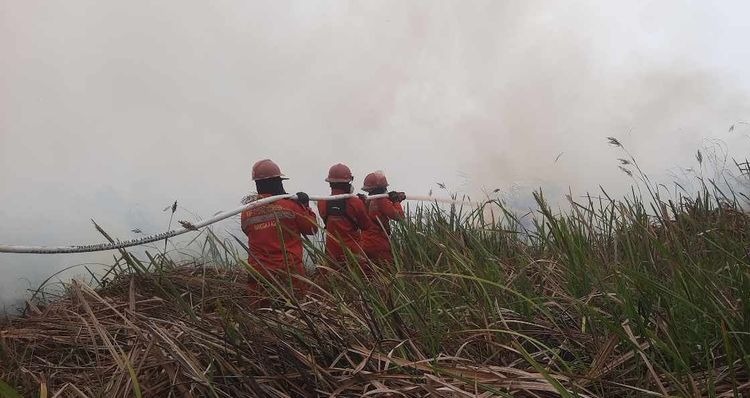
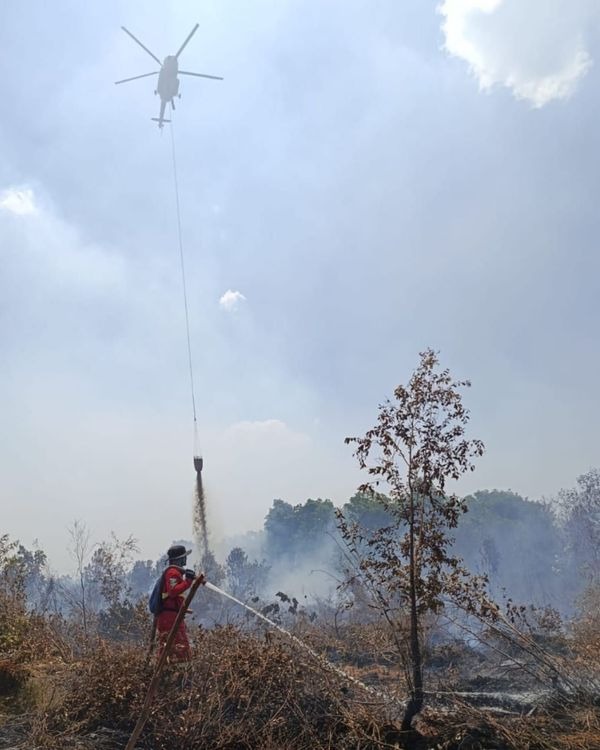
He explained that peatland degradation caused by fires and drainage remains a major source of greenhouse gas emissions, making sustainable, community-led management essential. Through the Social Forestry scheme, more than 608,000 hectares of peat ecosystems are currently managed sustainably by local and indigenous communities.
Each Social Forestry group is required to develop a Social Forestry Management Plan to guide institutional development, forest utilization, livelihood enhancement, and environmental monitoring.
Beyond conservation, Bambang highlighted agroforestry and paludiculture as environmentally friendly economic approaches suitable for peatlands. These models enable food, energy, and non-timber forest product production while maintaining ecological functions.
The Ministry of Forestry is also developing community-based peatland management demonstration plots in several provinces, including Riau, Central Kalimantan, and South Kalimantan, in cooperation with the International Tropical Peatland Center (ITPC).
Through international cooperation, Indonesia is sharing best practices in peatland management with countries such as the Democratic Republic of the Congo, Peru, and the Republic of the Congo.
Bambang concluded that inclusive and sustainable peatland management positions communities not only as beneficiaries but also as key guardians of ecosystems vital to global climate stability. (*)