Enviro News Asia, Pontianak — The Chairman of the Indonesian Forest Concessionaires Association (APHI), Soewarso, stated that current forestry issues have become increasingly complex and require constructive and objective thinking as well as concrete actions to address them. He emphasized that the challenges facing the forestry sector can no longer be resolved through partial or sectoral approaches.
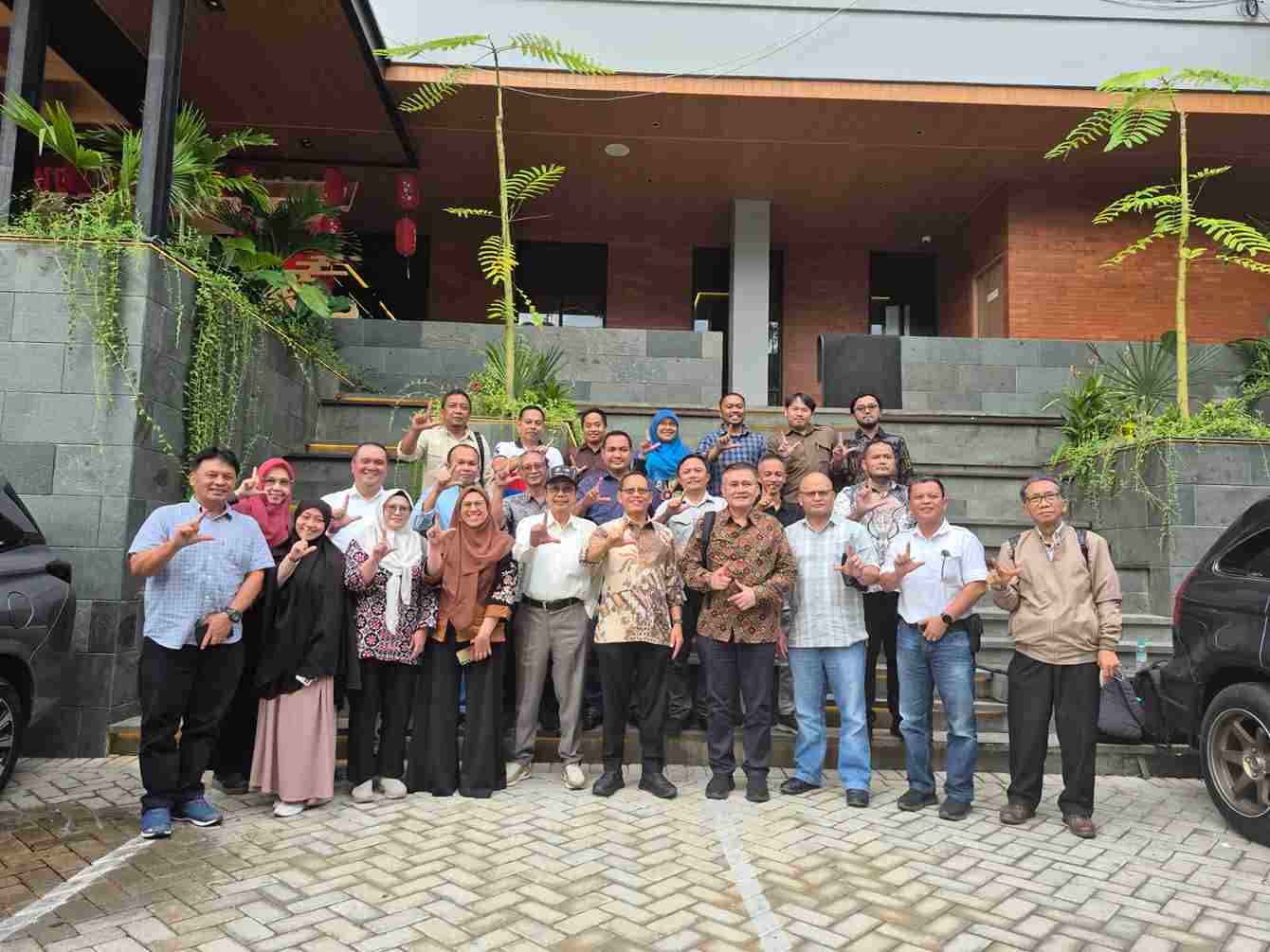
Soewarso made the remarks during a dialogue with the Dean of the Faculty of Forestry of Tanjungpura University, Farah Diba, along with her academic team, the Head of the West Kalimantan Provincial Environment and Forestry Agency, Adi Yani, and the Chairman of APHI West Kalimantan Chapter, Maman Surachman, in Pontianak on Wednesday (5/2/2026).
According to Soewarso, the forestry sector is currently facing a number of key challenges, including declining productivity of natural forests, suboptimal performance of plantation forests, limited development of multi-business forestry schemes, social conflicts, land tenure overlaps, and insufficient downstream product diversification.
“One of the initiatives currently being proposed by APHI in collaboration with the Indonesian Chamber of Commerce and Industry (KADIN) in West Kalimantan is the development of regenerative, landscape-based multi-business forestry in the Kubu landscape,” he said.
He further stressed that forestry stakeholders, particularly forestry academics, play a strategic role in responding to and formulating solutions to the sector’s pressing challenges. Such efforts, he noted, must be supported by enabling government policies.
Dean of the Faculty of Forestry at Tanjungpura University, Farah Diba, expressed the faculty’s openness to collaboration with multiple stakeholders as part of its commitment to the Tri Dharma of Higher Education.
“With adequate facilities and academic staff who possess strong expertise in silviculture, tropical forest management, forest conservation, and forest product processing, the Faculty of Forestry at UNTAN provides broad opportunities for cooperation in education, research, and community service,” she said.
Farah noted that the faculty admits approximately 500 undergraduate forestry students each year. She highlighted the importance of collaboration with APHI member companies in supporting student internship programs, enabling students to gain firsthand experience in addressing real-world forestry challenges in the field.
She also suggested optimizing the role of the Indonesian Forestry Higher Education Leadership Forum (FORETIKA).
“Consolidation with forestry higher education institutions under FORETIKA would be more effective and offer a broader perspective in identifying solutions to current forestry issues,” she explained.
Meanwhile, Head of the West Kalimantan Environment and Forestry Agency, Adi Yani, agreed that multi-stakeholder collaboration is an effective approach to addressing the dynamic challenges in the forestry sector.
“At the site level, permit holders in forestry, plantation, and mining sectors cannot operate in isolation. Forest and land fire prevention, social conflict resolution, and the mitigation of illegal activities all require consolidation and cooperation among stakeholders,” he said.
Adi Yani also highlighted the Mata Pendawa Biosphere Reserve initiative as an example of a landscape-scale, multi-stakeholder approach.
“This initiative reflects the West Kalimantan Provincial Government’s commitment to reducing greenhouse gas emissions through stakeholder engagement. The development of multi-business forestry in the Kubu landscape, as proposed by APHI and KADIN, will serve as a key pillar in supporting the establishment of the Biosphere Reserve,” he concluded. (*)