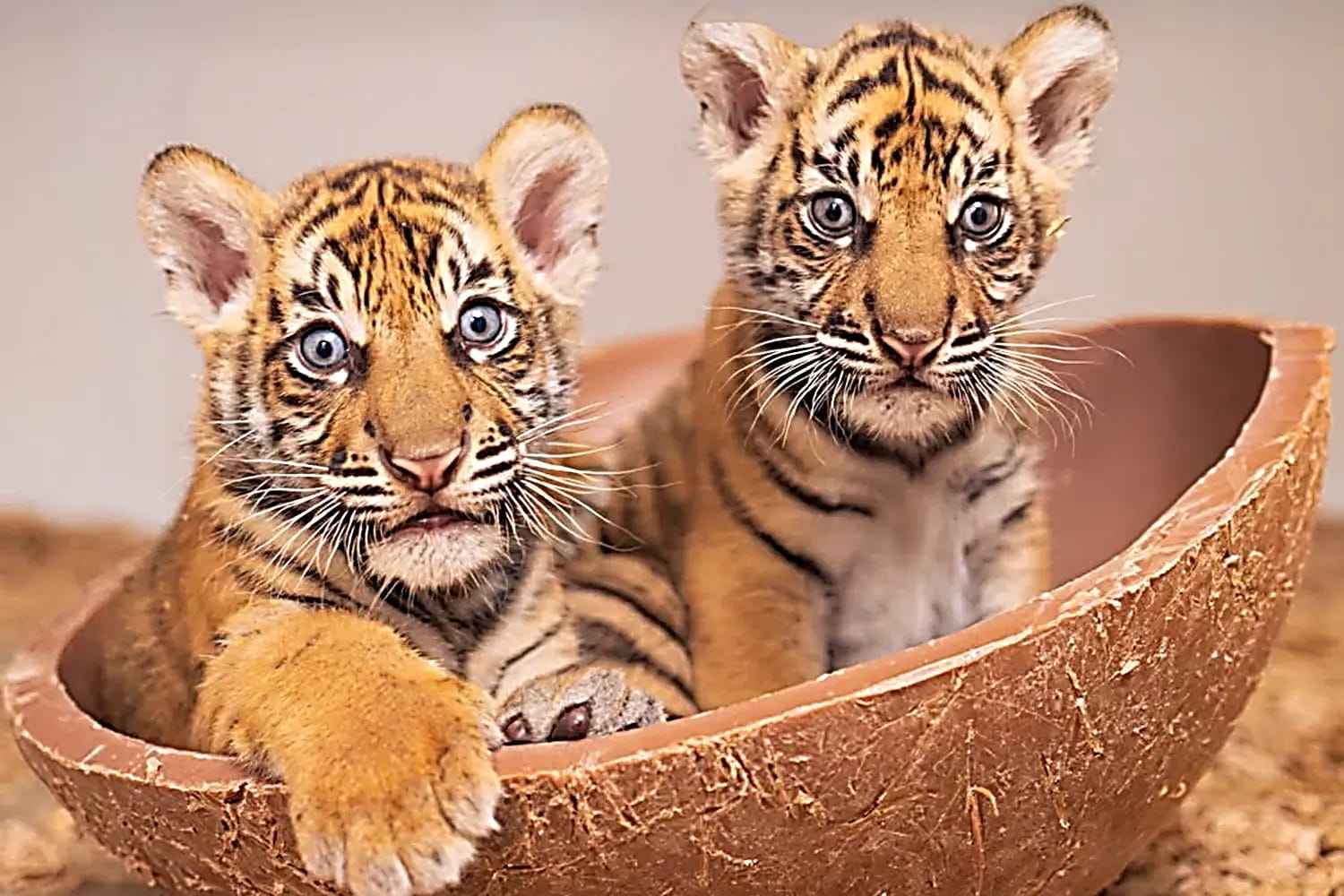
Enviro News Asia, Texas — News from Texas in early October 2026 brought a touch of Indonesia to the Fort Worth Zoo in Texas, USA. The zoo announced the birth of two female Sumatran tiger cubs, Barani and Malu—two Indonesian names now attached to the rare wildlife originating from the island of Sumatra.
The two Sumatran tigers were born on July 1, 2026, but their births were only announced to the American public on October 2, 2026, after the care team ensured that both cubs and their mother were in stable condition. Barani and Malu are the offspring of a first-time mother named Ndari and a male named Rakan.
This birth is particularly special as it marks the first birth of Sumatran tigers in the history of the Fort Worth Zoo. It also represents the zoo’s first tiger birth since 2008. At the time of the announcement, the two sisters were approximately 13 weeks old and weighed around 8–9 kilograms each.
Their names reflect two distinct personalities. Barani, derived from the word berani (brave), is known to be more active and full of curiosity. Meanwhile, Malu (shy) tends to be calmer and more cautious. Within the Predators of Asia & Africa habitat, the duo has become the new face of conservation efforts for Sumatran tigers—a critically endangered species native only to Indonesia.
The birth of Barani and Malu carries a deeper symbolic meaning, as Fort Worth is far from unfamiliar to Indonesia. Since 1990, Fort Worth and the city of Bandung have maintained a sister-city relationship. This partnership stands on record as the first sister-city connection between a city in the United States and one in Indonesia. At the time, the bond was rooted in the presence of PT Industri Pesawat Terbang Nusantara (IPTN) in Bandung and the General Dynamics Corp. aircraft manufacturing facility in Fort Worth, Texas.
In 2025, both cities celebrated 35 years of friendship. Over the decades, Bandung and Fort Worth have built close ties through youth exchanges, education, trade, technology, culture, and people-to-people contacts. Local governments of both cities also reaffirmed their commitment to expanding this collaboration, which has been active since April 2, 1990.
From an Indonesian perspective, Barani and Malu represent far more than two tiger cubs in a Texas zoo. They serve as a reminder that Indonesia is present in Fort Worth through two simultaneous avenues: a warm partnership with Bandung and a natural Sumatran heritage that demands collective preservation.
Indonesian Ambassador to the United States, Indroyono Soesilo, stated that while the two little tigers were born in America, they carry the names, origins, and messages of Indonesia. Barani and Malu demonstrate that closeness between Bandung and Fort Worth, as well as between Indonesia and the United States, can flourish not only through formal diplomacy, but also through education, culture, community friendships, and shared commitment to wildlife conservation. (*)