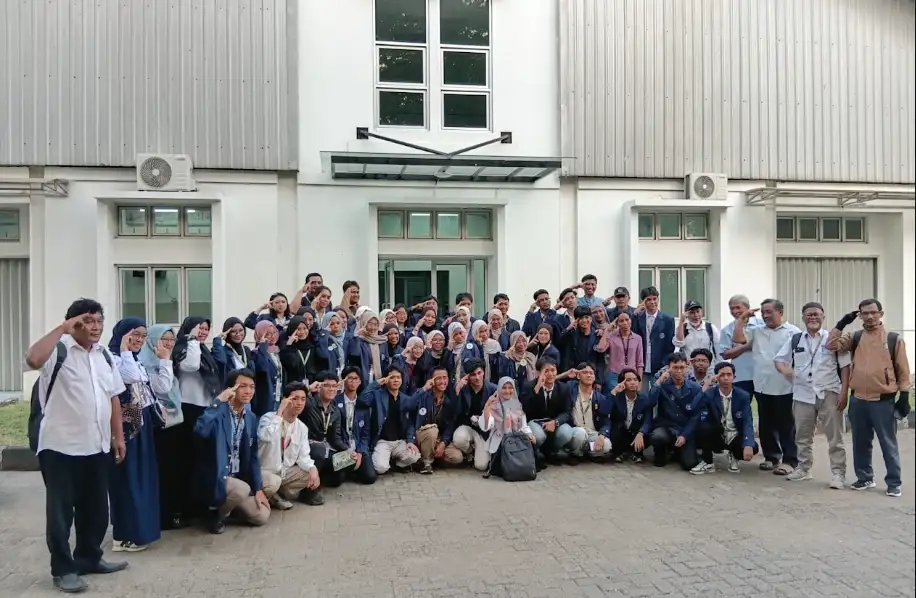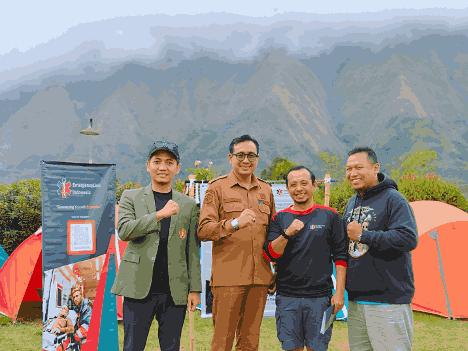
Enviro News Asia, Sembalun — Universitas Pembangunan Nasional “Veteran” Jakarta (UPNVJ) trained 37 participants in basic first aid for outdoor emergencies through Aksi DARSINEM (Sadari dan Atasi Kondisi Emergensi), held at Rinjani Camping Ground, Sembalun, East Lombok, on August 10–11, 2026.
The two-day training focused on strengthening participants’ knowledge and practical skills in responding to emergencies that may occur during mountain climbing and outdoor activities. All 37 participants successfully met the required knowledge and skills standards after completing training sessions, practical exercises, simulations, skills assessments, and a post-test.
The program applied Nature and Environmental Learning, outdoor education, and experiential learning approaches. Instead of relying solely on classroom-based instruction, the training used the Sembalun environment and Mount Rinjani area as a learning context. Participants were introduced to the ways terrain, weather, altitude, accessibility, and limited resources can influence emergency response decisions.
The training was opened by Head of the East Lombok Health Office Ns. Lalu Aries Fahrozi, M.Kep. The involvement of the local government supported efforts to strengthen community preparedness for emergencies, particularly in the Sembalun and Mount Rinjani tourism areas.
The community service program was led by Dr. Ns. Arief Wahyudi Jadmiko, M.Kep., M.Pd.Ked. It was implemented through collaboration among UPNVJ, Universitas Mataram, ITSK RS dr. Soepraoen Malang, Stikes Mataram, Bapelkes Mataram, PT Emergency Link, and Rinjani Bagus, a community focused on Mount Rinjani, with support from the East Lombok Health Office.
On the first day, participants completed a pre-test before receiving instruction and practical training on cardiopulmonary resuscitation (CPR), hands-only CPR, automated external defibrillator (AED) use, choking management, and high-altitude sickness. The second day covered animal bites, trauma management, and evacuation techniques, followed by skills assessments and a post-test.
The training also emphasized situational awareness and decision-making rather than technical procedures alone. Participants practiced identifying hazards, assessing victims, determining priorities, communicating with team members, coordinating responses, and selecting appropriate evacuation methods.
These skills are particularly important in mountain environments, where emergency response can be complicated by difficult terrain, changing weather, limited equipment, communication challenges, distance from healthcare facilities, and the time required to evacuate victims. First responders therefore need to combine technical knowledge with critical thinking and the ability to make rapid and appropriate decisions.
The program highlighted the importance of preparedness in Mount Rinjani, which presents challenging terrain and attracts significant numbers of climbers. Data from 2016–2024 recorded 273 climbing accidents, resulting in 17 fatalities and more than 200 injuries. The figures underline the importance of early response capabilities before professional emergency teams can reach an incident location.
Following the training, all 37 participants were qualified to advance toward becoming DARSINEM Cadres. The cadre system is designed to help participants transfer their first-aid knowledge and skills to communities and other people involved in outdoor activities in the region.
Aksi DARSINEM also promotes a Community-Based Health Tourism approach, positioning health and safety as integral components of nature-based tourism management. Under this model, local communities are encouraged to become active contributors to destination safety, while universities provide knowledge and technology, government institutions strengthen support and networks, and professional partners contribute emergency-response expertise.
The program is expected to continue through cadre development, mentoring, evaluation, and stronger coordination with health authorities, regional disaster management agencies, and search-and-rescue teams. This approach aims to ensure that emergency preparedness becomes a community capacity rather than relying solely on professional responders.
For UPNVJ, Aksi DARSINEM demonstrates the role of higher education in applying knowledge and innovation to address real challenges in society. Through collaborative and nature-based learning, the program seeks to strengthen a culture of safety while supporting safer and more sustainable nature tourism around Mount Rinjani. (*)