Enviro News Asia, Magelang— Indonesia is positioning the development of its electric vehicle (EV) ecosystem as a key pillar of economic self-reliance and the country’s transition toward a low-carbon economy, as the government seeks to achieve net-zero emissions by 2060 or earlier.
Minister of Environment and Head of the Environmental Control Agency (KLH/BPLH) Moh Jumhur Hidayat said the development of a domestic EV industry must go beyond replacing conventional combustion engines with electric motors.
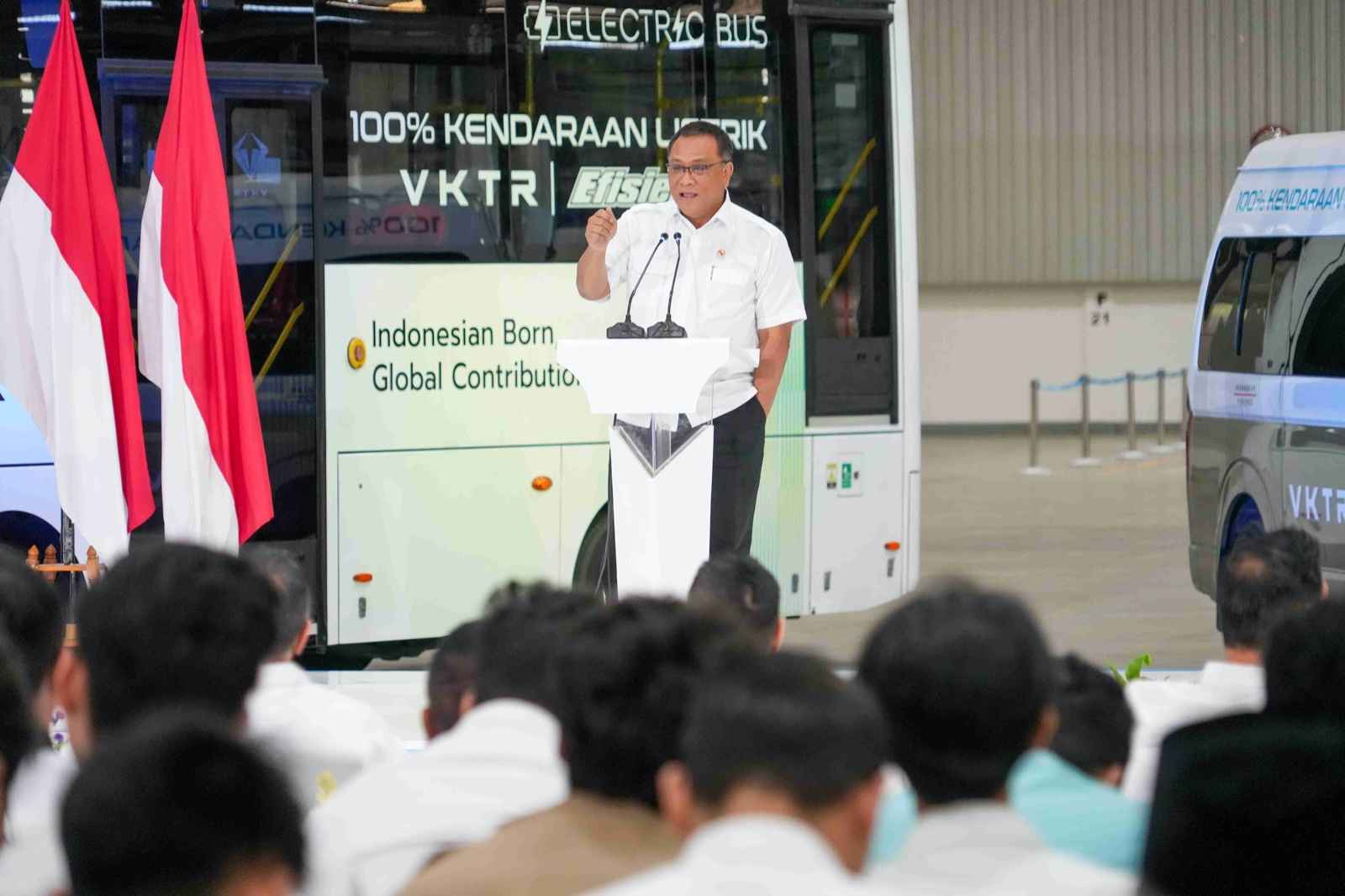
Jumhur made the statement during the Go-See and Pitch Trip industrial visit to PT VKTR Sakti Industries in Magelang, Central Java, on August 28, 2026.
“This demonstrates Indonesia’s efforts toward achieving net-zero emissions by 2060 by developing an electric-based automotive industry that does not produce emissions like conventional fuel-powered vehicles,” Jumhur said.
According to Jumhur, the transition to electric mobility is also part of the government’s broader effort to strengthen domestic industrial capacity and economic independence, in line with the principle of economic self-reliance promoted by President Prabowo Subianto.
He said Indonesia needs to develop a comprehensive EV industrial ecosystem covering manufacturing, research and innovation, supply-chain development, mineral downstreaming, battery technology and the creation of quality green jobs.
“Transformation means building a national industrial ecosystem that includes manufacturing, research and innovation, supply-chain strengthening, mineral downstreaming, battery technology development and the creation of quality green jobs,” Jumhur said.
The government also considers policy consistency essential to attract investment, strengthen domestic component requirements and improve Indonesia’s position in the global EV supply chain.
Jumhur stressed that the success of green investment would also depend on social preparedness. Industrial projects should involve surrounding communities from the early stages to build public trust and ensure long-term support for investment activities.
He also called on industrial operators to make workplace safety and a zero-accident culture fundamental elements of modern industrial governance.
The Indonesian Chamber of Commerce and Industry (KADIN) welcomed the government’s efforts to strengthen cooperation between environmental policy and industrial development.
KADIN Chairman Anindya Bakrie said the development of the domestic EV industry could contribute to greater industrial independence while reducing carbon emissions and fuel subsidies and creating employment opportunities.
The visit to VKTR took place five months after President Prabowo Subianto visited the company’s production facility, according to the Ministry of Environment and BPLH.
Anindya said the government’s industrialization strategy should not focus solely on increasing domestic content but should also ensure that industrial development delivers meaningful environmental benefits.
Through cross-sectoral cooperation, KLH/BPLH said it would continue to oversee EV investments to ensure compliance with environmental standards and regulations while supporting social welfare.
The government sees the development of the EV ecosystem as part of Indonesia’s broader strategy to reduce emissions, strengthen domestic industrial capacity and accelerate the transition toward a low-carbon economy. (*)