Enviro News Asia, Yogyakarta — Indonesia is strengthening its national carbon market governance by involving local governments and businesses in the development of an integrated Carbon Unit Registry System (SRUK).
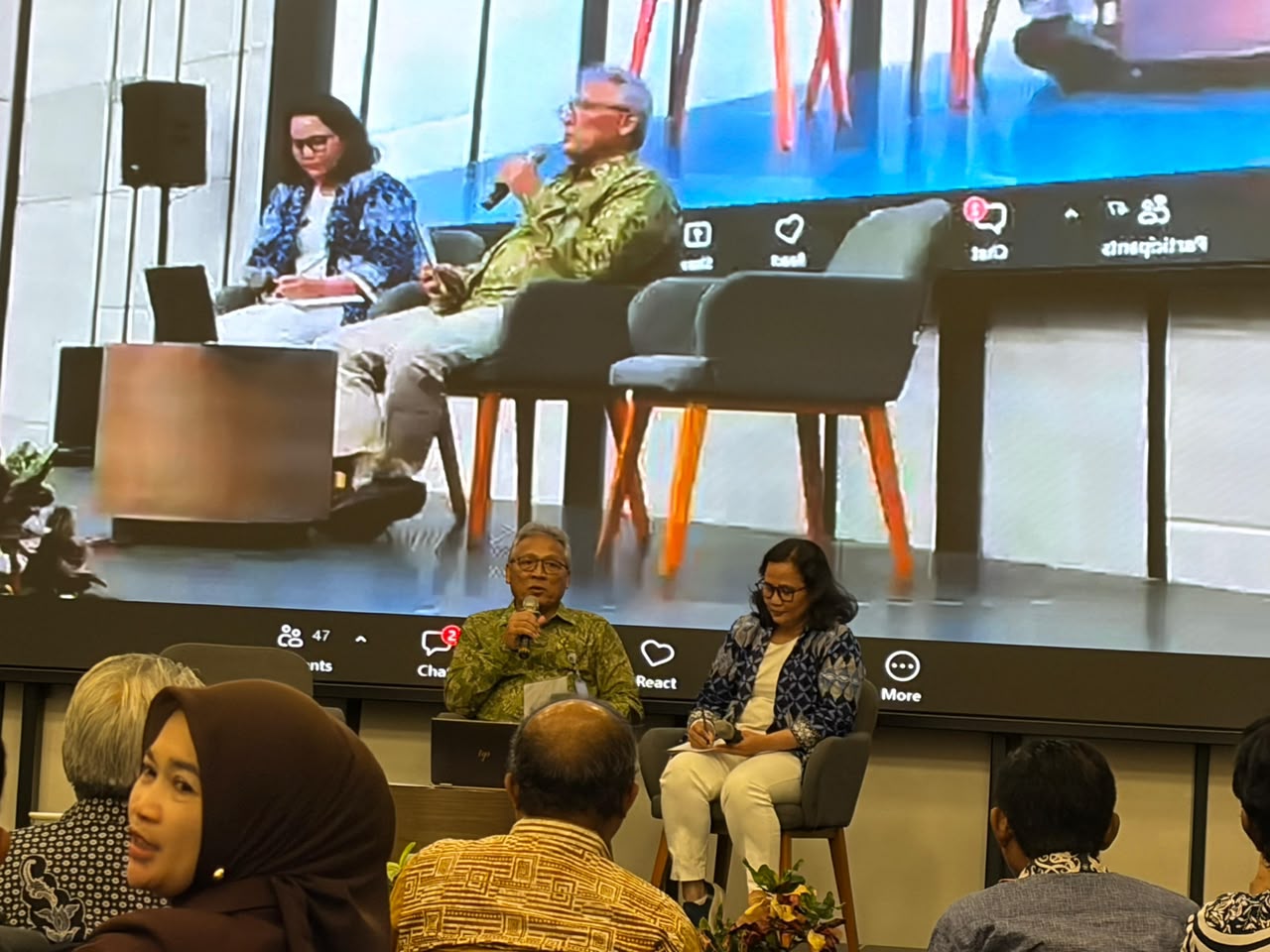
The Ministry of Environment and the Environmental Control Agency (KLH/BPLH) held a strategic SRUK forum in Yogyakarta on September 21, 2026, to gather input from regional governments and business actors on the development of a transparent, accountable and integrated carbon trading system.
The initiative is aimed at strengthening governance across the carbon market value chain while supporting Indonesia’s efforts to achieve its greenhouse gas (GHG) emission reduction targets.
The implementation of the Economic Value of Carbon (NEK) requires strong transparency to ensure that every traded carbon unit has a verifiable record, from its origin and verification process to its transfer between parties.
Mitta Ratna Juwita, Director of GHG Inventory and Monitoring, Verification and Reporting at KLH/BPLH, said the digital infrastructure should be developed based on the actual needs of its users.
“SRUK cannot be developed solely from the perspective of information systems and technology. It must be based on the real needs of its users. Business processes, regulations, data requirements, verification and validation, governance, information security and interoperability with other systems must form an integrated part of the system,” Mitta said.
The integrity of the carbon market also depends on reliable data to prevent double counting, a key risk in carbon accounting and trading.
An integrated registry is expected to improve transparency and traceability for carbon units while providing greater legal certainty for investors and industry participants.
Didik Eko, representing the BCL Cooperative in Ponorogo, said market confidence in carbon units ultimately depends on data quality and transparent processes.
Business actors, he said, need assurance that submitted data can be processed consistently and that the status of each carbon unit can be clearly traced.
Kusno Wibowo, Head of the Yogyakarta Environmental Agency, welcomed the active participation of local governments in developing the system.
He said Yogyakarta has diverse emission-reduction opportunities involving community initiatives and businesses that could contribute to national climate targets.
“The system represents a coordinated effort between the central government, local governments and businesses, rather than a stand-alone process. We hope SRUK can become integrated governance infrastructure while delivering economic and environmental benefits at the local level,” Kusno said.
The forum was designed as an interactive platform to identify technical and administrative challenges faced by regional governments and industry players.
The discussions were followed by a technical session on the SRUK application, led by KLH/BPLH’s Directorate of GHG Inventory and Monitoring, Verification and Reporting together with the system development consultant team.
Input gathered during the forum will be used to improve governance arrangements, data security and system integration.
By emphasizing transparency, accountability and traceability, KLH/BPLH aims to strengthen Indonesia’s carbon market ecosystem as a credible instrument supporting the country’s green transition and greenhouse gas emission reduction efforts. (*)