
Enviro News Asia, Jakarta — An ambitious transition to renewable energy could strengthen energy security and significantly reduce energy costs across Southeast Asia by 2050, according to modeling presented by the Institute for Essential Services Reform (IESR).
The modeling shows that energy costs under its best policy scenario could reach USD 65.4 per megawatt-hour (MWh) in 2050, about 45 percent lower than the USD 119.1 per MWh projected under current policy settings.
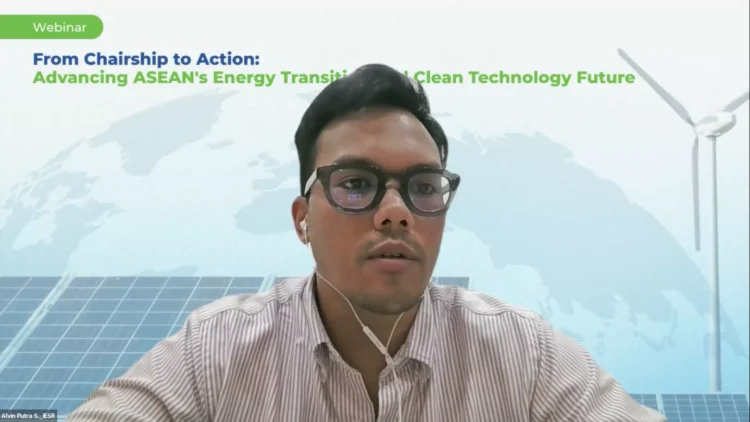
The findings were presented during the webinar “From Chairship to Action: Advancing ASEAN’s Energy Transition and Clean Technology Future,” organized by the Southeast Asia Energy Transition Collaborative Network (SETC) and IESR on September 21, 2026.
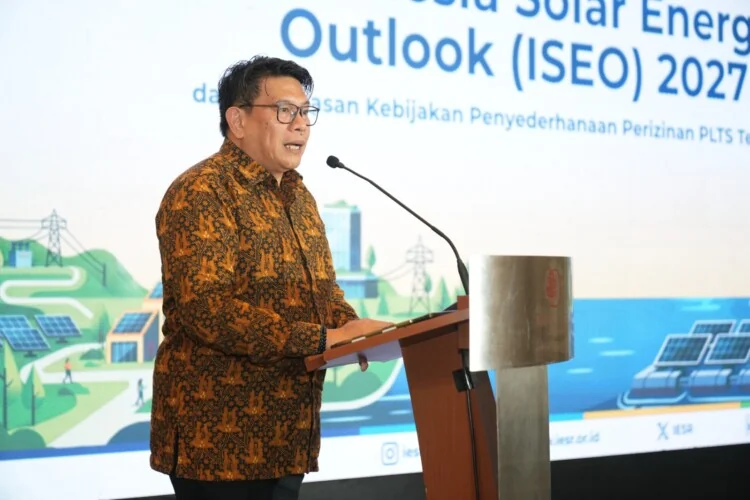
IESR CEO Fabby Tumiwa said continued dependence on fossil fuels exposes ASEAN countries to price and supply disruptions caused by geopolitical conflicts.
He said renewable energy combined with energy storage, grid flexibility and cross-border electricity trading could improve both supply security and affordability.
Felix William Fuentebella, Vice Minister at the Philippine Department of Energy, said the ASEAN Power Grid (APG) has a strategic role in strengthening regional energy security during the Philippines’ ASEAN chairmanship.
However, he said stronger regional interconnections require greater alignment of regulations and technical standards, electricity trading mechanisms and financing arrangements.
More integrated cross-border power systems could allow ASEAN countries to diversify electricity supplies, optimize underused resources, expand transparent electricity trading and accommodate larger shares of variable renewable energy.
IESR Project Manager for MENTARI Grid Alvin P. Sisdwinugraha said the institute’s most ambitious scenario indicates that ASEAN could achieve a 100 percent renewable energy system by 2050.
Under the scenario, solar power would become the region’s main source of electricity generation.
The modeling also indicates that wider electrification could reduce ASEAN’s primary energy demand to around 16,000 terawatt-hours (TWh) annually by 2050, compared with approximately 18,000–20,000 TWh under slower transition scenarios.
IESR recommends that ASEAN countries accelerate solar power development through auctions and incentives while expanding battery energy storage and modernizing electricity grids.
The institute also recommends strengthening cross-border power interconnections so the regional electricity trading potential identified in the modeling can be realized.
Clean Technology Industry Needs Stronger Regional Cooperation
IESR Decarbonization Sector Research Manager Farid Wijaya said Southeast Asia has an opportunity to strengthen its renewable energy technology industry because the region has critical minerals, growing market demand and an emerging manufacturing base.
However, he said the region still needs to strengthen its capacity to produce battery cells, components and complete battery systems.
Southeast Asia has significant reserves of minerals such as nickel, copper and manganese, but its ability to process these resources into battery cells, assemble battery packs and develop battery systems remains limited.
Farid warned that without stronger industrial capacity, countries in the region could remain focused on exporting raw materials or intermediate components while importing higher-value finished products.
Mardy Hout, Clean Energy Policy Manager at EnergyLab Asia, emphasized the importance of cooperation based on the industrial strengths of individual ASEAN countries.
He cited battery-pack assembly in Cambodia using imported battery cells as one potential starting point that could be developed before the country moves into more complex battery-cell manufacturing.
He also called for greater industrial specialization and cross-border production, stronger local suppliers for components such as electronics and cables, harmonized technical standards and early preparation for clean-technology waste management.
Ashish Gulagi, a postdoctoral researcher at LUT University, warned that new fossil-fuel power plants could lock investments into high-carbon infrastructure for decades.
Starting the transition earlier, he said, would give electricity grids and workers more time to adapt while reducing the risks of stranded assets and declining industrial competitiveness.
The IESR modeling highlights the importance of coordinated regional action, including renewable energy deployment, grid modernization, electricity interconnection, energy storage and clean-technology manufacturing, in shaping ASEAN’s energy system toward 2050. (*)