
Enviro News Asia, Jakarta — Indonesia is seeking to restore 3.31 million hectares of damaged peatland through closer coordination between the Ministry of Environment and Environmental Control Agency (KLH/BPLH) and the National Peatland and Mangrove Management Agency (BPGMN), following the completion of a six-year conservation project.
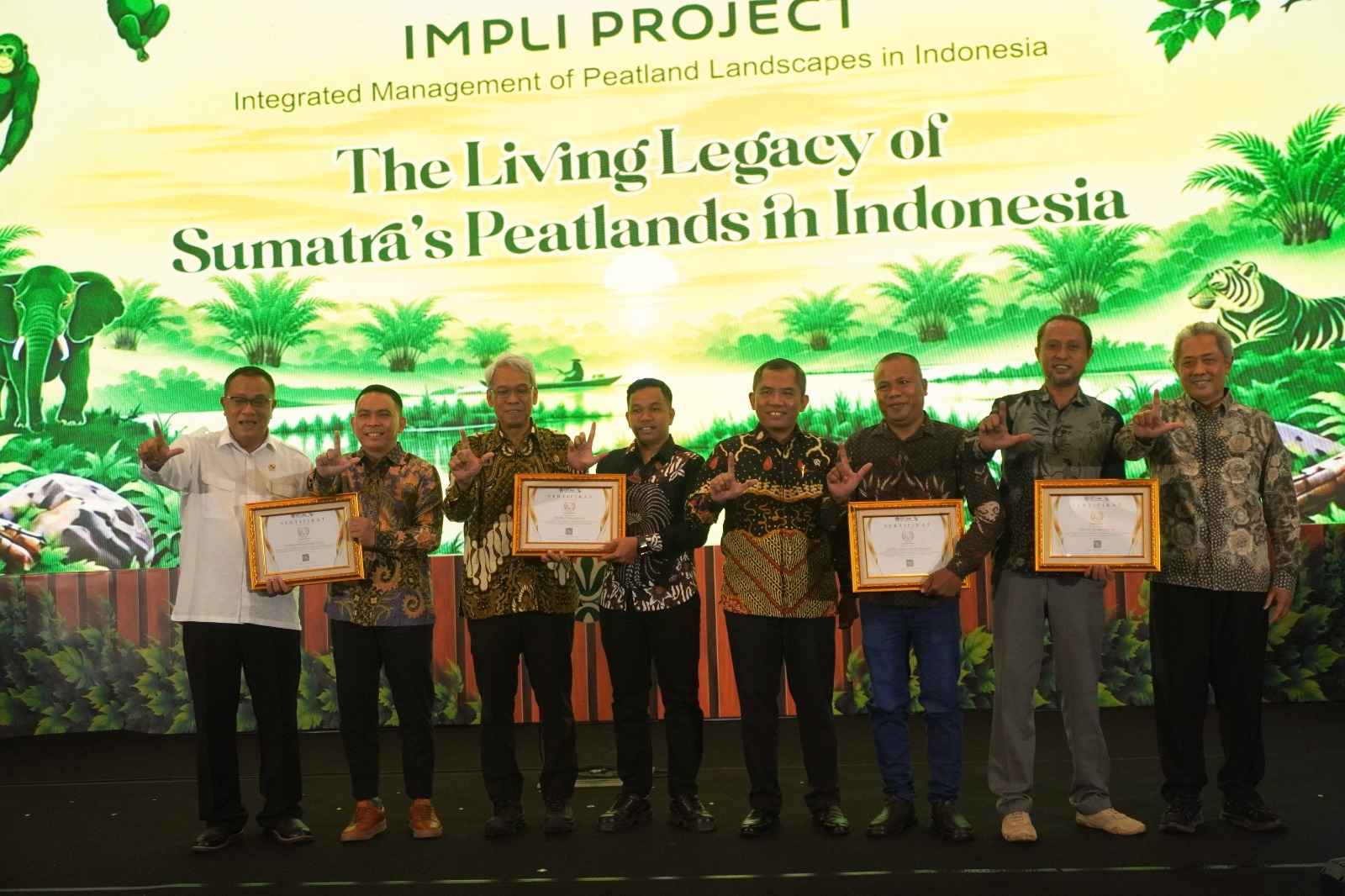
The two agencies signed a joint commitment to accelerate peatland and mangrove protection and restoration during the closing ceremony of the Integrated Management of Peatland Landscapes in Indonesia (IMPLI) project in Jakarta on Nov. 25. The initiative, covering the 2020–2026 period, is intended to ensure that successful practices developed at the village level become part of national policy.
Environment Minister and KLH/BPLH head Moh Jumhur Hidayat said the end of the project marked the beginning of a broader effort to maintain and expand its achievements. He stressed that lessons from local communities must inform national policies and deliver tangible benefits to residents.
“The project is what we are closing today, but the work is not finished,” Jumhur said. He added that peatlands and mangroves should be recognised as natural capital and ecological infrastructure supporting sustainable development.
A national inventory conducted in 2026 recorded 13.36 million hectares of peatland across Indonesia. Of this area, 9.45 million hectares remained in good condition, while 3.91 million hectares were classified as degraded. The government has set a restoration target of 3.31 million hectares, to be pursued through cooperation among ministries, government agencies, businesses and 2,004 Peatland Care Independent Villages, known as DMPG.
Indonesia also has approximately 3.45 million hectares of mangrove ecosystems, including 986,000 hectares considered suitable for restoration. Jumhur said the government would adopt a selective approach to rehabilitation to avoid undermining the livelihoods of coastal communities.
Productive aquaculture ponds would remain in operation, while declining ponds would undergo management improvements. Abandoned areas that remain ecologically suitable would be considered for conversion back into mangrove ecosystems, he said.
Between 2020 and 2026, the IMPLI project conducted peatland ecosystem assessments across 48 Peat Hydrological Units, prepared peatland protection and management plans in five districts, built 10 canal-blocking structures and installed 10 groundwater-level monitoring devices. The project also provided assistance to 13 DMPG villages.
Implemented in Riau, Jambi and South Sumatra, the programme combined ecosystem protection with community-based economic activities. These included good agricultural practices in paludiculture, a circular-economy initiative using Bali cattle waste, sustainable harvesting of non-timber forest products through the Madu Kepayang Lestari initiative, and support for micro, small and medium enterprises and village institutions.
The new agreement seeks to clarify responsibilities between the two agencies to prevent overlapping programmes and ensure that policy planning is linked to field implementation.
KLH/BPLH will lead the development of standards, regulations and management plans for peatland and mangrove ecosystems. BPGMN will handle technical and operational activities, translating those plans into measurable actions on the ground. Both agencies will also work with local governments, relevant ministries and institutions, and academic communities.
BPGMN head Prof. Satyawan said his agency would focus on carrying out technical work based on plans prepared by KLH/BPLH.
“We hope there will be no redundancy in programme implementation or overlapping activities. Instead, future programmes must work in synergy and support one another,” he said.
The government said restoration progress should not be measured solely by the number of canal-blocking structures built or seedlings planted. More important indicators include the recovery of peatland hydrological functions, fewer recurring forest and land fires, reduced greenhouse gas emissions and improved livelihoods for surrounding communities.
With support from the Global Environment Facility and the International Fund for Agricultural Development, KLH/BPLH said it would promote wider adoption of the knowledge and management systems developed under IMPLI.
The government aims to maintain wet peatlands, conserve mangrove ecosystems and strengthen the economic well-being of communities that depend on them. (*)