Enviro News Asia, Jakarta – Minister of Environment and Head of the Environmental Control Agency (KLH/BPLH), Hanif Faisol Nurofiq, emphasized that all commercial areas, residential zones, culinary centers, and shopping malls are required to manage their waste independently without burdening Final Disposal Sites (TPA).
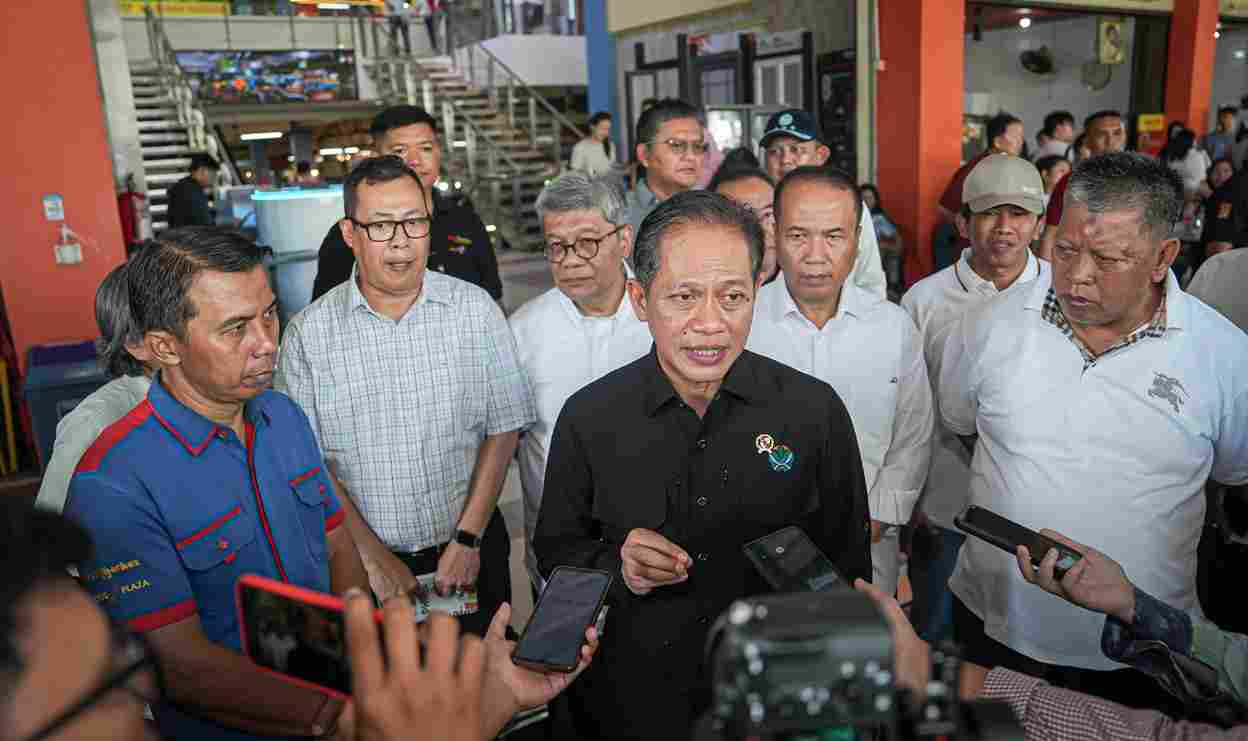
This statement was made during a working visit to North Jakarta alongside Mayor Hendra Hidayat.
The visit began at the Pantai Indah Kapuk (PIK) fresh market. Minister Hanif highlighted the importance of direct inspection and verification of waste management compliance in densely populated areas like North Jakarta, including their connection to official waste processing facilities such as licensed TPAs or the Rorotan RDF Plant.
“Densely populated areas like North Jakarta cannot be left without supervision. Waste management systems must comply with regulations and must not allow indiscriminate dumping,” Minister Hanif stated in his official press release on Sunday, July 6, 2025.
Minister Hanif condemned the practice of outsourcing waste management to irresponsible third parties. In many cases, the waste ends up in illegal landfills, harming the environment. One such case occurred in Limo, Depok, where the perpetrator was sentenced to five years in prison and fined IDR 3 billion.
“We must stop handing over waste management to irresponsible third parties. Waste ends up being dumped illegally through open dumping,” Hanif asserted.
He emphasized that waste management is mandated under Law No. 18 of 2008. Both central and regional governments are obligated to ensure a planned and sustainable waste management system according to their respective authorities.
In Jakarta, this mandate is further supported by Governor Regulation No. 102 of 2021, which requires every area to reduce, sort, and manage waste independently at the source.
“Waste management cannot continue to rely on TPAs. Every area, including neighborhood units (RWs), markets, and food centers, must have their own system. Waste must be handled on-site and must not become a burden for other regions,” Hanif added.
At RW 06, East Kelapa Gading Subdistrict, Minister Hanif praised the community initiative of a local waste bank in RT 003 that actively sorts and manages household waste.
He encouraged the broader public to start sorting waste at home and managing hazardous waste responsibly.
“A waste bank is not just about sorting; it’s a tangible example of community involvement in environmental preservation. This deserves appreciation and should be replicated elsewhere,” he said.
This grassroots movement, he noted, aligns with the national target of reducing waste by 52.21% by 2025 and achieving a waste-free Indonesia by 2029.
Minister Hanif reiterated that community participation is vital to reaching this goal.
The visit continued to the HOREKA area and the Mall of Indonesia (MoI) in Kelapa Gading, which generates 5 tons of waste per day.
Minister Hanif gave the area’s management one month to improve its waste management system in compliance with existing regulations.
“I’m giving a one-month deadline. The waste management system here must be improved and comply with legal standards. Negligence is not acceptable,” he stressed.
The KLH/BPLH urged business operators and area managers to play a crucial role in environmental protection.
Strict enforcement of regulations and close supervision are key to building a clean and resilient city.
This visit is part of the national strategy by KLH/BPLH to strengthen area-based waste management systems. The core principle emphasized is that waste must be resolved at its source—not collected and transferred to TPAs. (*)